
Brewing timing
Dark Tea Steeping Time: How Long to Brew Without Guessing
A rinsed brick fragment, a warm gaiwan, and one extra minute can make very different cups. For dark tea steeping time, choose the brewing style first: use short repeated infusions of about 10–20 seconds after a brief rinse in a small gaiwan or teapot, or start around 2–4 minutes for a larger mug or western-style pot. Then let the cup correct the clock.
If the liquor is pale, quiet in aroma, and thin on the tongue, steep a little longer or use slightly more leaf next time. If it turns heavy, rough, or muddy, shorten the next infusion, use less leaf, or pour sooner. The useful answer is not one fixed number; it is a starting range plus a cup check.
upward
Start with the broader guide
Use the broader guide first if you need the full scope before this page.
Start here
- Small vessel: brief rinse, then 10–20 seconds.
- Large mug or pot: begin around 2–4 minutes.
- Thin cup: add time or one opening infusion.
- Rough cup: shorten the next steep.
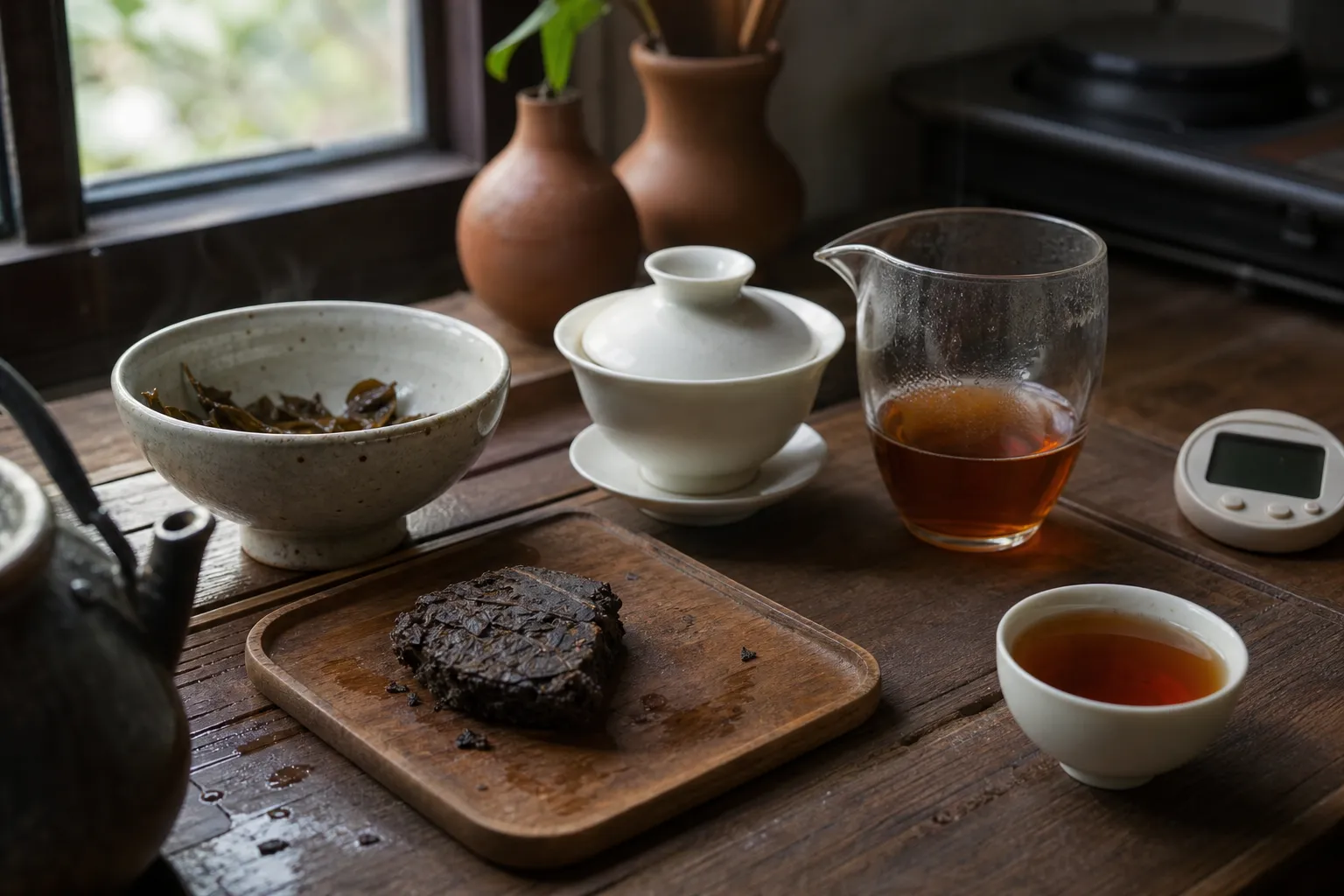
A Practical Starting Range
Dark tea brewing time changes with vessel size, leaf amount, and leaf form. A small vessel with more leaf asks for shorter steeps. A larger mug or pot with less leaf needs more time because the water is doing more extraction in one round.
Small gaiwan or teapot, repeated infusions
Brief rinse, then 10–20 seconds for the first drinkable steep
Liquor color, opening aroma, body
Later short infusions
Add 5–15 seconds as the cup fades
Sweetness, warmth, thickness
Large mug or pot
2–4 minutes
Balance between body and roughness
Broken tea pieces
Start shorter than intact chunks
Fast darkening, strong earthy notes
Tightly compressed cake or brick piece
Rinse, pause briefly, then start short
Whether the center has opened
These are starting points, not standards for every cake, brick, or loose leaf. The available material for this page did not include usable public references for exact producer timings, temperature rules, or formal infusion sequences, so the page stays close to what a brewer can observe: leaf form, water, vessel, liquor color, aroma, mouthfeel, and taste.
For a small vessel, the first drinkable infusion can be very short because the leaf-to-water ratio is usually high. If a compressed piece is still closed after the rinse, the first cup may taste light even when the timing looks reasonable. Do not force a very long steep immediately. Try one short opening pour, then lengthen gradually.
For a mug or larger pot, dark tea infusion time usually needs to be longer because there is more water and often less leaf by proportion. A 2-minute steep may be enough for loose or broken dark tea. A denser chunk may need closer to 4 minutes, especially if the first pour looks weak and tastes hollow.
What Changes the Timing
The question “how long to steep dark tea” sounds simple, but the cup changes when one variable moves. Keep the main variable visible before adjusting the next one.
Leaf form changes speed.
Loose dark tea steeping is often faster than compressed dark tea brewing because water reaches more surface area right away. A flaked cake, loose strands, or broken pieces can darken quickly. A firm brick corner may release flavor more slowly until the layers separate.
Broken pieces brew quickly.
Small fragments expose more surface and can make the liquor look dark before the cup feels rounded. If the aroma is strong but the mouthfeel is sharp, dusty, or flat, shorten the next steep rather than assuming the tea needs more time.
Leaf quantity changes concentration.
Dark tea leaf quantity matters as much as time. More leaf in the same vessel can make a 15-second steep taste full. Less leaf may need a longer infusion to reach the same body. If the cup is always too strong, reduce the leaf before making every steep shorter and shorter.
Vessel size changes extraction.
A 100–150 ml gaiwan with several grams of leaf is not working like a 300 ml mug. When you move from a small teapot to a larger cup, do not carry the same seconds across without changing the leaf amount.
Water temperature affects the cup.
Dark tea is often brewed with very hot water in everyday setups, but the exact result still depends on the tea, vessel, and taste preference. If a cup tastes flat and pale, hotter water or a longer steep can help. If it tastes rough, stale, or too forceful, shortening the infusion is usually the first adjustment to try.
A rinse can change the first cup.
A brief rinse is often used to wet compressed tea and help the leaves open. Keep it short if you plan to drink several infusions. After rinsing a tight piece, a short pause can let moisture move inward before the first drinkable pour.
Let Color, Aroma, and Mouthfeel Correct the Clock
The clock gets you started. The cup tells you whether to repeat, shorten, or lengthen.
Dark tea liquor color can move from amber-brown to deep reddish brown or darker, depending on the tea and the brew. Color is useful, but it is not enough by itself. A very dark cup can still taste thin if the leaf has not opened evenly, and a lighter cup can be satisfying if the aroma and body are clear.
Aroma gives an earlier signal. After the rinse and first steep, smell the wet leaf and the cup. If the aroma is quiet, closed, or mostly warm water, the tea may need more time, more heat, or another short infusion to open. If the aroma is heavy, sharp, or crowding the cup, pour sooner next round.
Mouthfeel is the final check. A good timing choice should give the liquor some presence on the tongue without making it feel clogged, harsh, or overly dense. If the cup tastes thin, extend the next infusion by 5–15 seconds in a small vessel, or 30–60 seconds in a larger mug. If the cup feels too heavy, shorten the next round or dilute with a little hot water.
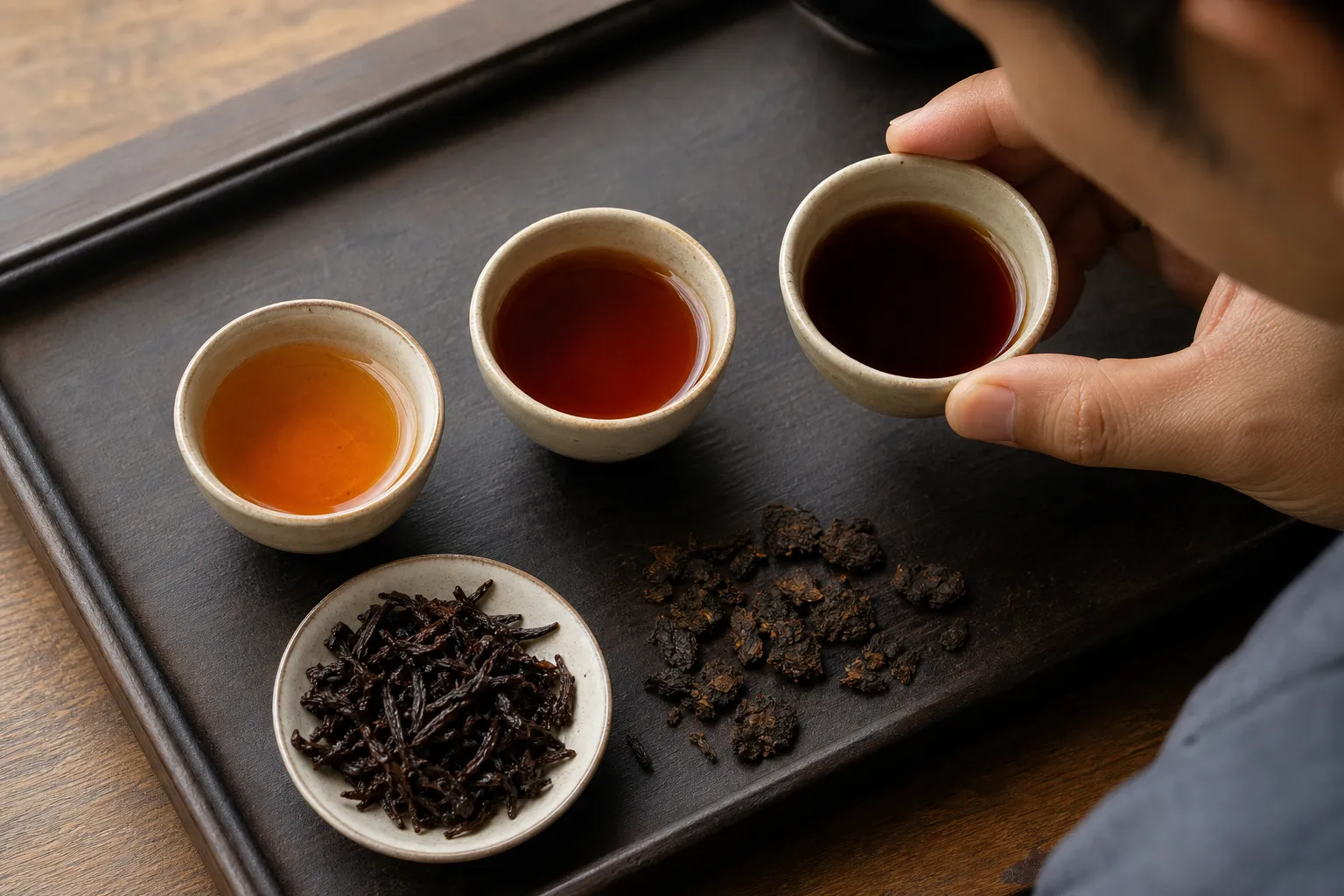
Pale, faint aroma, thin body
Too short, too little leaf, or compressed leaf still closed
Add time or use one more opening infusion
Dark color, rough taste
Too long or too much broken leaf
Shorten the next steep
Earthy but flat
Leaf may need heat, time, or better opening
Try a slightly longer infusion
Sweet but fading
Leaves are giving less each round
Add 10–20 seconds
Heavy and muddy
Over-extracted for your taste
Pour sooner or use less leaf next session
This keeps dark tea steeping time tied to the cup in front of you, not to a number repeated across every tea.
Short Infusions or One Longer Brew
Short repeated infusions are useful when you want to track how a cake, brick, or loose leaf changes across several pours. This method gives you more chances to correct. If the first infusion is too light, the second can run longer. If the third is too dense, the fourth can be shorter.
A typical small-vessel rhythm is simple: brief rinse, first infusion around 10–20 seconds, then gradual increases as the cup fades. For a tightly compressed piece, the first one or two drinkable pours may be lighter while the center opens. For loose or broken material, the strongest cups may arrive earlier.
One longer brew suits a desk mug, breakfast pot, or low-attention session. It needs a wider starting range because vessel size, leaf amount, and water volume vary more. Begin around 2–4 minutes, taste, and then decide whether the next pot needs more leaf, less leaf, or a different steep length.
Neither style is better in every setting. Short infusions give more control. A larger brew gives convenience. The better choice is the one that lets you notice when the tea turns from thin to full, or from full to too heavy.
Common Timing Mistakes
Treating darker liquor as a better brew
Dark tea can produce a deep cup, but depth of color is not the same as balance. If the cup looks strong but tastes harsh, dusty, or crowded, the steep was probably too long for that leaf amount and vessel.
Assuming compressed tea always needs a long first steep
Compression slows the opening of the leaf, but a long opening steep can pull too much from the exposed edges while the center is still tight. A brief rinse, a short first pour, and gradual lengthening often gives more control.
Changing everything at once
If a cup is weak, do not immediately add more leaf, raise the water temperature, and double the time. Change one thing. For dark tea brewing time, the easiest first correction is usually time: add a little if the cup is thin, subtract a little if it is rough.
What This Page Can Support
This page gives practical starting ranges and sensory adjustment logic for everyday brewing. It does not turn one infusion schedule into a rule for every fermented tea, every storage condition, or every personal preference.
Because no usable public references were available for exact dark tea timings, the numbers here should be read as cautious tea-table starting points. The stronger method is the repeatable one: choose a range, watch the liquor, smell the cup, feel the mouthfeel, and adjust the next infusion.
Quick Steeping Checklist
Before you pour, set the variables you can control:
- Choose the vessel size before choosing the time.
- Use shorter steeps for small vessels with more leaf.
- Start broken pieces shorter than intact compressed chunks.
- Rinse compressed tea briefly if it seems tight or dusty.
- Lengthen gradually when the cup tastes thin or quiet.
- Shorten when the liquor turns harsh, muddy, or too heavy.
For your next session, write down only three things: leaf form, first steep time, and cup result. That small note will do more for your dark tea steeping time than memorizing a rule that ignores the cake, brick, loose leaf, vessel, and taste in front of you.