
Gongfu vessel choice
Gaiwan or Teapot for Gongfu Brewing Dark Tea
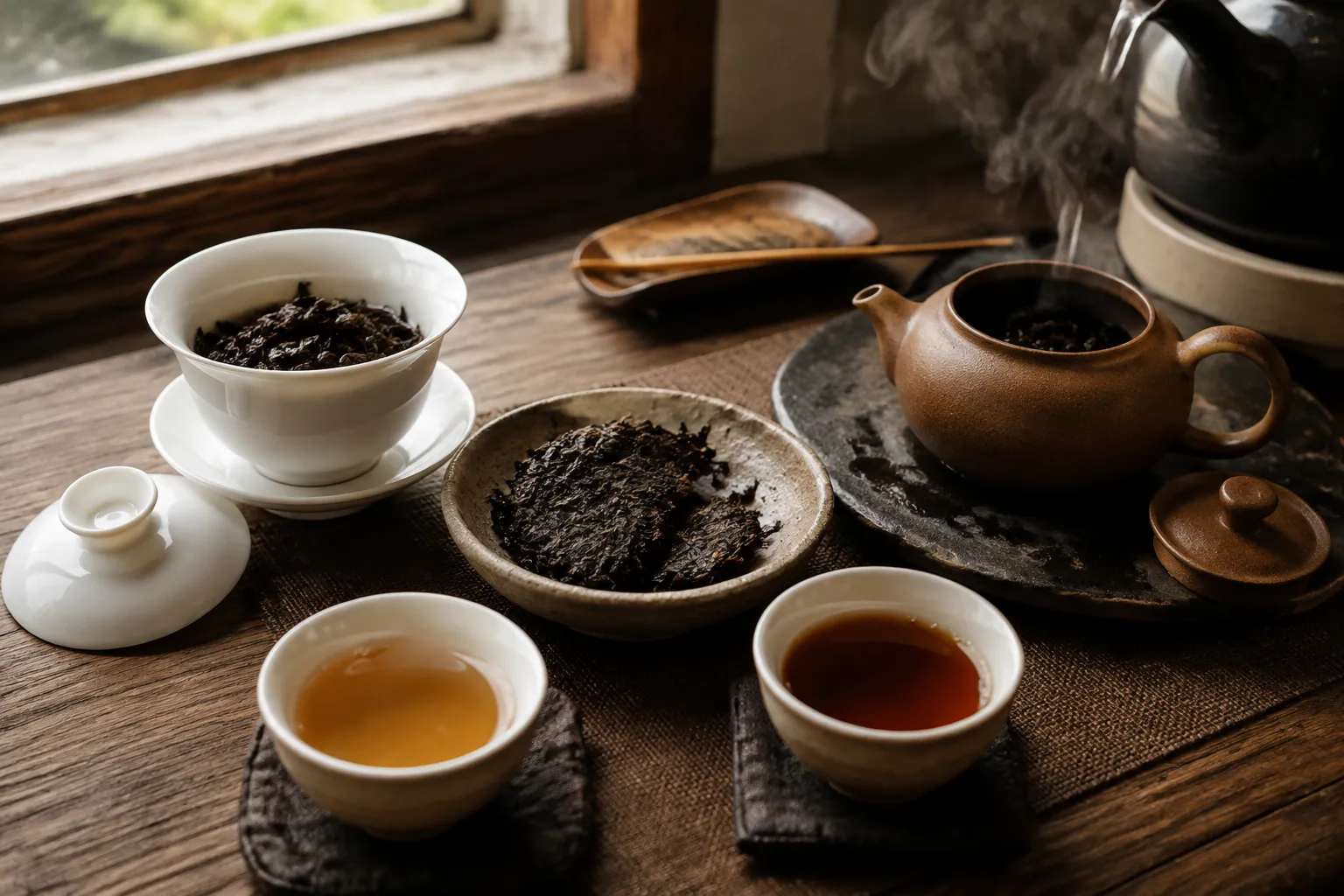
A rinsed piece of dark tea cake can change quickly once it meets a small gongfu vessel. For gaiwan vs teapot for dark tea, the useful answer is simple: choose a gaiwan when you want clearer control over opening leaf, aroma checks, pour timing, and quick correction; choose a small teapot when you want steadier heat, a rounder-feeling liquor, and a calmer rhythm across repeated infusions.
Neither vessel is the right choice for every cake, brick, or loose leaf. The better choice depends on compression, broken-leaf ratio, vessel size and material, pour speed, water temperature, and what the cup is doing. If the tea tastes thin, harsh, flat, earthy, sweet, or too heavy, treat the vessel as one control point, not the whole answer.
upward
Read the full overview first
Use the broader guide first if you need the full scope before this page.
Start With The Brewing Problem
A gaiwan gives you more visible control. You can watch a compressed piece loosen, tilt the lid to hold back fine particles, smell the lid after a short steep, and pour quickly when the liquor is already deep enough. For dark tea in a gaiwan, that control helps when the tea is unfamiliar, tightly compressed, broken into mixed sizes, or carrying a storage aroma you want to separate from the main infusions.
A small teapot gives a quieter kind of control. It hides the leaf from view, but once you know the tea, the enclosed space can make the brew feel steadier. Depending on wall thickness, material, and pour speed, a small pot may hold warmth more consistently than a thin gaiwan. For dark tea in a small teapot, that can help when short, exposed infusions taste hollow or when you want several cups with similar strength.
Use a gaiwan first if the tea is new to you. It makes the early signals easier to read: whether the rinse loosened the chunk, whether the liquor darkened too fast, whether the aroma cleared after the first steep, and whether roughness arrived before sweetness. Move to a small teapot when the tea already has a rhythm and you want less handling between infusions.
What Changes The Answer
Leaf form changes the vessel decision more than the vessel name does. Loose dark tea, small broken pieces, and flakes from a cake expose more surface area to water. They can darken quickly and release strength faster than a dense chunk. In that case, a gaiwan often helps because a fast pour and a controlled lid gap let you stop the steep before the cup becomes too heavy.
A dense piece from a brick or cake may need more time to open. A small teapot can be useful if the tea feels slow, woody, or flat in quick gaiwan infusions. The retained warmth and enclosed space can encourage steadier extraction, though the result still depends on pot size, water temperature, and how much the piece has loosened after the rinse.
Vessel size matters as much as vessel type. A 90 ml gaiwan and a 90 ml teapot make a fairer comparison than a 90 ml gaiwan against a 150 ml pot. If the water-to-leaf ratio changes, the cup changes too. When comparing gaiwan and teapot, keep leaf weight, water volume, and steep time close before blaming the vessel for a difference in flavor.
Material matters, but not as a universal ranking. Thin porcelain tends to show temperature changes quickly in the hand and in the cup. A thicker pot may buffer heat more, while a very small pot can intensify a brew because the leaf-to-water ratio is high. These are practical brewing tendencies, not proof that one material always improves dark tea.
Control, Heat, Pour Speed, And The Cup
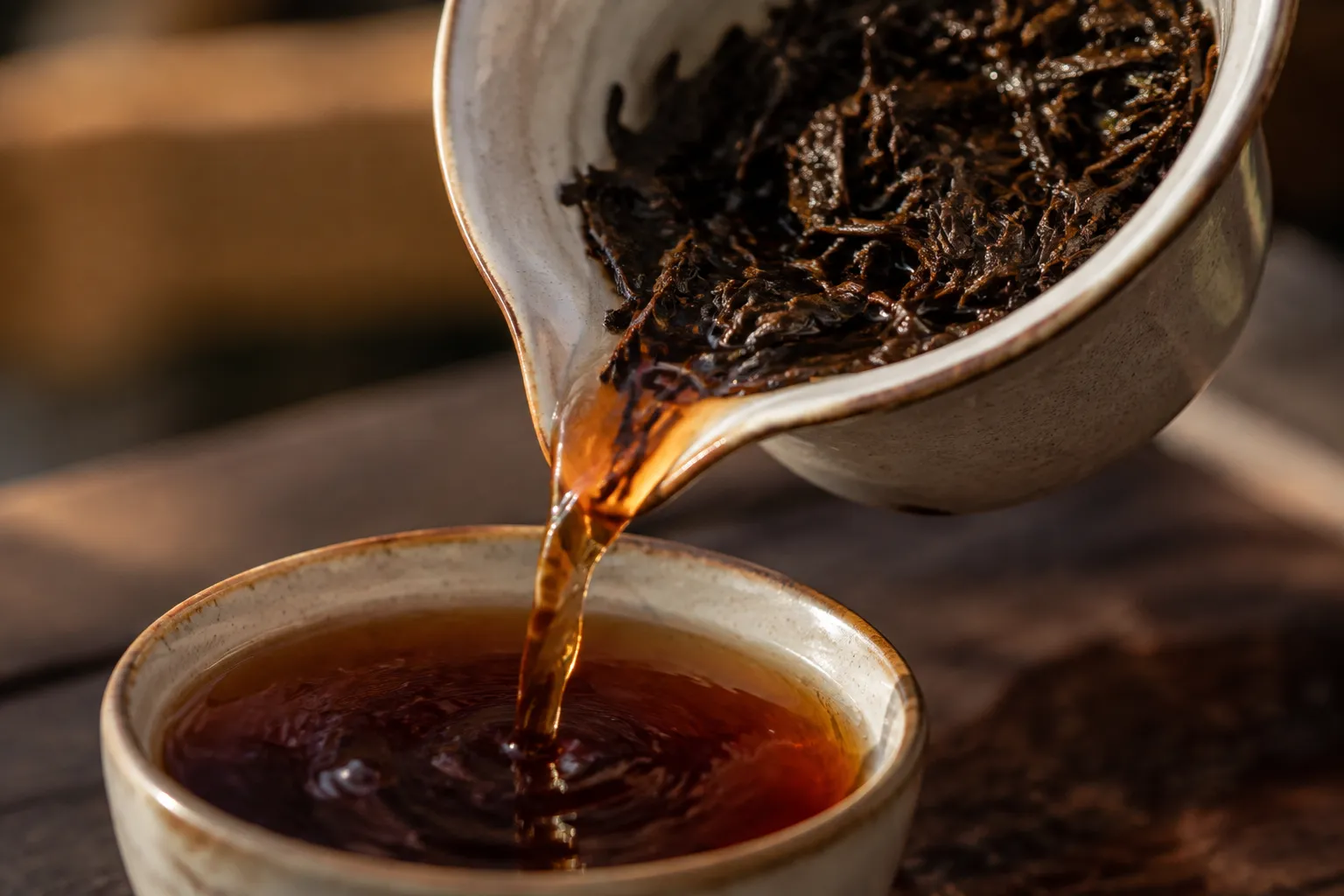
The clearest difference is vessel control for gongfu. A gaiwan lets you change the lid opening, inspect the leaf, smell the lid and bowl, and pour directly. If the liquor darkens quickly, pour earlier. If the aroma is muted and the liquor looks pale, extend the next steep slightly. If fine particles make the cup rough, narrow the lid gap and pour with more care.
A small teapot asks for more trust in the setup. You cannot see the leaves opening during the steep, and the spout controls the pour. If the spout is slow, the last part of the liquor keeps extracting while you empty the pot. That can make the cup stronger than expected, especially with broken dark tea or a generous leaf load. In gongfu brewing, pour time is part of steep time.
Heat behavior shows up most clearly in weak or heavy cups. If a gaiwan brew tastes thin even with enough leaf, the tea may need a little more time, hotter water reaching the leaf, or a vessel that holds warmth longer. If a teapot brew tastes dense, earthy, or tiring by the third infusion, shorten the steep, reduce leaf, or return to a gaiwan where the pour can be stopped more sharply.
Aroma checks also differ. A gaiwan gives frequent feedback from the lid, bowl, and wet leaf. This can help when a stored tea moves from damp, woody, or cellar-like notes toward sweeter or cleaner notes after the rinse and first infusions. A teapot concentrates aroma differently; the lid and empty cup may still give useful signals, but the leaf is less exposed. Choose the vessel that gives you feedback you will actually use.
A Practical Starting Point
Starting in a gaiwan
Start with a small vessel, enough leaf to make the first short infusion readable, and a brief rinse if the tea is compressed or dusty with fine fragments. Keep the first few steeps short. Watch the liquor color and the way the leaf separates. If the cup is pale and quiet, add time in small steps. If it becomes harsh or muddy, pour sooner, use slightly less leaf next time, or remove excess dust and crumbs.
Starting in a small teapot
Start with a modest leaf load until you know the pour speed. Pre-warming the pot can make the early infusion more even, especially when the pot is thick or the room is cool. Keep the first steep conservative because the tea remains in a hot, enclosed space until the pour is complete. If the pot drains slowly, count that draining time as part of the brew.
Brewing variables to compare
Leaf form and compression
A gaiwan often helps when the tea is broken, mixed-size, or still opening. A small teapot often helps when the piece is dense and slow to release.
Pour speed and strength
A gaiwan often helps when you need to stop extraction quickly. A small teapot often helps when the pot pours cleanly and evenly.
Heat behavior
A gaiwan often helps when you want quick feedback and easy correction. A small teapot often helps when the tea tastes thin or cools too fast.
Aroma checks
A gaiwan often helps when you want to smell lid, bowl, and wet leaf often. A small teapot often helps when you prefer a more contained rhythm.
Mouthfeel and texture
A gaiwan often helps when you want to avoid heaviness early. A small teapot often helps when you want a fuller, steadier cup.
Use the comparison as a starting point, not a verdict. The same tea can move from gaiwan to teapot after a few sessions, once you understand how fast it opens and where it tastes most balanced.
When The Cup Tells You To Switch
If the tea tastes thin in a gaiwan, do not switch vessels first. Check whether the leaf has opened. A dense chunk may need another short infusion before it gives much. You can also extend the steep, increase leaf slightly next time, or make sure the water reaches the leaf while still very hot. If those adjustments still leave the cup hollow, a small teapot may help by keeping the brew warmer and more enclosed.
If the tea tastes too heavy in a teapot, the pot may be holding the brew past the point you want. Shorten the steep, pour with less hesitation, or reduce the leaf. If the spout is slow and the liquor keeps turning dark during the pour, a gaiwan may give cleaner liquor strength adjustment because the infusion can leave the vessel faster.
If the tea tastes harsh, look at broken material. Fine particles and small flakes can release quickly in either vessel, but a gaiwan gives you more chance to hold some of them back with the lid. If the roughness comes from long contact with hot water rather than leaf dust, steep time will matter more than the vessel.
If the tea tastes flat, check heat and rinse before deciding. A compressed tea that has not loosened may seem dull in the first infusion. A tea with a strong storage aroma may also need a rinse and a little air in the wet leaf before sweeter or cleaner notes are easier to notice. The vessel can help you manage those steps, but it cannot make every stored tea taste the same.
Common Confusion Around Gaiwan Vs Teapot For Dark Tea
Treating the vessel as a quality judgment
A gaiwan is not only for delicate tea, and a small teapot is not automatically the more serious dark tea choice. They answer different brewing needs. The gaiwan favors visibility and fast correction. The teapot favors continuity once the setup is working.
Ignoring pour speed
Two vessels with the same volume can produce different cups if one empties in three seconds and the other takes much longer. With gongfu dark tea, short infusions make those seconds visible in the liquor. Count the pour as part of the brew, especially with broken leaf or a pot that drains slowly.
Assuming heat is always better
More heat can help a slow, dense piece open, but it can also push a broken or already active tea into heaviness. Heat is useful when the cup is thin, slow, or flat. It becomes a problem when the cup loses clarity, feels overly thick, or turns rough before the aroma has settled.
Comparing different recipes
If the gaiwan uses less water, more leaf, or a faster pour than the teapot, the result is not only a vessel comparison. Keep the setup close for one session, then change one variable at a time.
Evidence Limits And A Sensible Choice
No usable public sources or technical vessel references were available for this page, so the answer should stay narrow: practical, conditional brewing guidance based on observable variables, not an external ranking of teaware. Use it at the tea table by comparing what you can see, smell, pour, and taste.
Choose a gaiwan if you are learning the tea, working with mixed fragments, checking storage aroma, or trying to prevent a fast brew from becoming too strong. Choose a small teapot if the tea is already familiar, the leaf opens slowly, the cup feels thin in exposed short steeps, or you want a steadier rhythm over several infusions.
The next decision is small: brew the same dark tea once in a gaiwan and once in a small teapot, keeping leaf, water, and timing as close as you can. Then let the cup answer the narrow question: which vessel gives you better control over this tea today?