
Gongfu timing guide
How to Adjust Gongfu Infusions as Dark Tea Opens Up
A rinsed piece of dark tea may look still in the gaiwan, then change quickly once the compressed edges loosen. To adjust gongfu infusions with dark tea, start with short early steeps, taste each cup, watch the liquor and body, and change the next pour instead of obeying a fixed timing ladder.
In many small-vessel sessions, the first drinking infusions often sit around 5–20 seconds. That range only makes sense when the leaf amount, vessel size, compression, water temperature, and pour speed fit the tea in front of you.
The working pattern is simple: start short, read the cup, then move in small steps while the leaves open. Lengthen when the cup is pale, thin, or fading too quickly. Shorten or pour faster when it turns harsh, bitter, muddy, or too heavy. Later, when the tea is clearly fading, lengthen more decisively.
upward
Start with the broader guide
Use the broader guide first if you need the full scope before this page.
Start Short, But Let the Cup Correct the Timer
Gongfu brewing uses many short infusions rather than one long steep. That does not mean every dark tea session needs a neat schedule such as 10 seconds, 15 seconds, then 20 seconds. A timer can help you notice your habits, but the cup should make the decision.
With a small gaiwan or teapot and a generous amount of leaf, short early infusions are often enough because the leaf-to-water ratio is high. With less leaf, a larger vessel, or a dense piece from a cake or brick, the same quick pour may taste hollow. More leaf usually asks for quicker pours; less leaf often needs more time.
The exact second count matters less than the direction of change. If the first cup is already full, warm, and rounded, keep the next infusion close. If it is pale and watery, add time. If it feels rough around the tongue, reduce contact time before blaming the tea itself.
Read More Than Color
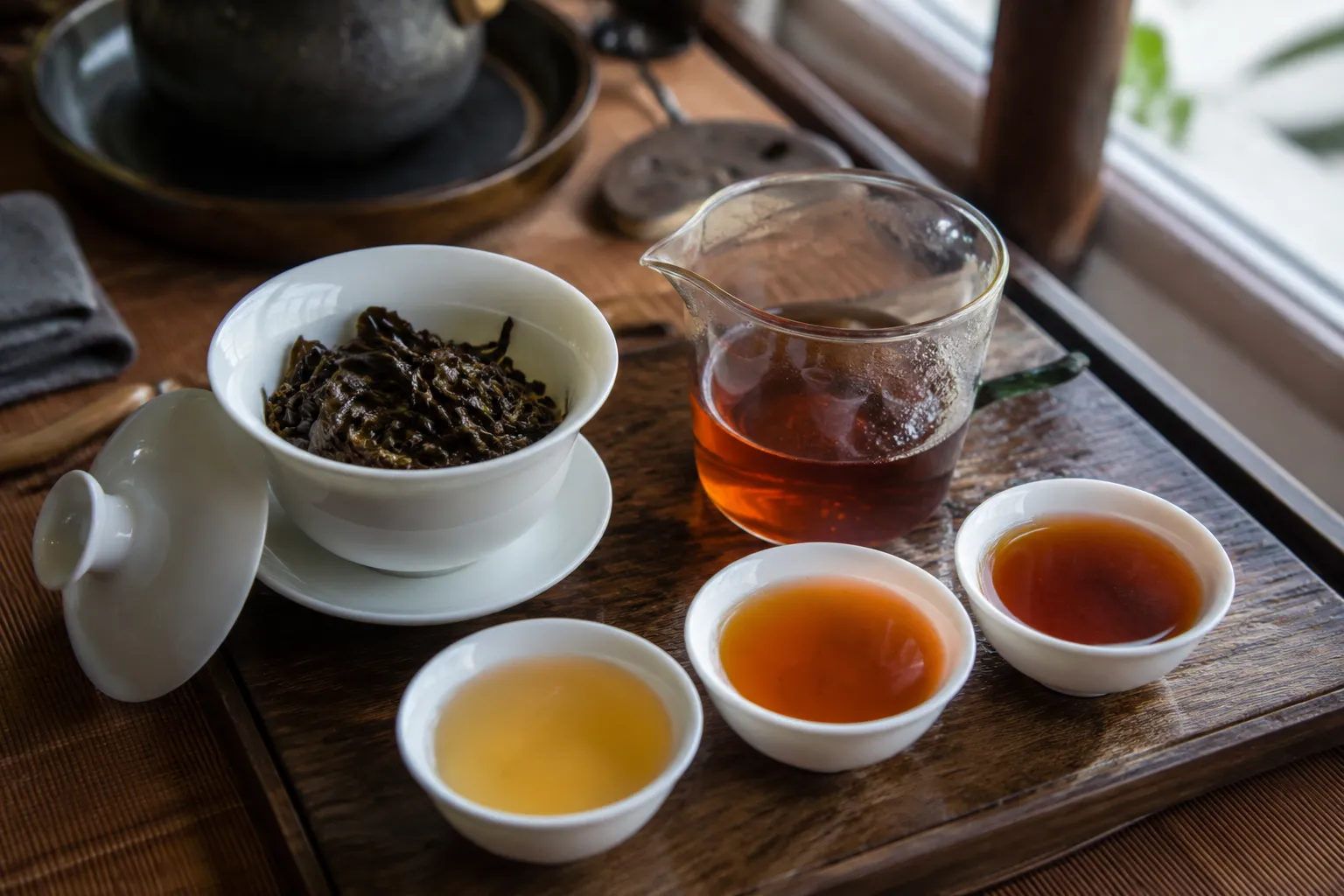
Dark tea infusion progression is visible, but color is not the whole answer. Liquor color helps once you know the depth you enjoy from a particular tea, yet some dark cups taste flat, and some lighter cups still carry sweetness, earthiness, or a clean finish.
Look at the liquor
Amber, red-brown, and dark brown can all be normal depending on the tea. Sudden change matters more. If the cup jumps from thin to murky, the leaves may have opened quickly, crumbs may be extracting hard, or the steep may have run too long.
Smell the cup and lid
Clean earthy, woody, date-like, grainy, or mellow aromas often suggest that the tea is opening comfortably. If the aroma feels dull and the taste is weak, the tea may need a warmer vessel or more time. If the smell is intense but the taste is rough, shorten the next infusion.
Feel the body
Thin weak dark tea can feel like colored water with a quick finish. A balanced cup has some weight, even when it is not thick. Too-heavy tea can feel muddy, blunt, or tiring, especially when broken bits dominate the gaiwan.
Notice the finish
If sweetness or a clean aftertaste appears after the swallow, do not rush to make the next cup stronger. If bitterness, dryness, or harshness lingers, make the next steep shorter or faster.
Flexible gongfu steeping is not guessing. Each cup gives instructions for the next one.
Adjust the Next Infusion by the Problem in the Cup
Most gongfu steep adjustments are small, but they should match what went wrong. Time is the easiest control, not the only one.
If the cup is thin, add a little time first. A few seconds can matter in a high-leaf, low-water setup. If the next cup is still weak, check the surrounding causes: the vessel may not be warm, the water may be cooling too much, the compressed piece may still be closed, or the session may simply have too little leaf for the vessel.
If the cup is harsh, bitter, or drying, shorten the next infusion. Pour more quickly and avoid letting the leaves sit in a slow-draining vessel. If the gaiwan contains many crumbs, those small particles may be releasing faster than the larger pieces. Use a lighter hand with broken bits next time, or accept a lighter cup to avoid roughness.
If the cup is sweet but too light, lengthen gently. Sweetness is a good sign; the tea may only need a little more contact. Push too hard, and that sweetness can be covered by heaviness.
If the cup is earthy and clean but flat, add time and heat before assuming the tea has failed. A slightly longer steep, a warmed vessel, and steady hot water can bring more body. If the tea remains flat after several rounds, it may be past its stronger infusions.
If the cup is muddy or too heavy, shorten the next pour and separate the liquor from the leaves cleanly. Do not let brewed liquor sit in the gaiwan while you taste. In gongfu brewing, the pour is part of the steep time.
The goal is not to make every infusion identical. Multiple infusions with dark tea often move from opening cups, to fuller middle cups, to softer late steeps. Adjust for balance, not sameness.
Compressed Dark Tea Opens on Its Own Schedule
Compressed dark tea brewing has one extra variable: the leaf may not be fully available at the beginning. A cake flake, brick piece, or tight chunk can release slowly even after a rinse. The outside brews while the inside is still compact.
A brief rinse and short rest can help some compressed teas loosen before the first drinking infusion. It is optional, not a universal rule. If you use it, pour hot water over the leaves briefly, discard that rinse, then let the damp leaves sit for a short moment while they soften. After that, begin with short early infusions and taste.
If the first drinking cup is pale after a rinse, do not panic. Dense chunks may need another round before they open. Add a little time, keep the vessel warm, and watch whether the leaf edges begin separating. Once the chunk opens, the tea may strengthen quickly, so avoid making every early steep longer by habit.
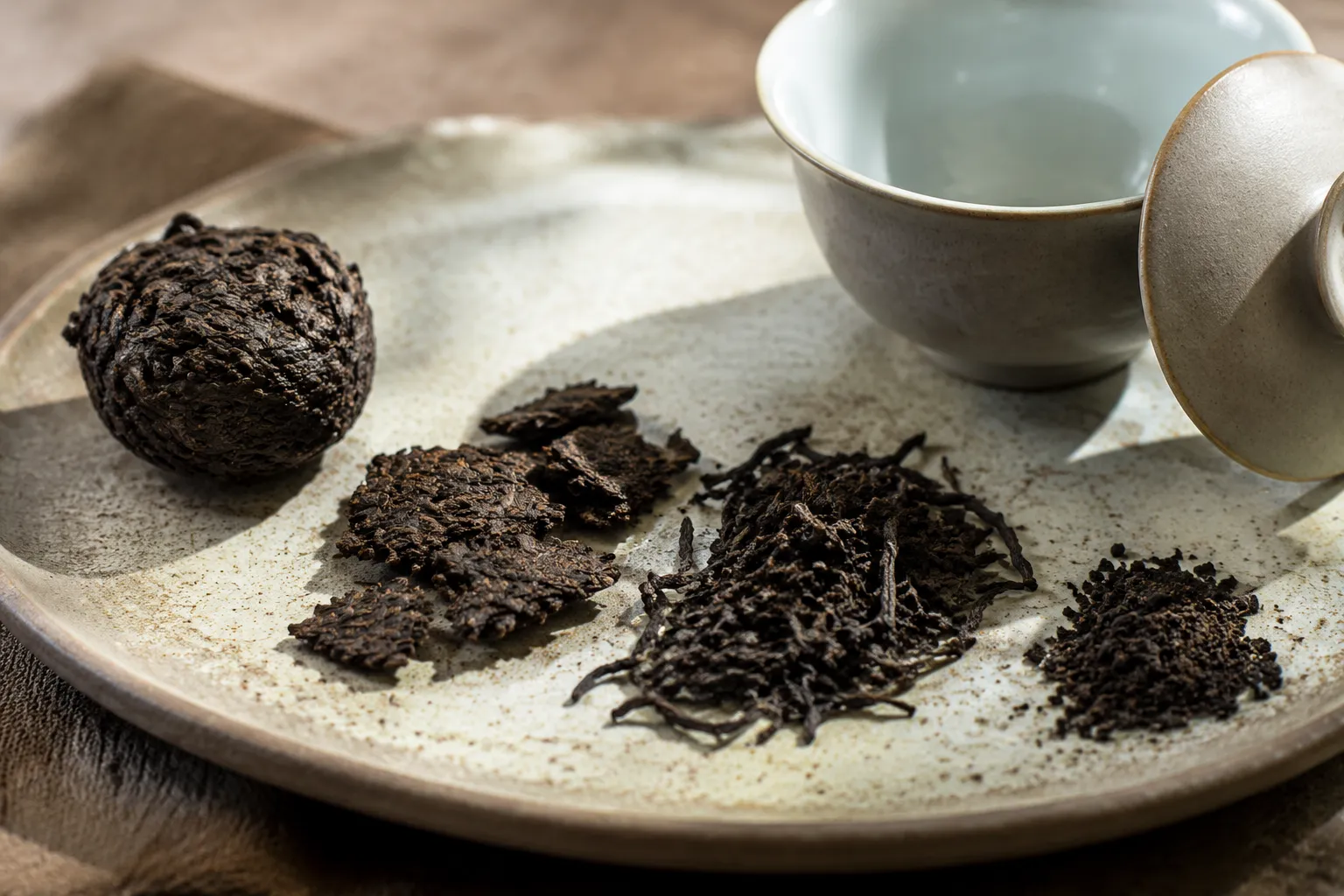
Loose leaf behaves differently. It exposes more surface area from the start, so short steeps can extract quickly. Broken flakes sit between loose leaf and tight chunks. Crumbs need the most caution: they are not useless, but they can make a cup strong quickly because so much surface area touches the water.
If the liquor becomes cloudy, rough, or overly heavy, the issue may be particle size rather than the whole tea. Pour faster, use fewer crumbs next session, or place larger pieces in the gaiwan first and let the broken bits play a smaller role.
Compression changes timing; it does not excuse ignoring the cup.
Think in Phases, Not a Fixed Steep Chart
For a practical dark tea gongfu session, think in three phases.
Early infusions
Early infusions are for waking and reading. After any rinse you choose to use, keep the first drinking steeps short. Look for whether the tea is closed, thin, already heavy, or beginning to show sweetness. With dense compression, patience matters. With crumbs, speed matters.
Middle infusions
Middle infusions are where the tea often gives its clearest body. The leaves are more open, the liquor color may deepen, and the cup can become rounder. Hold steady if the tea tastes balanced. Do not lengthen automatically just because the infusion number increased. If infusion three is stronger than infusion two, the leaves are still opening.
Late infusions
Late infusions need clearer decisions. When the cup becomes light, do not add one second at a time forever. Lengthen later infusions more noticeably, especially if the aroma is fading and the aftertaste is short. If a long steep still tastes flat, the session may be nearing its natural end.
This also answers a common timing question: you do not need a fixed wait between multiple infusions. The wet leaves can sit while you drink. If they cool for a long time between rounds, the next cup may need hotter water, a warmer vessel, or a slightly longer steep, but there is no single waiting rule that fits every tea.
Common Misreadings at the Tea Table
One mistake is fixing weak tea only by steeping longer. More time may help, but it can also pull roughness from crumbs or make a closed chunk overshoot once it opens. If several cups are thin, consider leaf amount, vessel size, water heat, and compression.
Another mistake is treating liquor color as the whole answer. Color is useful, especially when you know the tea, but it does not replace aroma, body, and aftertaste. A dark cup can taste flat. A lighter cup can be clean and sweet.
A third mistake is assuming every gongfu tea follows the same early flash-steep pattern. Very quick pours can work in some high-leaf setups, but compressed dark tea may need time to loosen. If a dense piece is still intact, a flash pour may only wet its surface.
The opposite mistake is chasing intensity in every round. Dark tea can become heavy when pushed too hard. If the cup feels muddy, blunt, or tiring, the next adjustment is usually less contact, not more.
Finally, do not turn market language about “many steeps” into a promise. Some teas give several satisfying cups; some fade sooner because of leaf condition, storage history, breakage, vessel choice, or personal preference. The useful question is not how many infusions the tea should give, but whether the next cup is still worth brewing.
What This Advice Can and Cannot Claim
For this exact question, public source coverage is limited. The most useful material comes from general gongfu brewing education, tea-shop instruction, reader troubleshooting language, and practical experience with leaf form and extraction. That is enough for cautious brewing guidance, but not for rigid claims about exact times, fixed infusion counts, quality grades, storage outcomes, or health results.
Use the numbers here as starting points, not authority. The stronger working frame is observational: leaf form, compression, vessel warmth, water heat, pour speed, liquor color, aroma, body, bitterness, sweetness, earthiness, clarity, heaviness, and aftertaste all shape the next steep.
The Next Pour
When dark tea opens up, adjust by response: short early infusions, careful tasting, and clear changes from one cup to the next. If the tea is thin, give it time, heat, or more leaf in a future session. If it is harsh or heavy, shorten the contact and watch the crumbs. If it is fading late, lengthen with purpose.
The next useful decision is small: pour the next infusion, read the cup, and change only the variable the tea is asking you to change.