
Gongfu timing
How Long Should the First Gongfu Infusion Be for Dark Tea
A rinsed piece of dark tea can look ready before it tastes ready. For a first gongfu infusion dark tea session, start the first drinkable steep at about 10-20 seconds if the leaves are loose or already opened, and about 20-30 seconds if a compressed cake or brick piece is still tight. This means the first steep after rinse, not the rinse itself.
Use that timing as a starting point, not a rule for every leaf. A small vessel, high leaf ratio, hot water, tight compression, storage character, and your preferred cup strength can all move the answer. The cup gives the correction: thin, pale, or flat usually needs more time; harsh, muddy, heavy, or drying usually needs a lighter hand.
upward
Start with the broader guide
Use the broader guide first if you need the full scope before this page.
Start With the First Drinkable Infusion, Not the Rinse
The useful question is not only “how many seconds?” It is also “which pour are you timing?”
In gongfu brewing, a rinse is often a quick wetting step, especially with compressed dark tea. Some drinkers discard that first splash and begin counting the main session with the next pour. Here, the timing range refers to the first drinkable infusion after any rinse.
Loose dark tea, high leaf ratio
Start the first drinkable gongfu steep at 10-20 seconds.
Broken cake or brick, loosened after rinse
Start around 15-25 seconds.
Tight compressed piece
If it is still slow to open, start around 20-30 seconds.
Very strong leaf load
In a small gaiwan or pot, start around 10-15 seconds.
Light leaf load or larger vessel
Start around 20-30 seconds.
This is different from large-pot or mug brewing, where instructions often use several minutes. Gongfu dark tea steeping time is usually counted in seconds because the vessel is small and the leaf amount is relatively high.
If you are unsure, begin near the shorter end. It is easier to lengthen the second infusion than to rescue a first cup that has already become heavy and drying.
Why Compression Changes the First Steep
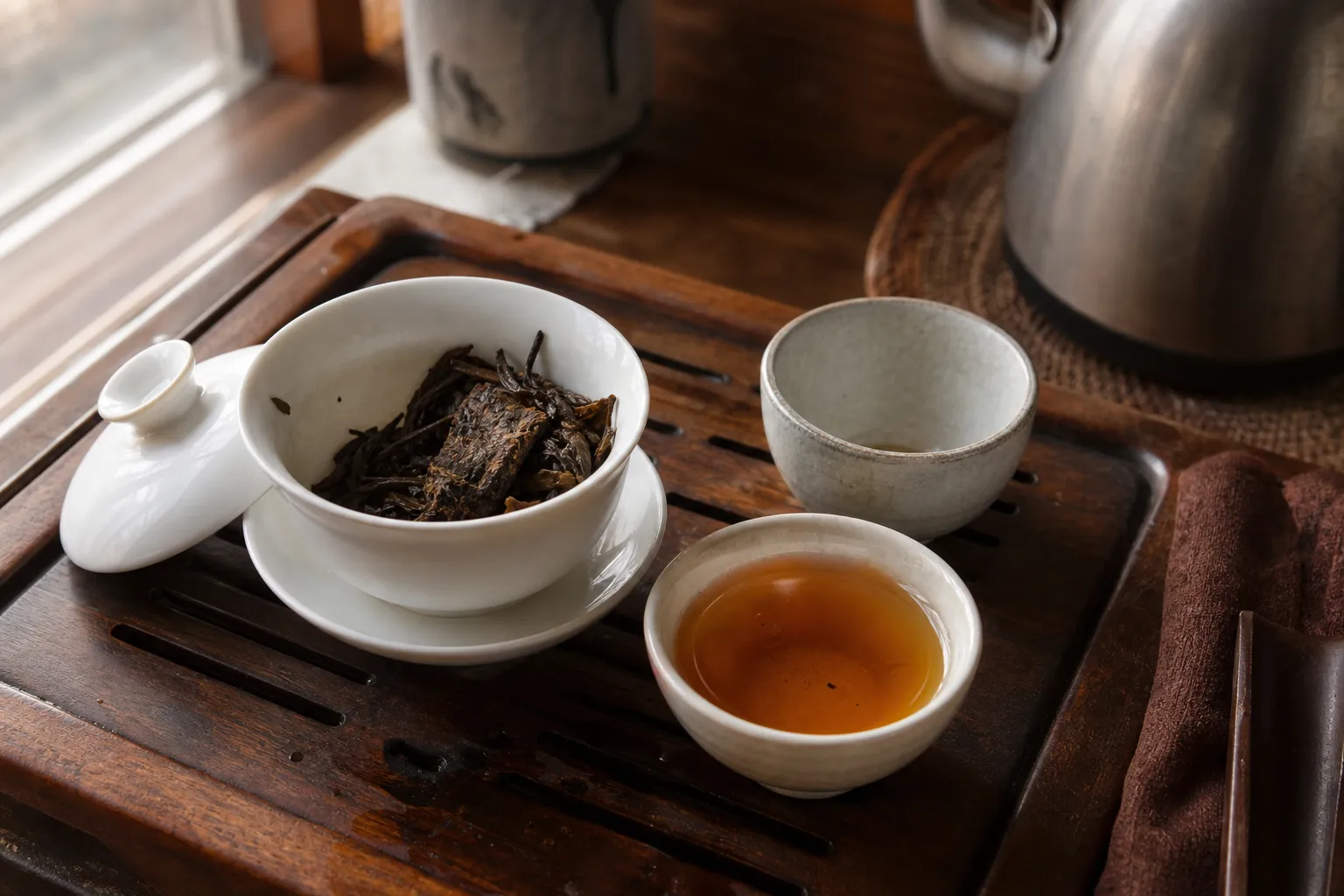
Compressed dark tea timing differs from loose dark tea first infusion timing because water does not reach every surface at the same speed. Loose fermented tea may release color and aroma quickly. A tight flake from a cake, brick, or tuo-shaped piece may stay firm at the center even after the outside darkens.
That is where a rinse before first infusion can help. A quick rinse wets the compressed piece, and a short covered rest can let heat and moisture move inward before the first timed cup. This is an everyday option, not a required step. Loose or lightly compressed tea may need little rest.
For a tight piece, do not judge only by the first flash of liquor color. The outside may give a dark pour while the inside is still slow to open. If the first cup smells faint and tastes flat despite a deep color, add a few seconds to the next infusion or let the wet leaves sit covered briefly before pouring again.
For loose tea, or a cake piece that has already opened up, the opposite can happen. The first drinkable steep may become strong quickly, especially in a small vessel with a high leaf ratio. In that case, 10-15 seconds may be enough.
The practical boundary is simple: compression affects how quickly water reaches the leaf, while leaf load affects how quickly the cup becomes strong.
Adjust by Cup Strength, Not by the Clock Alone
The clock gives you the starting point. The cup gives you the correction.
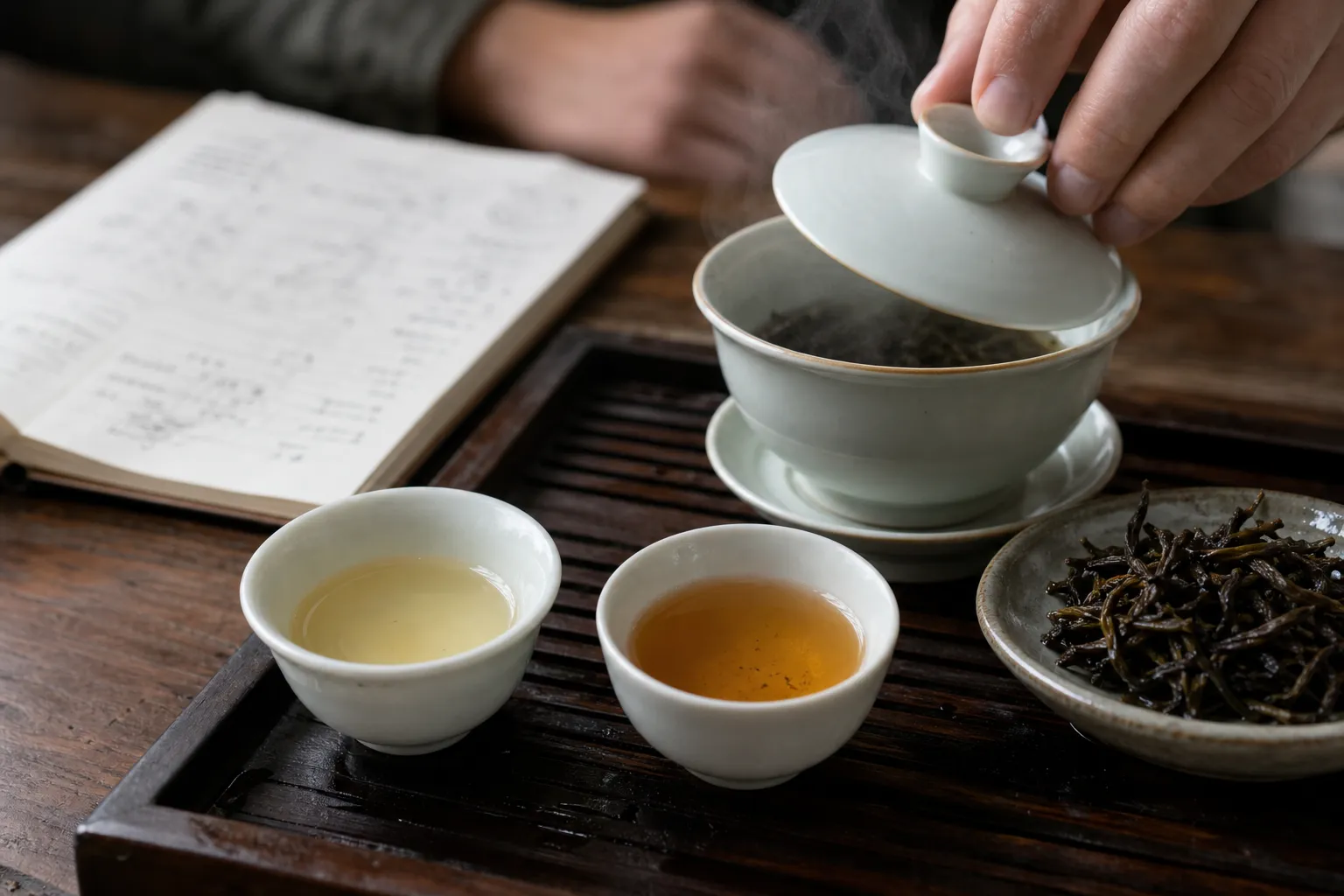
After the first drinkable infusion, check aroma, liquor color, mouthfeel, and aftertaste together. Color helps, but it is not enough by itself. Some dark teas pour deep early but taste soft; others look moderate and still feel dense on the tongue.
Thin, pale, or watery
This often means not enough extraction, or leaves that are still tight. Add 5-10 seconds.
Flat aroma, little finish
The leaves may need more opening. Rest wet leaves briefly, then add time.
Pleasant but light
This can be good if you like a softer cup. Add only a few seconds.
Harsh, bitter, or drying
This is too much force for that setup. Shorten the next steep.
Muddy, heavy, or overly earthy
This may come from too long a steep, too much leaf, or dense storage character. Pour faster, dilute, or reduce leaf next session.
Sweet, rounded, and clear
The timing is close. Keep the next steep similar or add slightly.
The next infusion does not always need a dramatic increase. If the first cup was balanced, add only a few seconds. If it was weak because the compressed tea had not opened, the second cup may strengthen naturally even with similar timing. Once the chunk separates, extraction can speed up.
Water temperature also matters, but it is not a single-answer fix. Hotter water, more leaf, and longer time all push the cup stronger. If the tea keeps tasting rough even with short infusions, try a slightly cooler pour, less leaf in the next session, or a quicker decant. Change one variable at a time so the cause stays visible.
Common Confusion Around Short Infusions
The most common confusion is mixing gongfu timing with large-pot timing. A dark tea first steep gongfu session may begin at 10-30 seconds because the setup uses more leaf in less water. That does not mean every dark tea should be brewed for only a few seconds in every situation. A mug, thermos, or large teapot changes the method.
Another confusion is counting the rinse as “infusion one.” Some people do; others do not. For a practical brewing note, it is clearer to separate them:
- The rinse is a quick wetting step, often discarded.
- The first drinkable infusion is the first cup you taste.
- The timing range here applies to that first drinkable cup.
Compressed tea adds one more wrinkle. If the piece is dense, the first steep may taste quiet even when the surface color looks deep. If the piece breaks open quickly, the next cup may jump in strength. That is why compressed dark tea timing needs watching, not just counting.
A harsh cup also does not prove much by itself. The cup may simply be too strong, too drying, too bitter, or too heavy for your setup. Shorten the next pour before making a larger judgment about the tea.
A Small-Vessel Starting Routine
For a focused small vessel gongfu brewing session, keep the first round simple.
Use your usual dark tea amount for a high leaf ratio setup, then warm the vessel if that is part of your normal habit. Add the tea, notice the dry aroma if you like, and rinse quickly if the tea is compressed, dusty from breaking, or slow to open. After the rinse, let a tight cake or brick piece sit covered briefly if it still looks compact.
Then choose the first drinkable timing:
- Loose or open leaves: start around 10-20 seconds.
- Partly opened compressed tea: start around 15-25 seconds.
- Tight compressed piece: start around 20-30 seconds.
Pour fully. Do not let extra water sit in the vessel while you taste; that turns a short infusion into a longer one without making the timing clear.
Taste the first cup before changing anything else. If it is weak or flat, add time to the next infusion. If it is harsh or heavy, shorten the next pour. If it is close, move gently. Gongfu brewing gives you another steep to correct.
What This Timing Can and Cannot Tell You
There is no strong neutral public source in the supplied material that establishes one exact first gongfu infusion time for dark tea. The useful pattern is narrower: many everyday gongfu notes point toward short first drinkable infusions, roughly 10-30 seconds, followed by adjustment from the cup.
That is enough for a cautious starting range, not a universal method. It also should not be stretched into claims about quality, provenance, body effects, or aging value. The reliable ground here is practical and observable: leaf form, compression, vessel size, leaf-to-water ratio, water temperature, rinse choice, aroma, liquor color, mouthfeel, and cup strength.
So the working answer stays modest: begin short, separate the rinse from the first drinkable infusion, give compressed tea time to open if needed, and adjust the second steep from what the first cup actually does.
Quick Answer for the Next Cup
If you want one number, use 15 seconds for loose or opened dark tea and 25 seconds for a tight compressed piece after a rinse. Then correct immediately.
A thin cup asks for more time. A harsh cup asks for less. A balanced cup asks you to keep the rhythm steady and let the next steep show how the leaves continue to open.