
Ripe Pu-erh storage
Does Ripe Pu-erh Age the Same Way as Other Dark Teas
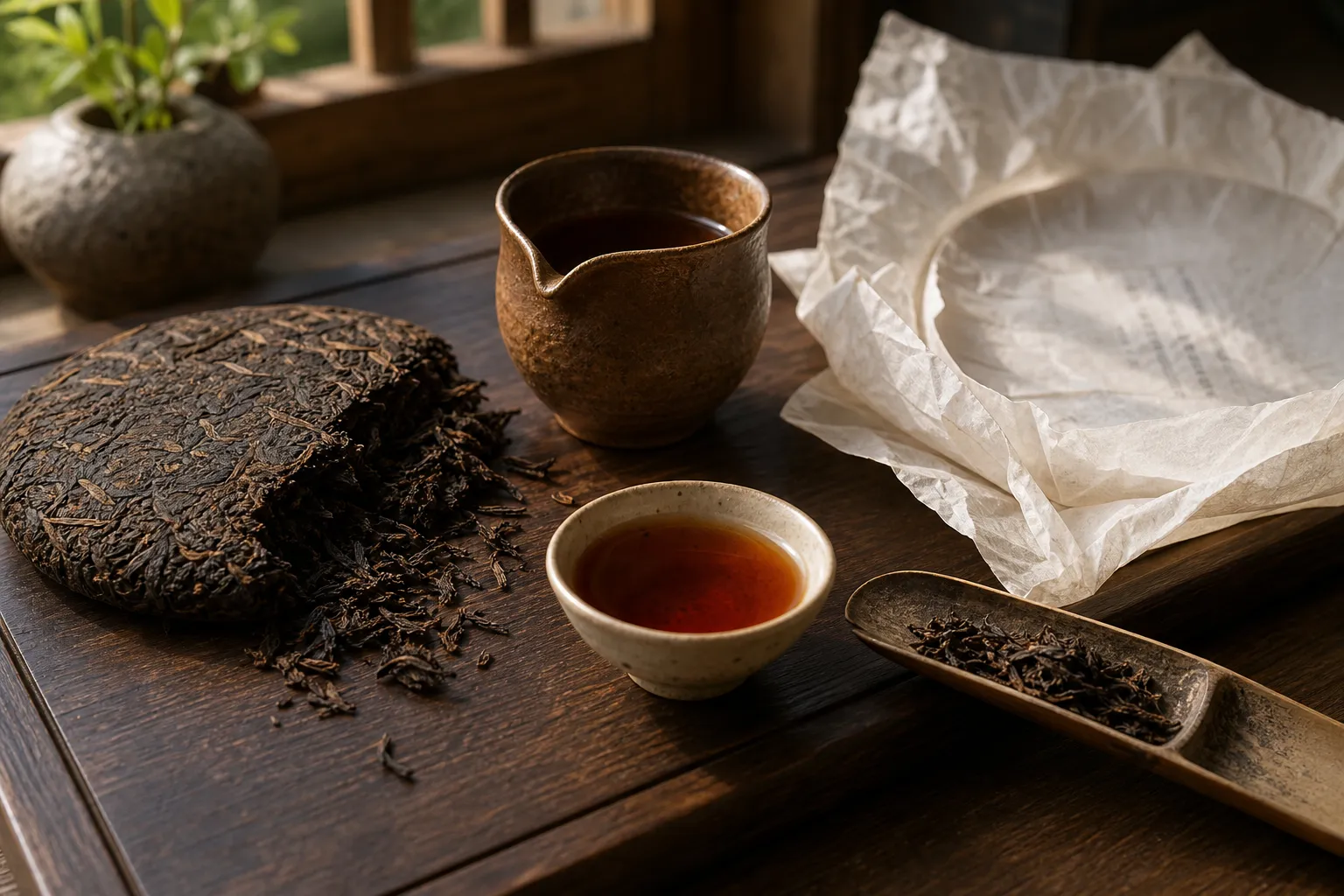
Ripe Pu-erh can keep changing in storage, but it does not age in exactly the same way as every other dark tea. The short answer to does ripe pu-erh age like dark tea is: partly. It belongs in the post-fermented dark-tea family, but its later storage life starts after wet-pile fermentation has already pushed the tea toward a dark, mellow profile.
With time, a good ripe Pu-erh may become more settled: cleaner earthiness, softer wood, rounder body, less obvious fermentation edge. It may also become flat, stale, sour, or musty if the tea or storage conditions are poor. Age is useful context, not the main judge. The better question is what the leaf, aroma, liquor, and storage are showing you.
upward
Read the full overview first
Use the broader guide first if you need the full scope before this page.
Why ripe Pu-erh starts from a different place
Ripe Pu-erh, also called shu Pu-erh, is made through wet-pile fermentation. Moisture, warmth, microbial activity, and time are used during processing to create its dark, mellow, post-fermented character before the tea reaches normal storage.
That makes it different from raw Pu-erh. Raw Pu-erh starts closer to sun-dried green tea material and may change over many years from sharper, greener notes toward deeper, sweeter, darker, or more rounded flavors, depending on storage. Ripe Pu-erh has already gone through an accelerated fermentation stage, so later aging is usually less dramatic. It is often more about settling than transformation.
Research on Pu-erh and other Chinese dark teas supports a careful version of this idea: storage time, microbial communities, metabolites, and volatile aroma compounds can change during processing and storage. Studies of ripe Pu-erh with different storage years describe shifts in aroma compounds and chemical markers. But that does not mean every ripe cake improves in the same direction. The evidence supports “change is possible,” not “older is automatically better.”
A practical comparison
Raw Pu-erh aging
Can involve a longer shift from brighter, more astringent material into a deeper stored profile.
Ripe Pu-erh aging
Often begins after much of the darkening and mellowing has already happened during wet-pile fermentation.
Other dark teas
May also continue to change, but each one has its own processing style, leaf material, compression, microbial history, and storage path.
So ripe versus raw puerh aging is not just a question of years. It is a question of where the tea starts.
What may change as ripe Pu-erh sits
When people talk about shu Pu-erh aging, the most useful signs are sensory. A five-year-old ripe may taste more integrated than a newly made one, especially if the fresh tea carried a strong fermentation aroma. But a poorly stored older tea can be less pleasant than a younger, cleaner one.
What you notice
A helpful storage direction
A warning direction
Dry leaf aroma
Clean earth, wood, dry bark, mild sweetness
Stale basement, sour dampness, chemical odor, smoke, perfume
Warmed leaf aroma
More open, rounded, less sharp
Heavy must, rotten note, obvious contamination
Liquor
Dark red-brown, coherent, full-bodied
Muddy, dull, lifeless, unpleasantly cloudy
Taste
Smoother, less rough, easier sweetness
Flat, dirty, sour, harsh, or thin
Finish
Soft wood, clean earth, mild sweetness
Storage odor that coats the mouth and dominates
The phrase “ripe Pu-erh smoothing” is useful if you keep it modest. Storage can soften the rough edge of newer ripe Pu-erh and let woody or mellow notes feel more integrated. Some drinkers describe this as airing out, settling, or becoming less pile-forward.
But smoothing is not rescue. If the tea starts with thin body, unpleasant sourness, dirty earthiness, or a harsh throat feel, time may soften one edge without making the tea satisfying. Aging does not rescue bad tea; it only gives the material and storage conditions a chance to change.
Compression also matters. Loose ripe Pu-erh may respond to air and storage more quickly. A tightly compressed cake, brick, or tuo may change more slowly and unevenly, especially inside. If you are judging a cake, taste both an outer piece and a slightly deeper piece when possible before deciding how “the whole tea” has aged.
How ripe Pu-erh compares with other dark teas
It is reasonable to compare ripe Pu-erh with other dark teas because they share a post-fermented context. Many dark teas are shaped by microbial fermentation, moisture, storage, and time. They may also share tasting words such as earthy, woody, mellow, thick, sweet, aged, or smooth.
The mistake is turning that shared vocabulary into one aging rule.
Other dark teas can differ in
- leaf material
- region and processing tradition
- degree and style of pile fermentation
- compression form
- microbial community
- drying and storage history
- how much transformation happened before sale
That is why a dark tea storage comparison should not ask only, “How old is it?” A better question is, “What kind of fermentation did it already receive, and what kind of storage has it lived through?”
Two teas can both taste dark and earthy, yet feel very different in the cup. One may be clean, woody, and mellow. Another may be heavier, damper, or more storage-forward. Some drinkers enjoy that stronger stored character; others prefer a cleaner, drier profile. Preference is real, but it is not proof that one path is better for every tea.
Storage matters more than the number on the wrapper
If you are deciding whether to keep ripe Pu-erh longer, look at the storage environment before you trust the age.
Warmth and humidity can speed up storage changes. That is why hot humid tea storage is often associated with faster transformation, darker aroma, and stronger storage character. But more activity is not automatically better. Too much dampness, poor airflow, or odor exposure can push the tea toward dank, stale, or musty notes.
Cool dry tea storage usually moves more slowly. It may keep the tea cleaner and more restrained, but in some homes the tea may change very little over time. The outcome depends on the tea, packaging, room conditions, and how often the storage environment swings.
For home storage, avoid chasing one perfect humidity number. The more useful approach is to control obvious risks:
- Keep ripe Pu-erh away from spices, smoke, perfume, incense, cleaning products, and cooking fumes.
- Avoid direct sunlight.
- Avoid damp rooms, leak-prone closets, bathrooms, laundry areas, and musty basements.
- Keep tea away from heaters, air conditioners, windows, and large temperature swings.
- Watch for pests.
- Do not seal damp tea in a way that traps unwanted moisture and odor.
- Inspect stored cakes occasionally rather than forgetting them for years.
Tea absorbs its surroundings. If the storage area smells like paint, soap, smoke, mildew, or fried food, the tea may pick up that character.
A thermometer and hygrometer can help you notice whether your storage is stable, but they do not replace smelling and inspecting the tea. Numbers are background. The leaf is the evidence you brew.
A quick sensory check before aging it longer
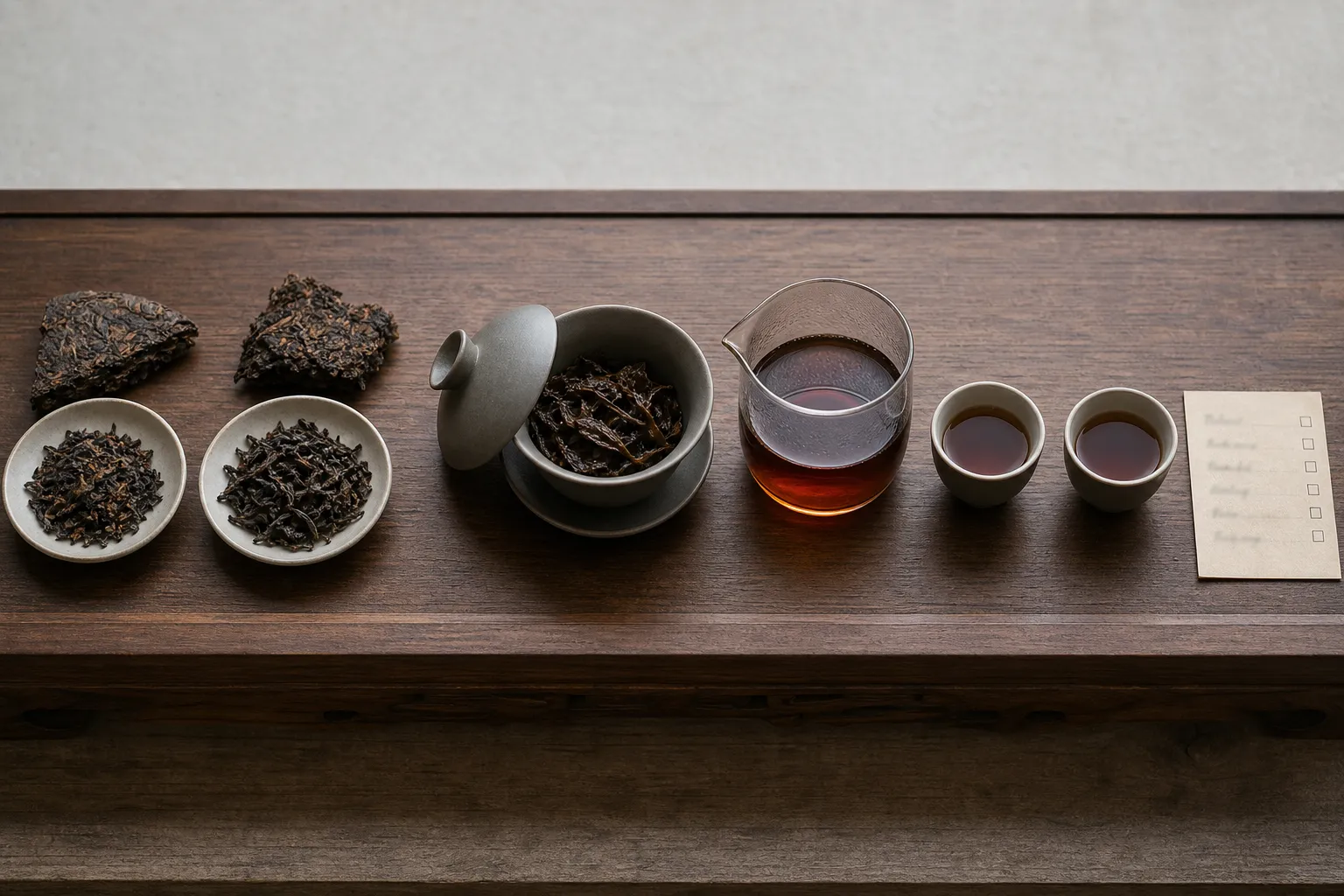
If you have a ripe Pu-erh cake and wonder whether more time will help, do a small tasting instead of guessing from the wrapper date.
Break off a piece carefully, including both surface and slightly inner material if possible. Let the dry leaf sit in a clean cup or gaiwan for a moment. Smell it before adding water. Then warm the vessel, add the leaf, and smell again.
Look for these cues:
-
Dry leaf
Clean earth, wood, dry bark, cocoa-like depth, or mild sweetness can be promising. A stale basement smell, sour dampness, chemical odor, or visible mold is not something to brew through as normal tea.
-
First rinse or first short infusion
Newer ripe Pu-erh may show a stronger fermentation edge. Stored ripe may feel softer or more settled. If the first infusion is storage-heavy, see whether later infusions open into sweetness and body or stay dull and musty.
-
Liquor clarity and body
Ripe Pu-erh liquor is often dark, but dark is not the same as muddy. Notice whether the cup feels round and coherent, or flat, dusty, and lifeless.
-
Earthiness
Earthy can be clean and pleasant, like damp wood after rain or dark soil without rot. It can also be stale, dank, or dirty. That distinction matters more than age.
-
Sweetness and finish
Aged ripe Pu-erh flavor may show accessible sweetness, calm woody depth, or a smoother finish. If the tea only becomes heavier without sweetness or clarity, more years may not improve the experience.
Use a simple brewing setup: a small gaiwan or pot, hot water, and short infusions. Ripe Pu-erh is forgiving, but oversteeping can hide the difference between smoothness and flatness. If you want to compare storage change over time, keep the leaf amount, water, vessel, and steeping time consistent.
Common confusion: older, darker, or better
Older does not automatically mean better
Storage time can change ripe Pu-erh, but improvement depends on material, processing, compression, and storage. A clean three-year-old ripe can be more enjoyable than a neglected fifteen-year-old cake.
Darker does not automatically mean more aged
Ripe Pu-erh is already dark because of wet-pile fermentation. A very dark liquor may reflect processing and leaf style as much as storage age. Judge aroma, body, clarity, and finish, not color alone.
This is about tea quality in the cup
Marketing and research summaries often attach broader claims to Pu-erh, but they do not help you decide whether your stored cake is aging well. For this page, the useful evidence is sensory and storage-based: smell, taste, liquor, environment, and change over time.
When age is not an advantage
Do not keep a ripe Pu-erh only because you hope time will fix it. More storage is unlikely to help if the tea already shows:
- visible mold
- rotten or chemical odor
- strong absorbed smells from storage
- persistent sour dampness
- dirty earthiness that does not clear after early infusions
- thin body with no sweetness or depth
- harshness that feels like poor material rather than fresh fermentation edge
- a flat, dusty cup with no lift
If you see visible mold, smell rotten or chemical contamination, or notice a clearly off storage odor, do not brew it as normal; set it aside. For milder storage dullness, you can air the tea briefly in a clean, odor-free place and taste a small amount later, but do not treat storage defects as normal aging.
The useful conclusion is modest: ripe Pu-erh can age within the dark-tea family, but it does not follow one universal dark-tea formula. Its later life is shaped by wet-pile fermentation, storage humidity, temperature, airflow, compression, odor exposure, and the quality of the tea itself.
If your stored ripe Pu-erh smells cleaner, brews smoother, holds body, and reveals sweetness or calm woody depth, time may be helping it. If it turns musty, dull, sour, or storage-dominated, age is only a number on the wrapper.
Sources
Sources and further reading
Reference links are limited to sources considered suitable for public citation in this page.