
Brewing temperature
What Water Temperature Should You Use for Dark Tea
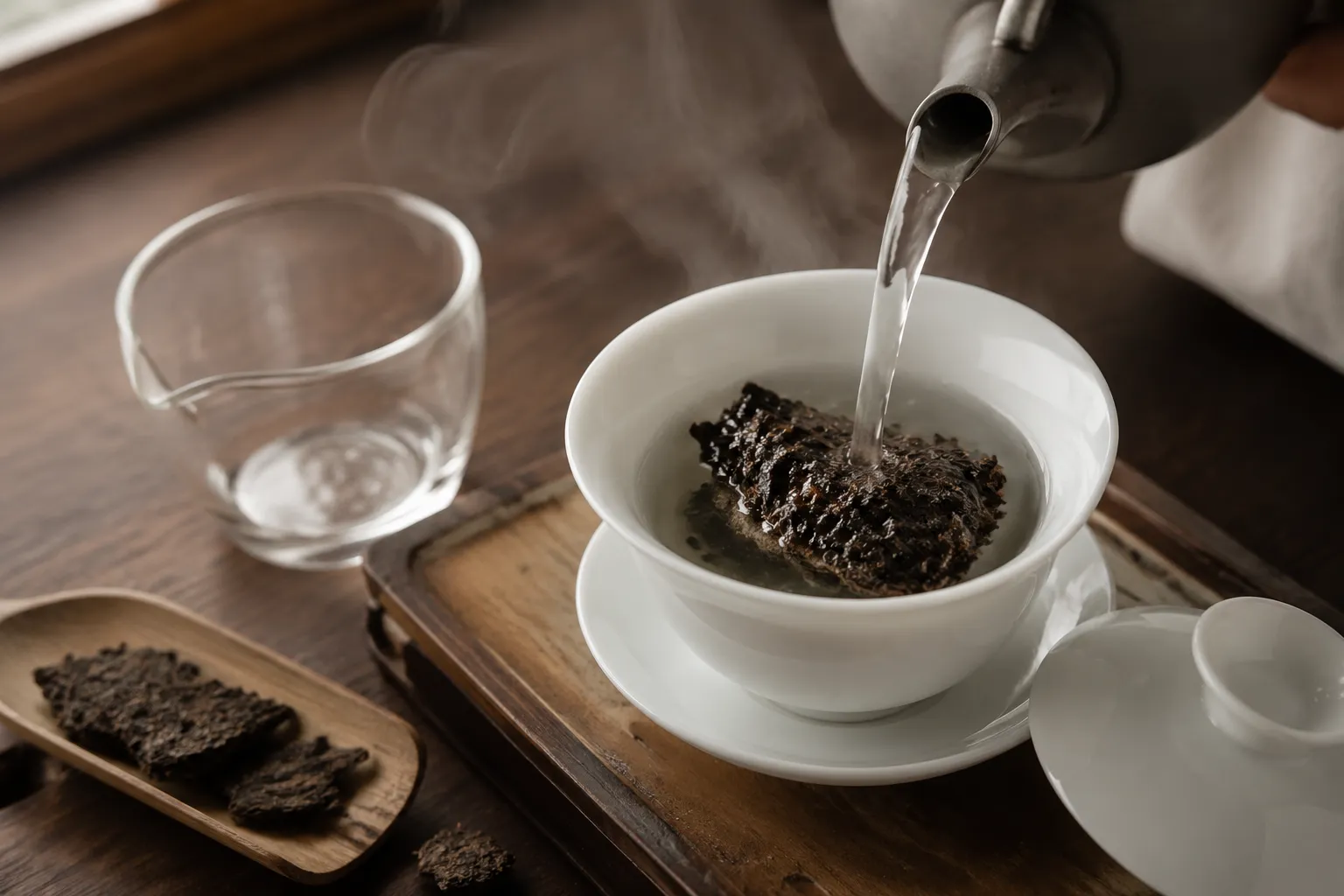
A rinsed piece of dark tea should start to loosen, darken, and give off aroma before you ask the first drinking steep to carry the whole cup. For most everyday dark tea brewing, begin with very hot or near-boiling water, about 95-100°C / 203-212°F. This is especially useful for a compressed cake, a brick, dense broken pieces, or an older tea that opens slowly.
That range is a starting point, not a rule for every leaf. If the liquor tastes thin, flat, or slow to release aroma, use hotter water or add a little time. If the cup turns rough, bitter, heavy, or muddy, shorten the steep first, then lower the temperature slightly if needed. Dark tea water temperature works with leaf form, vessel size, rinse choice, steeping time, storage character, and your own taste.
upward
Start with the broader guide
Use the broader guide first if you need the full scope before this page.
A Practical Starting Range for Dark Tea
Many dark teas handle very hot water well because the leaf is often compressed, chunky, or slow to open. Hot water can help a tight piece separate, bring aroma forward, and give the early steeps more body.
Dense compressed cake or brick
98-100°C / 208-212°F
Does the first drinking steep still taste quiet or woody?
Looser broken compressed pieces
95-100°C / 203-212°F
Does the liquor gain body without turning rough?
Loose-leaf dark tea
90-98°C / 194-208°F
Does the cup become rounded, or does it sharpen quickly?
Very storage-forward tea
90-96°C / 194-205°F
Does heat make the storage note cleaner or heavier?
Strong leaf in a small gaiwan
90-96°C / 194-205°F
Does a short steep still become too intense?
These are brewing ranges, not quality grades. A tea that tastes better below boiling is not automatically better or worse than one that needs near-boiling water. It may simply be looser, more broken, easier to extract, or better suited to a longer steep.
If your kettle does not show exact temperature, use timing and behavior. Freshly boiled water poured right away sits near the top of the range. Water that rests briefly after boiling, especially in an open vessel, drops lower. The useful question is not whether you hit a perfect number; it is whether the next steep tastes clearer, fuller, or better balanced.
Why Compressed Dark Tea Often Likes Hotter Water
Compression changes how water reaches the leaf. A tight brick chip or dense cake fragment does not behave like loose leaf. The outer layers may darken quickly while the center stays dry or only partly opened. Near-boiling water can help the piece separate and infuse more evenly.
This is where a rinse helps. A short rinse with very hot water warms the vessel, wets the compressed surface, and gives dense pieces a head start before the first drinking steep. If the rinse comes off pale and the leaf still looks clamped together, keep the water hot and the first steeps short.
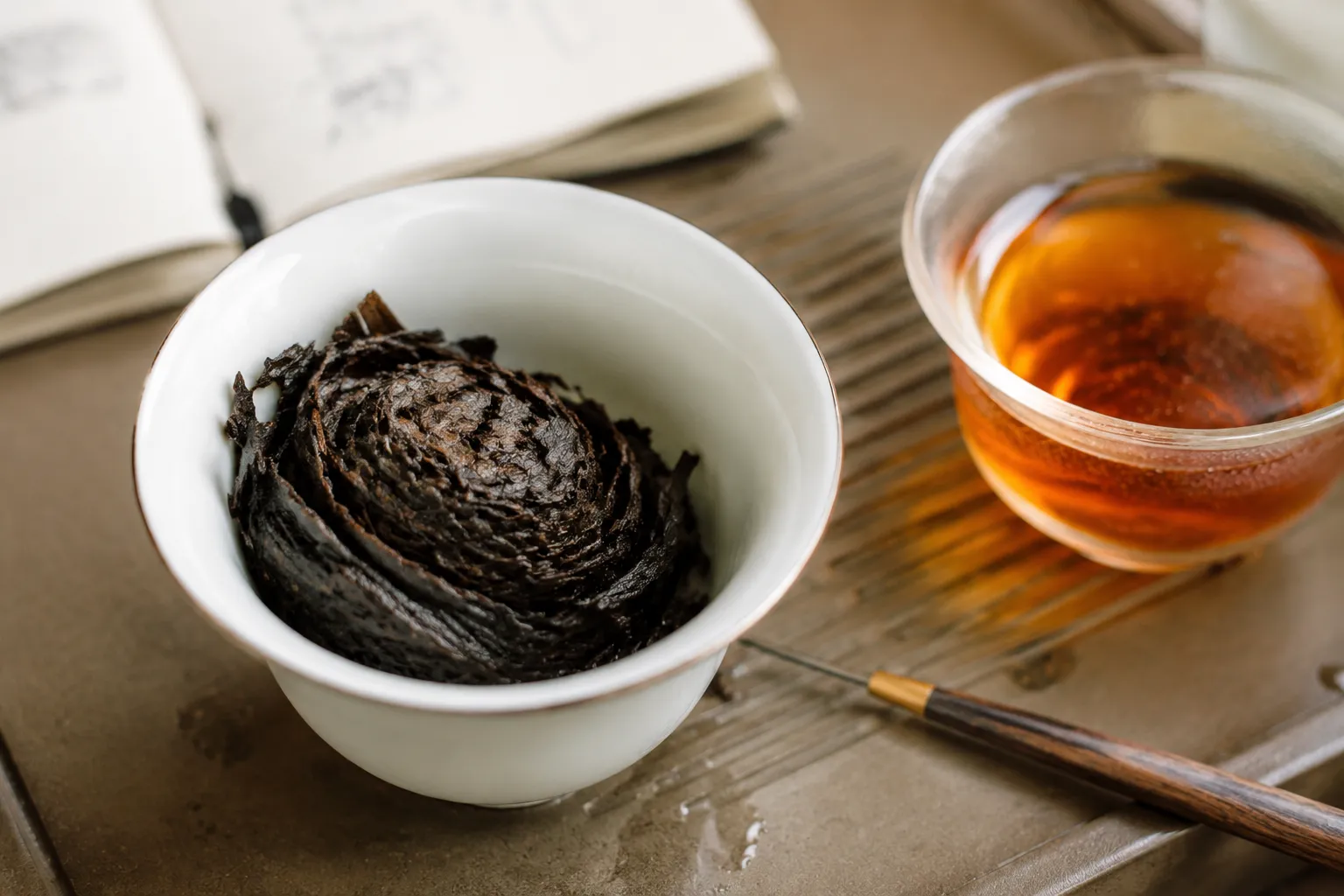
Piece stays hard and closed
Water has not reached the inner leaf. Use very hot water and short early steeps.
Edges loosen but center stays tight
Tea is opening gradually. Keep the water hot, and extend only slightly.
Leaf breaks apart quickly
Extraction may speed up. Shorten the next steep or cool the water a little.
Liquor darkens immediately
Strength is building fast. Reduce steep time before changing temperature.
A common mistake is using cooler water, then making the steep much longer. That can work for some teas, but with dense pieces it may give a cup that is both under-opened and heavy: the outside contributes thickness while the center stays quiet. Hotter water with shorter steeps often gives more control.
When to Lower the Temperature
Boiling water is common in dark tea brewing, but maximum heat does not improve every cup. Some teas taste cleaner slightly below boiling, especially when the leaf is loose, broken, heavily dosed, or quick to release color and strength.
Bitter edge arrives before aroma
Lower the water slightly or shorten the steep.
Liquor feels rough on the tongue
Pour sooner, use less leaf, or reduce heat.
Earthy note becomes heavy and dull
Try slightly cooler water and a shorter contact time.
Sweet finish disappears
Reduce heat or steep less aggressively.
Cup turns very dark too fast
Shorten the steep first, then adjust water.
Do not treat bitterness as only a temperature problem. Leaf amount, broken material, steep length, and vessel size can all push the cup in the same direction. If the brew is too heavy in a gaiwan or small pot, pour sooner first. Lower the water temperature next if the roughness remains.
Temperature and Steeping Time Move Together
Near-boiling water for ten seconds is not the same as near-boiling water for three minutes. Cooler water with a long steep can still pull a lot from the leaf, and sometimes it makes the cup feel flatter because aroma and body do not rise together.
For small-vessel brewing, very hot water usually pairs best with short steeps. You get several chances to adjust. If the first steep is thin, add a few seconds or keep the water hotter. If the second steep suddenly becomes heavy, pour sooner.
For mug or large-pot brewing, be more conservative. Long contact time gives the leaf more opportunity to release strength. Near-boiling water over a generous amount of loose or broken dark tea can become thick, bitter, or muddy after several minutes. In that setup, slightly cooler water or less leaf may give a steadier cup.
A simple path works better than chasing one exact number:
- Start hot, especially for compressed or slow-opening tea.
- Keep the first steeps short.
- Taste for body, aroma, roughness, and finish.
- If the tea is quiet, increase heat or time.
- If the tea is harsh, reduce time, heat, or leaf amount.
That keeps temperature connected to the cup instead of treating it as a separate rule.
What Storage Character Changes
Storage character can shift how very hot water behaves. A clean, mellow stored tea may open well with near-boiling water, giving a rounded liquor and deeper aroma. A tea with a strong storage note may become heavier under the same heat. The issue is not whether the tea is broadly called aged; it is what the cup does when hot water meets the stored leaf.
Smell the dry leaf, then the warmed leaf. If the aroma is woody, sweet, dry, or gently earthy, hotter water may help the tea show body. If the warmed leaf smells damp, heavy, or closed, start a little cooler, use a quick rinse, and keep the early steeps short.
Storage-forward teas can also change across infusions. The first steep may carry the strongest storage aroma, while later steeps become cleaner and sweeter. If that happens, you can begin slightly cooler, then return to hotter water after the leaf opens. Even a small drop from boiling can change the feel of the liquor.
The practical boundary is simple: do not use temperature to hide a tea that smells clearly unpleasant to you. Brewing can change intensity and balance; it does not make every storage note desirable.
Common Confusion About Boiling Water
Formal tea liquor preparation can use boiling water in a controlled sensory setting. ISO 3103 is useful only as a narrow reference point here: boiling water exists in one repeatable preparation method. It does not decide how every dark tea should be brewed for everyday drinking.
A standards method and a tea table have different goals. One aims for repeatable preparation. The other aims for a good cup from the leaf, vessel, water, and steeping rhythm in front of you.
General tea temperature charts can also mislead when they flatten all dark tea into one line. A loose dark tea in a large mug does not need the same handling as a tight brick chip in a small gaiwan. A single chart cannot read compression, storage aroma, broken leaf, or your cup result.
Hotter water often extracts faster and can bring more strength, body, aroma, bitterness, or roughness, depending on the tea and method. The available public references do not support one fixed dark tea brewing temperature for every tea. Use the mechanism as a reason to adjust, not as a promise of one correct result.
Handling Very Hot Water Carefully
Very hot water is ordinary in many tea setups, but it needs calm handling. Near-boiling water, preheated cups, gaiwans, kettles, and rinse water can all scald skin if handled carelessly. Public burn-prevention guidance supports keeping hot liquids controlled while pouring, carrying, and serving.
For dark tea, that means placing the kettle securely, avoiding an overfilled gaiwan, pouring rinse water away from your hand, and remembering that a preheated vessel can be hot before the drinking steep even begins. With small cups, leave space at the rim so the liquor can be lifted without spilling.
This should stay beside the brewing decision, not take over the article. Very hot water can be useful for dark tea; handle it as deliberately as you handle the leaf.
A Simple Temperature Adjustment Checklist
Use this when the cup is close, but not quite right:
Thin
Use hotter water or steep slightly longer.
Flat
Increase temperature, especially for compressed pieces.
Slow to open
Add a hotter rinse or keep early steeps very hot.
Harsh
Shorten the steep before changing everything.
Bitter
Lower temperature slightly or use less leaf.
Too heavy
Pour sooner, reduce leaf, or cool the water a little.
Aromatic but weak
Keep heat high and extend by a few seconds.
Thick but dull
Reduce steep time and check leaf amount.
For most dark tea, the working answer remains very hot or near-boiling water, especially for compressed, dense, or slow-opening forms. Let that be the first setting, then let the liquor correct you. The next cup will usually tell you whether to move the kettle hotter, shorten the steep, or give the leaf a gentler pour.
Sources
Sources and further reading
Reference links are limited to sources considered suitable for public citation in this page.