
Brewing notebook
How to Keep Dark Tea Consistent From One Brew to the Next
Consistent dark tea brewing starts with making the controllable parts steady: the same vessel, water volume, measured leaf amount, water temperature habit, steeping timer, and note format. The tea may still change from session to session because of compression, broken leaf, storage condition, age, and personal taste. The point is not to make every cup taste identical. The point is to make each change traceable.
If today’s cup is thinner, heavier, sweeter, sharper, or flatter than the last one, your notes should help you see whether the shift came from leaf, water, time, temperature, vessel size, or the tea itself.
upward
Read the full overview first
Use the broader guide first if you need the full scope before this page.
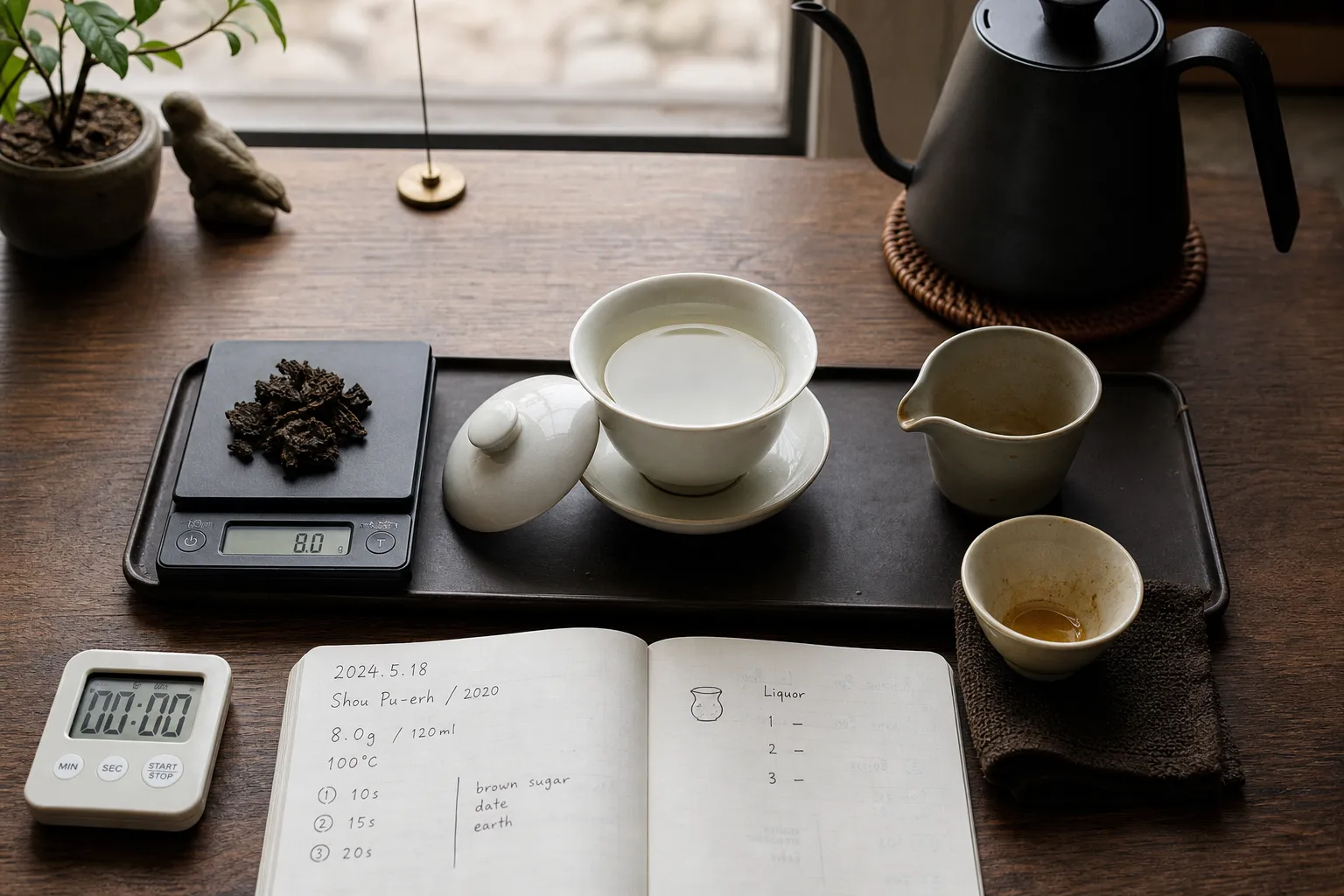
Start With One Repeatable Brewing Setup
A repeatable dark tea recipe does not need to be complicated. It just needs to be specific enough that you can return to it.
For each tea, record:
- Tea name or simple description
- Form: loose leaf, brick, cake, tuo, basket, or another shape
- Leaf amount by weight, or a very consistent scoop if you do not use a scale
- Vessel size and water volume
- Water temperature target or kettle habit
- Whether you rinse the leaves
- Steeping time for each infusion
- Liquor color, aroma, body, aftertaste, and rough edges
A scale helps because “a small chunk” of compressed tea can vary more than it looks. If you do not weigh the leaf, keep the substitute steady: same spoon, same visual level, same type of broken piece, and same vessel.
Vessel size is easy to overlook. A five-second difference in a small gaiwan can show up more clearly than the same difference in a large mug. When you are learning one tea, keep the vessel and fill level steady until you understand how the leaf behaves.
Leaf amount
Record weight or a consistent scoop. This keeps strength comparable.
Water volume
Record vessel size or fill line. This controls concentration.
Temperature habit
Record kettle setting or cooling time. This makes extraction easier to compare.
Steep time
Record a timer for each infusion. This shows where strength changed.
Tea form
Record loose, compressed, broken, or whole leaf. This explains faster or slower release.
Sensory cues
Record color, aroma, body, and finish. This connects the numbers to the cup.
This is a repeatability frame, not a rule for every dark tea. Different teas may need different starting points, but each one becomes easier to understand when the record stays steady.
Keep the Main Variables Still
The main dark tea brew variables are leaf amount, water volume, water temperature, steeping time, vessel, and leaf condition. If several of them change at once, you may get a better cup by accident, but you will not know why.
Leaf amount sets the basic intensity. More leaf often gives a denser cup, but it can also bring out roughness, heaviness, or a faster-darkening liquor, depending on the tea. Less leaf can feel gentler, but it may also taste thin or distant. If the last session felt close, keep the leaf amount still before changing anything else.
Water volume works together with leaf amount. The same leaf in a smaller vessel will not taste the same as that leaf in a large cup. Use a marked fill line, a familiar cup, or a measured pour if you want repeatable dark tea sessions.
Water temperature is best treated as a plan rather than a dramatic rule. Some brewers use freshly boiled water for many dark teas; others let the water cool slightly when a tea turns rough too quickly. For comparison, the important thing is consistency. If one session uses water straight from the boil and the next uses water that sat for several minutes, you changed a major variable.
Steeping time is the easiest variable to control and the easiest one to forget. Dark tea steeping time notes should include each infusion, not only the first. One tea may stay calm early and become heavy later. Another may open slowly and need more time after the first steep.
Leaf condition can change extraction before the kettle is involved. A tight piece of compressed tea may release slowly at first. Broken flakes, powder, or a loosened edge may darken the liquor faster. If one session uses a dense inner chunk and another uses crumbly outer material, the difference may not come from your brewing method.
Read the Cup, Not Just the Numbers
Numbers help you repeat a setup, but the cup still has to be observed. Dark tea sensory cues make the notes useful because they show how the brew felt in the mouth and nose.
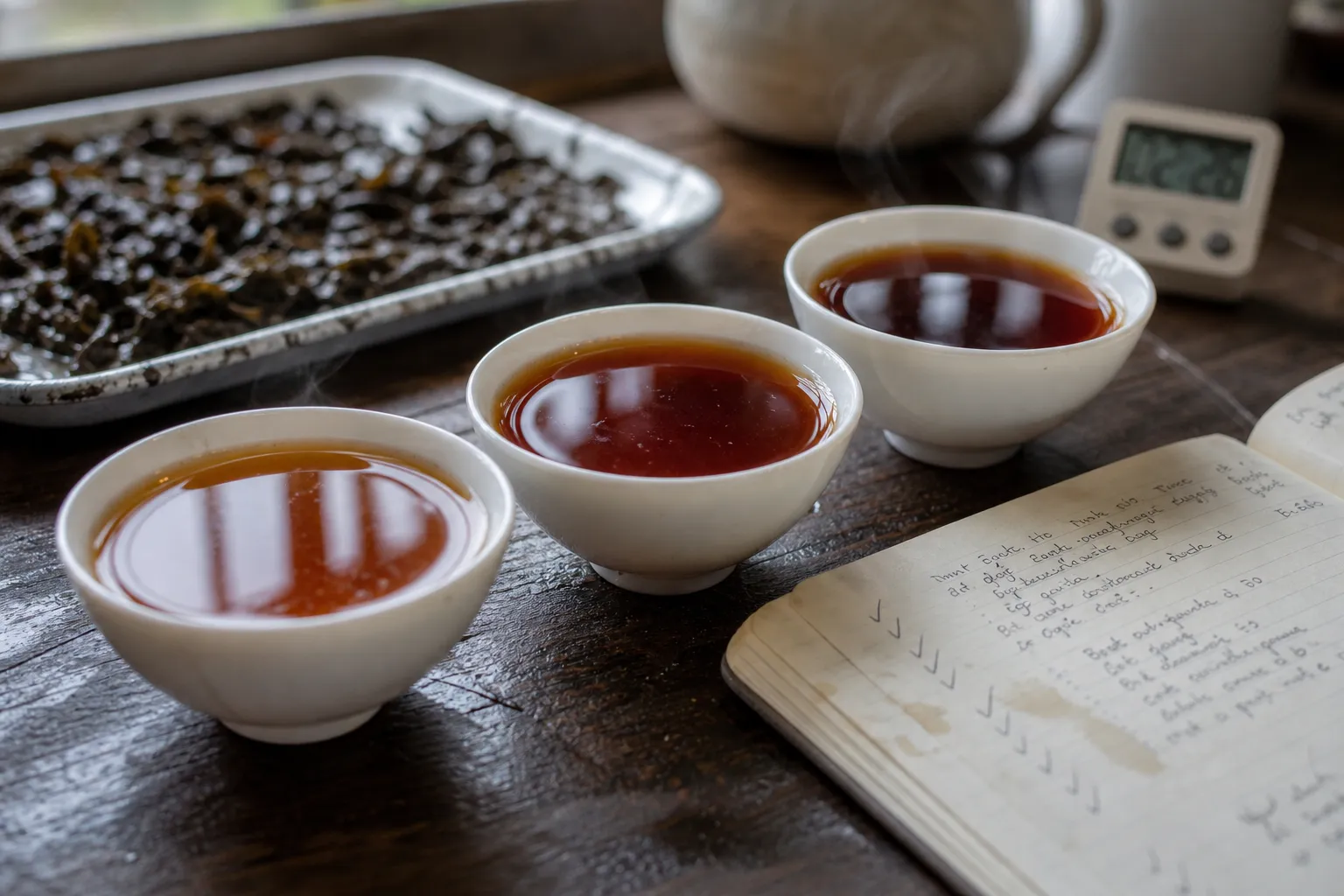
Start with liquor color. It is not a score, and it does not tell the whole story, but it is a visible clue. If the same tea, vessel, and steeping time produce a much darker liquor than last time, check for more broken leaf, hotter water, a longer pour, or less water. If the liquor is much paler, check for less leaf, cooler water, a shorter steep, or a tightly compressed piece that has not opened.
Then note aroma in plain language: earthy, woody, sweet, grain-like, dry, damp, mellow, sharp, stale, clean, or heavy. You do not need ornate tasting language. You need words that help you recognize the same tea again.
Mouthfeel is often more useful than a long flavor list. Ask whether the tea feels thin, rounded, thick, drying, smooth, rough, soft, or heavy. A cup that smells pleasant but feels watery may need more time, more leaf, or less water next time. A cup that tastes acceptable but feels too drying may need a shorter steep or slightly less leaf.
Aftertaste belongs in the notebook too. Does the cup fade quickly? Does sweetness remain? Does the finish feel clean, flat, earthy, or too heavy? These impressions are subjective, but they become useful when the brewing variables stay steady.
Cup results and first adjustments
Thin, pale, fades quickly
Add time before changing leaf amount.
Rough, drying, too dark
Shorten time or use slightly less leaf.
Flat but not rough
Check water temperature habit and leaf condition.
Heavy or muddy
Reduce leaf, shorten later steeps, or separate broken dust.
Pleasant aroma, weak body
Keep temperature steady and increase time gradually.
Change one variable at a time. If you add leaf, raise water temperature, and lengthen the steep in the same session, the cup may improve, but the notes will not show which change mattered.
Adjust Between Brews in Small Steps
The first session is your baseline. It does not have to be “right.” It only has to be clear enough to compare against.
If the tea is too light, first extend the steeping time rather than rebuilding the whole recipe. Time is easy to reverse in the next round. If a small increase makes the liquor fuller without roughness, the original steep was probably too brief for that tea and vessel.
If the tea is too strong, shorten the next steep before changing the whole setup. “Strong” can mean concentrated, drying, muddy, bitter-edged, or simply more intense than you prefer. Name the problem in your notes. “Dark liquor, drying finish, heavy aftertaste” is more useful than “too strong.”
If the tea is uneven from cup to cup, check the leaf. Compressed dark tea may not open evenly, especially when the piece is dense or irregular. A rinse, a short pause after wetting, or gently loosening the piece before brewing can make the session easier to read.
If the first cup is pleasant and later cups become heavy, keep the early setup and shorten later infusions. Consistency from one brew to the next includes the whole session, not only the first pour.
If a tea tastes dull no matter what you change, stop adjusting for the moment. Your palate, water, vessel, storage setting, and expectations may all be involved. Make one or two careful changes, record them, and return another day.
What Commonly Breaks Consistency
The most common misunderstanding is treating consistency as sameness. Dark tea is not a sealed beverage formula. Leaf form, compression, storage aroma, broken material, water, and preference can all shift the cup. Consistency means you know what you did, not that every session tastes identical.
Changing equipment casually can also blur the result. A new pot, cup, kettle, or strainer may alter heat retention, volume, pour speed, and leaf movement. Special equipment is not required, but stable tools give clearer feedback when you are trying to understand one tea.
Rinse habits need to be recorded. Some drinkers rinse compressed dark tea; others do not, depending on the tea, form, and routine. If you rinse, note the approximate time, water temperature habit, and whether you drink or discard that liquid. If you skip the rinse next time, you have changed the start of the session.
Storage can affect what you notice, but this page should not turn that into detailed storage claims. Keep the practical lesson simple: if a tea smells different before brewing, record that before blaming the steep time. Dry leaf aroma, wrapper scent, container odor, or storage space can shape how you read the cup.
Avoid chasing a method that claims to solve every dark tea. A compact brick, loose aged leaf, broken sample, and tightly stored cake may not respond the same way. A consistent method is a measuring tool, not a command for how every tea should taste.
A Short Consistency Checklist
Before brewing:
- Use the same vessel and fill level as last time.
- Measure the leaf amount as consistently as you can.
- Follow the same water temperature habit.
- Time each steep instead of guessing.
- Record whether the leaf is compressed, loose, broken, or dusty.
- Note liquor color, aroma, body, and finish before judging the tea.
After brewing, choose one adjustment for the next session. If the cup is thin, add time. If it is heavy, shorten time or reduce leaf. If it is rough, check whether the steep ran long, the leaf was very broken, or the water habit changed. If it is flat, keep the recipe stable and revisit the tea before making a large conclusion.
The most useful dark tea brewing notebook is not a diary of perfect cups. It is a record of controlled changes. When your notes show the same vessel, same leaf amount, same water plan, and same steeping sequence, the next adjustment becomes smaller, calmer, and easier to trust.
FAQ
Is there one correct ratio for consistent dark tea brewing?
No. A ratio is only useful when it matches the tea, vessel, and style of brewing. Start with one measured setup, keep it steady, and adjust from the cup you actually taste.
Should I change leaf amount or steeping time first?
Change steeping time first in most everyday brewing setups. It is easier to adjust and easier to reverse. Change leaf amount when the whole session feels too thin, too dense, or out of balance.
Does darker liquor mean better dark tea?
Not by itself. Darker liquor can come from more leaf, longer time, hotter water, smaller water volume, broken material, or a tea that releases quickly. Use color as a clue, then check aroma, body, and finish.
What if the same tea tastes different even when I follow my notes?
That can happen. Compression, uneven leaf pieces, storage aroma, water, kettle behavior, and your own palate can all affect the session. Good notes do not remove variation; they make variation easier to understand.