
Label reading
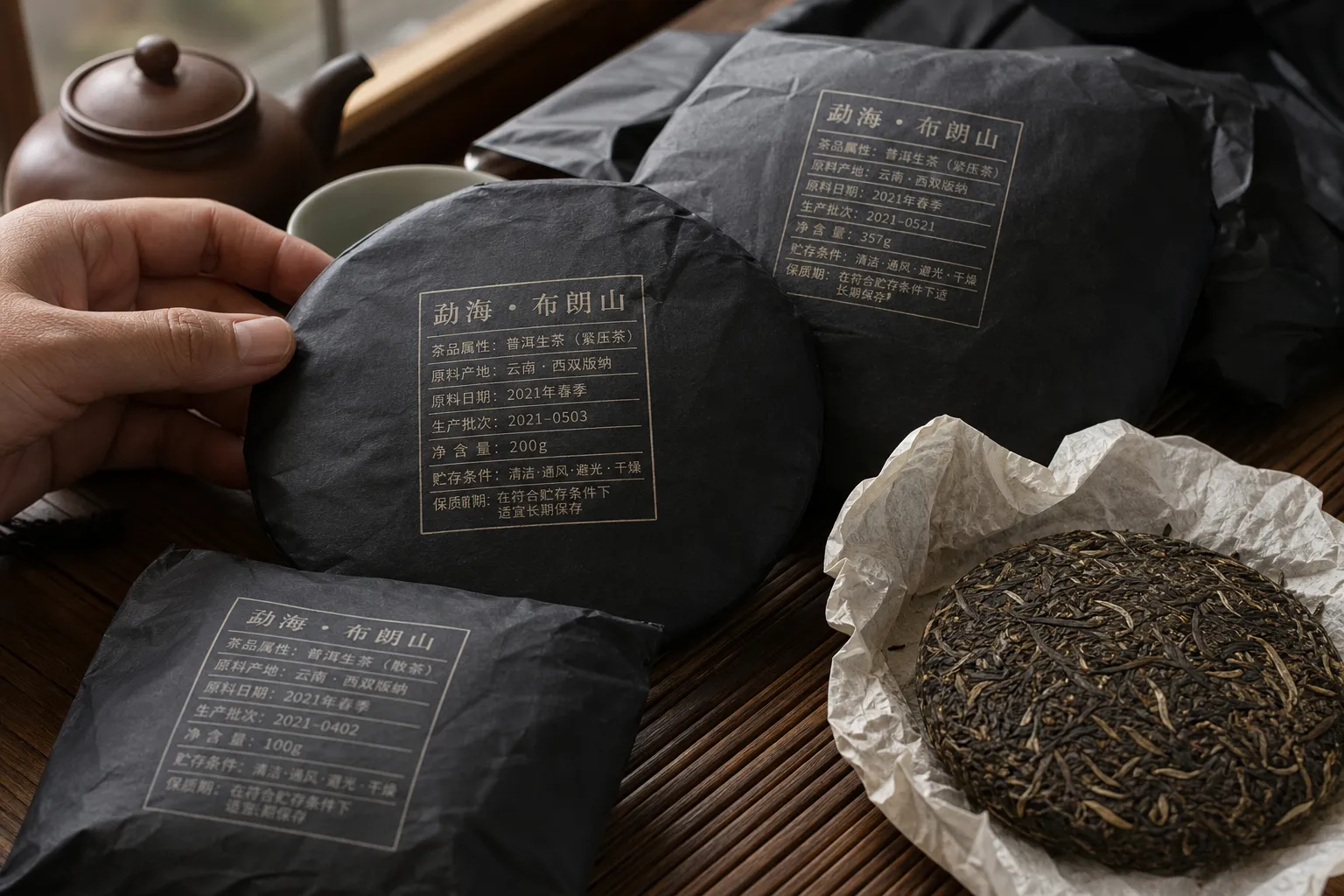
What Region Names on Dark Tea Labels Actually Indicate
A dark tea region label is a place-name clue, not a full judgment of the tea. It can point to a broad origin area, a regional product identity, a style association, or the way a seller wants to frame the tea. It does not, by itself, prove the exact farm, mountain, grade, storage condition, flavor, age, or authenticity of the leaf in your cup.
When you see names such as Anhua, Yunnan, Liubao, Hunan, Guangxi, or another dark tea place name, read that name as one layer of the wrapper. Then separate it from the form name, producer, date or batch, processing terms, storage language, and the actual condition of the tea.
upward
Start with the broader guide
Use the broader guide first if you need the full scope before this page.
Read the region name as one label layer
Dark tea labels often carry several kinds of information at once. A place name may sit beside a product form, a producer name, a production year, a batch code, a storage phrase, and a few market-friendly claims. They may look equal on the wrapper, but they do different jobs.
Broad origin zone
The tea is being associated with a province, county, city, production area, or trade place.
It does not prove: exact garden, village, mountain, or leaf source.
Regional product identity
The name is tied to a known dark tea family or local naming habit.
It does not prove: that every tea with the name tastes the same.
Style cue
The place is associated with certain forms, processing habits, or market expectations.
It does not prove: that the tea was stored well or will brew easily.
Marketing shorthand
The name is used to create recognition, history, or prestige.
It does not prove: that the tea is high grade, cleanly stored, well aged, or worth more.
This is why tea origin label meaning is rarely as simple as “this place equals this flavor.” Place matters, but it sits inside a larger chain: raw material, processing, compression, storage, age, handling, and brewing.
A region label can still be useful. It can tell you where to begin a comparison, help you group teas on a shelf, or explain why a seller describes a tea as part of a regional tradition. It should not be the only reason you trust a wrapper.
Separate place names from form names
The most useful move when reading dark tea labels is to ask: which words are place names, and which words are product-form names?
For example, an Anhua Fu Brick label combines at least two signals:
Anhua: a place or regional identity associated with Anhua County, Yiyang, Hunan in common dark tea terminology.
Fu Brick: a product form or product family, usually presented as a brick-style dark tea.
Producer, factory, date, batch, or storage note: separate practical information that affects how you evaluate the tea.
The same pattern appears across dark tea naming. A wrapper may use a region name beside terms such as brick, roll, basket, loose tea, raw-material language, or processing language. In Anhua-related naming, terms such as Fu Brick, Hei Brick, Hua Brick, Qianliang, Huajuan, Xiangjian, Tianjian, Gongjian, and Shengjian are better read as form or product-family signals, not as additional place names.
That distinction matters because form affects handling. A compressed brick may need a different breaking method from loose or basket-style tea. A dense roll may open more slowly than a loosened piece. A small broken corner from a brick may brew faster than an intact chunk. None of those differences is explained by the region name alone.
For everyday label reading, make a quick split:
- Where is the place signal?
Look for province, county, city, mountain, village, or region language. - What is the form signal?
Brick, roll, cake, basket, loose tea, or named product family. - Who made or packed it?
Producer or factory information is separate from origin language. - When was it made or packed?
A production date, storage year, or batch code gives a different clue from the region name. - What process or storage words appear?
Terms such as pile-fermentation, raw material, aged storage, warehouse, or “Golden Flower” language need their own reading.
This small separation prevents a common mistake: treating one attractive place name as if it answers every practical question.
What a region name can suggest about flavor
A region name can give you a starting expectation. Some dark tea place names are associated with certain materials, local product forms, or processing habits. A puerh origin label, for instance, is often discussed in relation to Yunnan place language and raw-material identity. Anhua dark tea label language often appears beside brick, roll, and loose or basket-style product families. Liubao is commonly used as both a place-linked name and a product identity in market language.
Those associations can help you choose what to compare. If you are tasting two teas from the same named region but different forms, you might notice how compression and processing change the cup. If you are comparing two Fu Brick teas from different production areas, the region language may help organize your notes.
But the region name does not give you the cup by itself.
Flavor can change with:
- leaf grade and raw material selection;
- whether the tea is loose, brick, roll, cake, or broken;
- processing conditions;
- fermentation and drying;
- age and storage environment;
- humidity, airflow, light exposure, and packaging;
- how much leaf you use;
- water temperature, steeping time, and vessel size.
For this reason, a dark tea place name is better read as a context clue, not a tasting note. It may support an expectation of earthy, woody, mellow, sweet, mineral, smoky, sour, or dried-fruit notes only if the rest of the label and the tea itself point in that direction. Even then, use the cup as the final check.
When you brew, let the tea answer the label:
- If the liquor is thin, increase leaf amount or steeping time before blaming the region.
- If the cup is harsh, reduce steeping time or use slightly less leaf before assuming origin is the cause.
- If the aroma is stale, damp, sharply sour, or unpleasantly musty, look more closely at storage and condition.
- If the tea opens slowly, compression may be the main reason rather than region.
In many everyday brewing setups, storage and form will speak louder than the region name.
Common confusions on dark tea labels
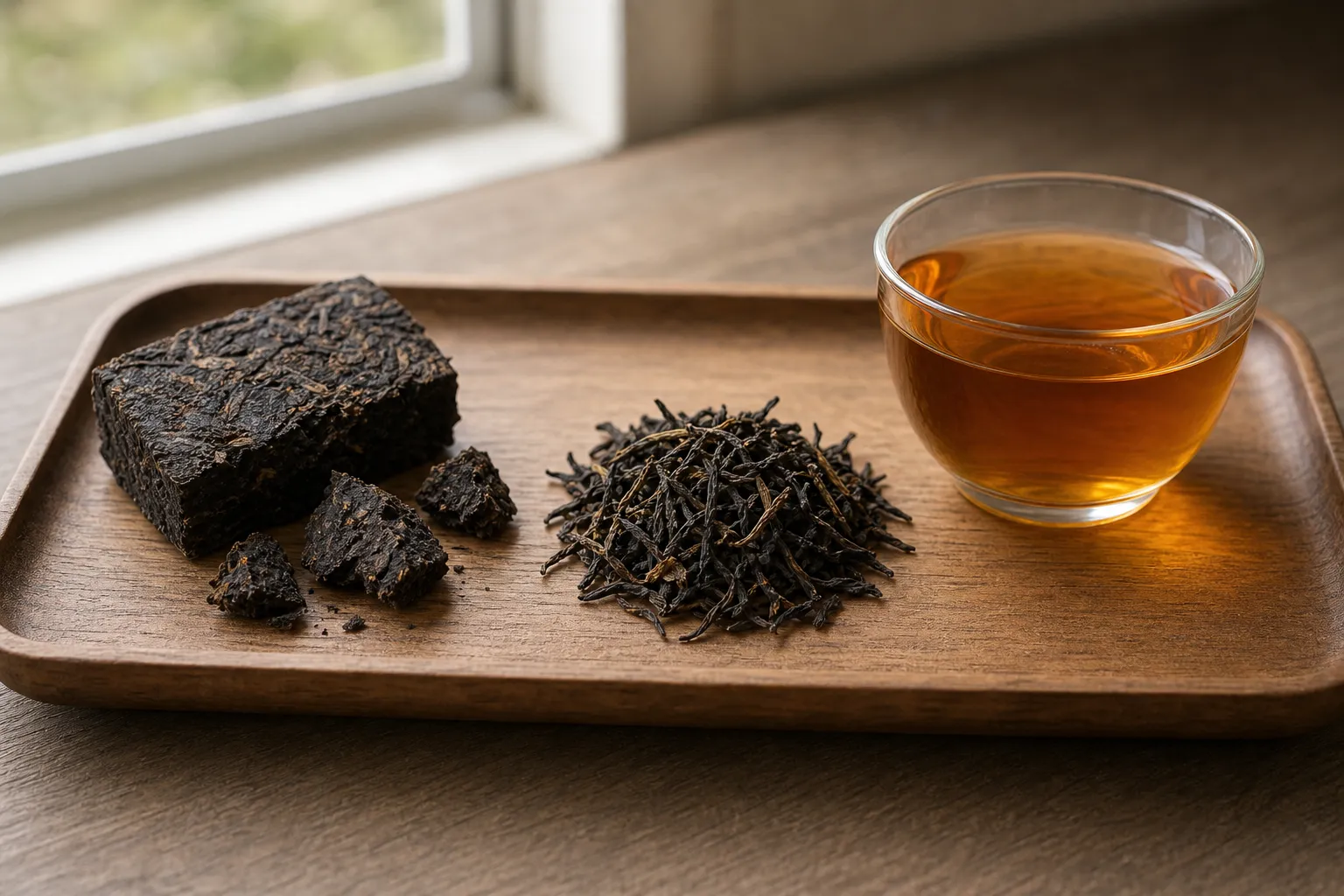
Dark tea labels become confusing because cultural language, product taxonomy, and sales language often sit on the same wrapper. A reader may see a grand regional name, a compressed form, a historical phrase, a processing term, and a flavor promise all in one place.
Here are the confusions worth catching.
Region name versus exact origin
A region label can be broad. It may refer to a province, county, city, production area, or regional product identity. It does not necessarily identify one mountain, village, tea garden, or farm.
A more specific label may name a mountain or smaller area, but the wrapper is still a package claim. Without stronger traceability information, treat it as a useful detail rather than complete proof.
Region name versus product form
“Anhua” and “Fu Brick” do not do the same job. One points toward place identity; the other points toward form or product family. The same principle applies whenever a place name appears beside words such as brick, roll, basket, cake, or loose tea.
This matters for brewing. A dense compressed piece may need a rinse or longer first infusion to open. A looser tea may release flavor quickly. Those are form and condition issues, not just region issues.
Region name versus producer
A place name is not the same as a producer name. Two teas may carry the same regional identity but come from different producers, factories, or batches. Their leaf selection, processing control, compression, and storage may differ.
If the producer or batch information is missing, the region name has to do more work than it should. That does not make the tea bad, but it gives you less information to compare.
Region name versus storage language
Storage can change dark tea dramatically. A wrapper may name a region, but the cup may be shaped by years of humidity, airflow, heat, packaging, or warehouse conditions.
Look for storage clues in both words and senses. Descriptions such as dry-stored, aged, warehouse-stored, or traditionally stored are useful only if they match the tea’s condition. A clean aged aroma can be deep and earthy; a damp-basement smell, chemical packaging note, smoke damage, or obvious spoilage is a separate warning sign.
Region name versus “Golden Flower” language
Some Fu Brick teas are associated with visible yellow speckling often marketed as “Golden Flower.” Readers may also encounter the scientific name Eurotium cristatum in discussions of Fu Brick tea. For label reading, keep this descriptive: it can be a known feature in certain Fu Brick contexts, but it is not a universal quality signal.
Do not judge a brick by speckling alone. Look at the whole tea: aroma, dryness, compression, storage condition, producer information, date or batch, and how the liquor behaves after brewing.
A practical way to read a dark tea region label
When a wrapper looks impressive but unclear, slow the label down into parts. You do not need to solve the entire history of the tea. You only need to know what each claim is doing.
Use this order:
- Find the place name
Is it a province, county, city, mountain, village, or trade-place identity? If the label says Anhua, Yunnan, Guangxi, Hunan, or another regional term, mark it as the place layer. - Find the form name
Is it brick, roll, cake, loose, basket, Fu Brick, Qianliang, Huajuan, or another product-family term? This tells you more about handling and brewing than the place name does. - Find producer, factory, date, or batch
A dark tea producer date batch line may be small, but it helps you compare teas more fairly. Same region, different producer and year can mean a very different cup. - Identify processing terms
Dark tea processing terms such as pile-fermentation, dark mao tea, raw material, or post-fermented language point toward how the tea was made or described. They are not flavor proof, but they help you understand the category. - Read storage language cautiously
Dark tea storage language can be helpful, but only if the tea’s aroma and condition agree. Clean, dry, woody, mellow, or earthy notes are different from damp, sharply sour, or stale off-notes. - Separate description from promotion
If the label says where the tea is from, what form it is, who made it, and when it was produced, that is practical information. If it leans mainly on prestige, romance, broad value language, or vague superiority, treat it as market framing. - Let brewing confirm or challenge the label
Use a small first session to observe. Does the leaf open evenly? Is the liquor clean? Does the aroma match the storage claim? Does the cup become smoother with shorter or longer infusions? These observations are more useful than relying on the region name alone.
What the region label cannot settle for you
A region label has real use, but its limits are just as important.
- It does not settle authenticity by itself.
- It does not tell you the exact grade.
- It does not confirm storage quality.
- It does not promise a clean aroma.
- It does not tell you whether the tea will suit your taste.
- It does not prove that a famous place name equals better tea.
- It does not turn historical reputation into modern cup quality.
The better question is not “Is this region name impressive?” but “Does the rest of the label give enough support for the claim, and does the tea itself behave well when inspected and brewed?”
For a simple buying or tasting decision, the strongest label is usually not the loudest one. It is the one that lets you separate place, form, producer, date, processing, and storage without guessing too much.
If the label only gives a region and a grand claim, be cautious. If it gives a region plus clear form, producer, date, batch, and storage context, you have a better basis for comparison. The region name starts the reading; it does not finish it.
Quick answers for common label questions
Does a puerh origin label mean the tea is from one exact mountain?
Not necessarily. A puerh origin label may point to Yunnan, a broader production area, or a more specific place name, depending on the wrapper. The more specific the claim, the more you should look for supporting producer, batch, and sourcing information.
Does “Anhua Fu Brick” mean Anhua is the tea type?
No. In that phrase, Anhua works as the region or place identity, while Fu Brick works as the product form or family. Both matter, but they answer different questions.
Should I buy dark tea mainly by region name?
Use region as a starting filter, not the final decision. For everyday dark tea selection, also check form, producer, date or batch, storage description, aroma, compression condition, and how the tea brews in the cup.