
Label reading guide
What Do Batch Numbers Mean on Dark Tea Packaging
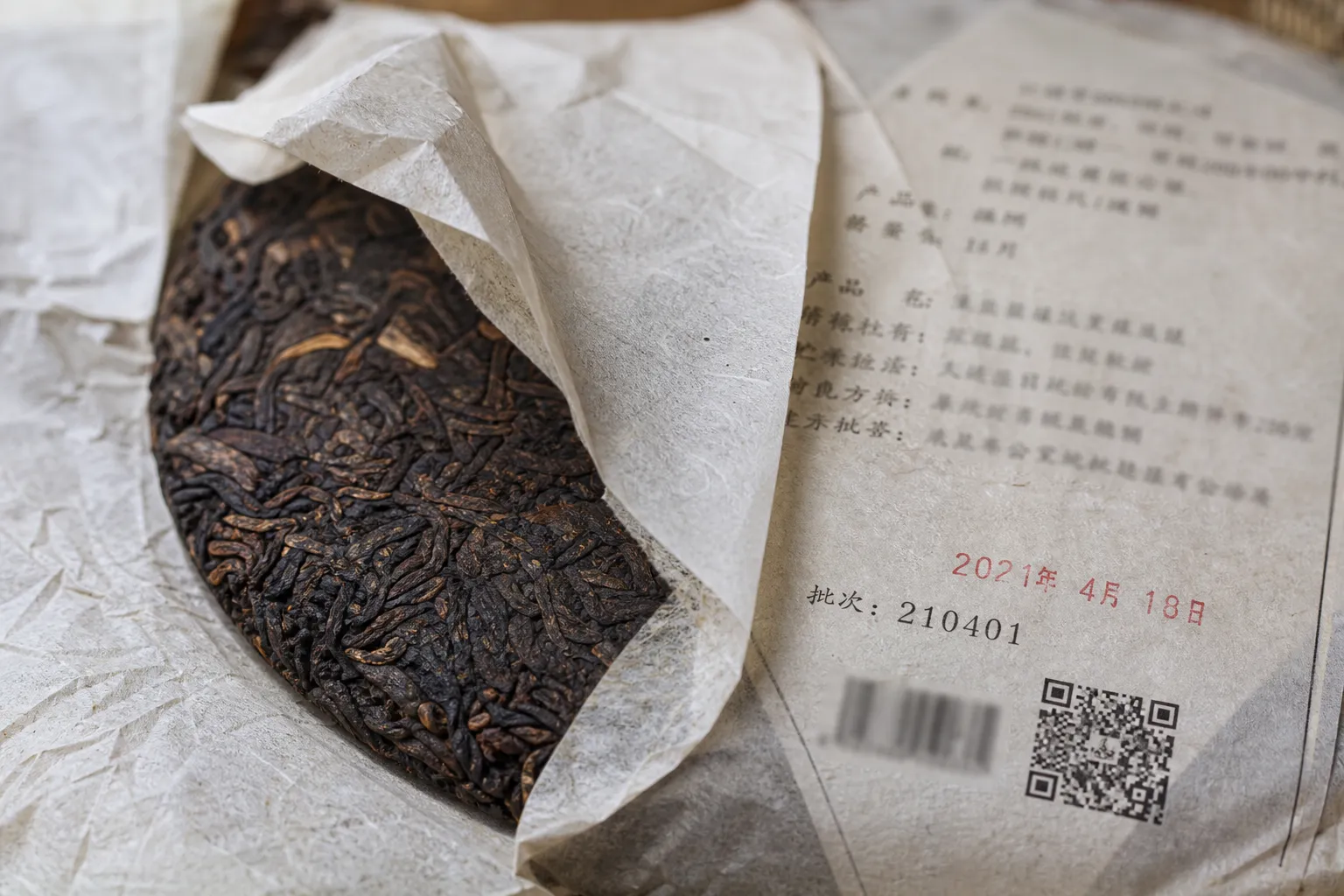
A dark tea batch number is usually a tracking clue. It may connect a cake, brick, pouch, wrapper, or box to a production group, packing lot, factory record, warehouse lot, seller stock note, or QR traceability entry.
It does not prove age, origin, storage condition, flavor quality, or authenticity by itself. Read it alongside the production date, factory or brand name, product name, QR code, seller records, and the tea’s physical condition.
In practical terms: the number can help you ask better questions, but it is only one part of the buying picture.
upward
Read the full overview first
Use the broader guide first if you need the full scope before this page.
What a Dark Tea Batch Number Can Indicate
In general food traceability language, a lot or batch code is a descriptor, often made from letters, numbers, or both, that identifies a group of products in the records of the source that assigned it. The FDA’s traceability terminology treats this type of code as a way to identify a traceability lot, while allowing flexible formats rather than one universal style.
For dark tea buyers, that means the code may point to a group of tea that was produced, packed, assigned, or tracked together.
Depending on the producer or seller, a tea batch code may refer to:
- A production run
- A packing lot
- A factory or workshop record
- A product series or recipe grouping
- A warehouse or seller lot
- A traceability entry connected to a QR code or invoice
- An internal stock number used by a distributor or retailer
The important word is may. Dark tea packaging does not follow one visible code convention across all cakes, bricks, loose-leaf pouches, export boxes, and collector-market wrappers. A puerh batch number on one product may not work like a dark tea lot number on another.
Some codes are factory-facing. Some are seller-facing. Some only make sense when paired with records you cannot see from the wrapper alone.
A useful buyer’s question is simple: What exactly does this code identify?
Read the Code Beside the Date, Factory, Product, and QR Mark
Dark tea labels can be crowded. A pressed cake may show a product name, weight, production date, factory name, origin wording, recipe or series number, distributor label, QR mark, anti-copy sticker, and several small printed codes. Loose-leaf dark tea in a pouch or box may also carry a retail label added later.
Not every number is a batch number.
Production date
What it may mean: When the tea, product, package, or label was made, depending on the producer’s practice.
What not to assume: That the tea was stored well after that date.
Batch or lot code
What it may mean: A group identifier for production, packing, stock, or records.
What not to assume: That it proves origin, age, storage, or flavor.
Product name or series wording
What it may mean: The tea line, form, blend, or market name.
What not to assume: That it is the same as a traceability lot.
Recipe or product identifier code
What it may mean: A product formula, series, wrapper design, or internal product reference.
What not to assume: That it identifies one production batch.
Factory or brand name
What it may mean: The named producer, packer, or brand on the label.
What not to assume: That all later handling is known.
QR code
What it may mean: A possible link to brand, seller, or traceability information.
What not to assume: That the information is complete or impossible to copy.
Net weight or size number
What it may mean: The amount of tea in the package.
What not to assume: That it has batch meaning.
A code printed near the production date, factory name, or lot wording is more likely to be a dark tea production code or lot marker. A code printed near a product name, wrapper design, or series name may instead be a product identifier.
If the package has both a production date and a batch code, keep them separate. The date usually answers “when?” The batch or lot code usually answers “which group?” A date can apply to many lots, and a lot code may include or sit near a date without being the date itself.
Batch Number vs Production Date
This is one of the easiest places to overread a wrapper, especially with puerh and other aged dark tea forms where year language carries market weight.
A dark tea production date is a time marker. It may indicate when the tea was produced, compressed, packed, or labeled, depending on the producer’s practice. There is not enough public, dark-tea-specific evidence to apply one rule to every producer or market.
A dark tea lot code or batch number is a grouping marker. It can help a producer, warehouse, seller, or buyer distinguish one group of units from another. In food recordkeeping, this kind of grouping can support tracing products through records. On a tea wrapper, it may help connect your cake or brick to seller documentation, but the visible number rarely tells the whole story.
A puerh batch number can be especially easy to misread because puerh packaging may also include product names, recipe-style identifiers, series numbers, year language, and storage claims. Without producer records or a clear seller explanation, a number that looks important may simply belong to a product identity system rather than one production lot.
A practical check
- 1. Find the production date first.
- 2. Look for any nearby code marked as lot, batch, production, traceability, or internal code.
- 3. If there is a QR page, see whether it repeats the same number.
- 4. Ask the seller whether the code identifies a production run, recipe or series, warehouse lot, or retail lot.
- 5. Keep the answer with your purchase notes if you plan to compare that tea later.
That last step is useful for tasting. If you buy two cakes with the same product name but different batch codes, the code can help keep your notes organized. It still cannot tell you in advance whether one cup will taste cleaner, deeper, sweeter, more woody, or more aged.
What the Number Cannot Prove
A batch number is a label clue, not a verdict.
It cannot, by itself, prove that a dark tea is from the stated mountain, village, county, factory, or year. Research on tea and Pu-erh traceability often looks beyond printed packaging marks, using supply-chain data systems, digital identifiers, image recognition of compressed tea surfaces, stable isotope analysis, multielement analysis, and chemometric methods. Those methods are not everyday tea-table tools, but they show the boundary clearly: stronger authentication usually needs records, technical comparison, or both.
A printed tea packaging batch code also cannot show storage history. Dark tea changes with time, but storage depends on humidity, airflow, temperature, light exposure, container choice, surrounding aromas, and the tea’s path before it reached you. A wrapper number does not tell you whether a cake sat in a dry cabinet, a damp warehouse, a warm shop window, or a mixed-aroma storage room.
It also cannot predict the cup. Two teas with similar label language can brew differently because of leaf material, processing, compression, age, storage, breakage, and brewing choices. A number can help you identify what you bought; it cannot replace looking at the leaf, smelling the dry tea, watching the liquor, and tasting the infusion.
Be careful with these assumptions
- “It has a batch number, so it must be better.”
- “The number proves the exact origin.”
- “The code confirms the storage history.”
- “The QR code makes the wrapper fully reliable.”
- “No visible lot code means the tea is unsafe or fake.”
- “A production year printed on a label is the same as verified age.”
In the FDA traceability context, a traceability lot code is not necessarily required to appear directly on product packaging; it may be communicated through records or other channels. That does not define dark tea labeling practice everywhere, but it is a helpful reminder: the absence of a visible code is not enough to judge the tea.
How to Use a Batch Code Before Buying
The best use of a dark tea label code is not to reach a dramatic conclusion. It is to make your buying conversation more precise.
When you are holding a cake, brick, or pouch, ask:
- Who assigned this code: the producer, packer, warehouse, distributor, or retailer?
- Does it identify a production run, recipe or product series, packing lot, or retail stock lot?
- Is there a separate production date?
- Does the QR code show the same number or a different identifier?
- Can the seller explain the code in a way that matches the wrapper or invoice?
- If buying multiple pieces, do all wrappers show the same code and date?
- If the tea is sold as aged stock, what storage information is available beyond the label?
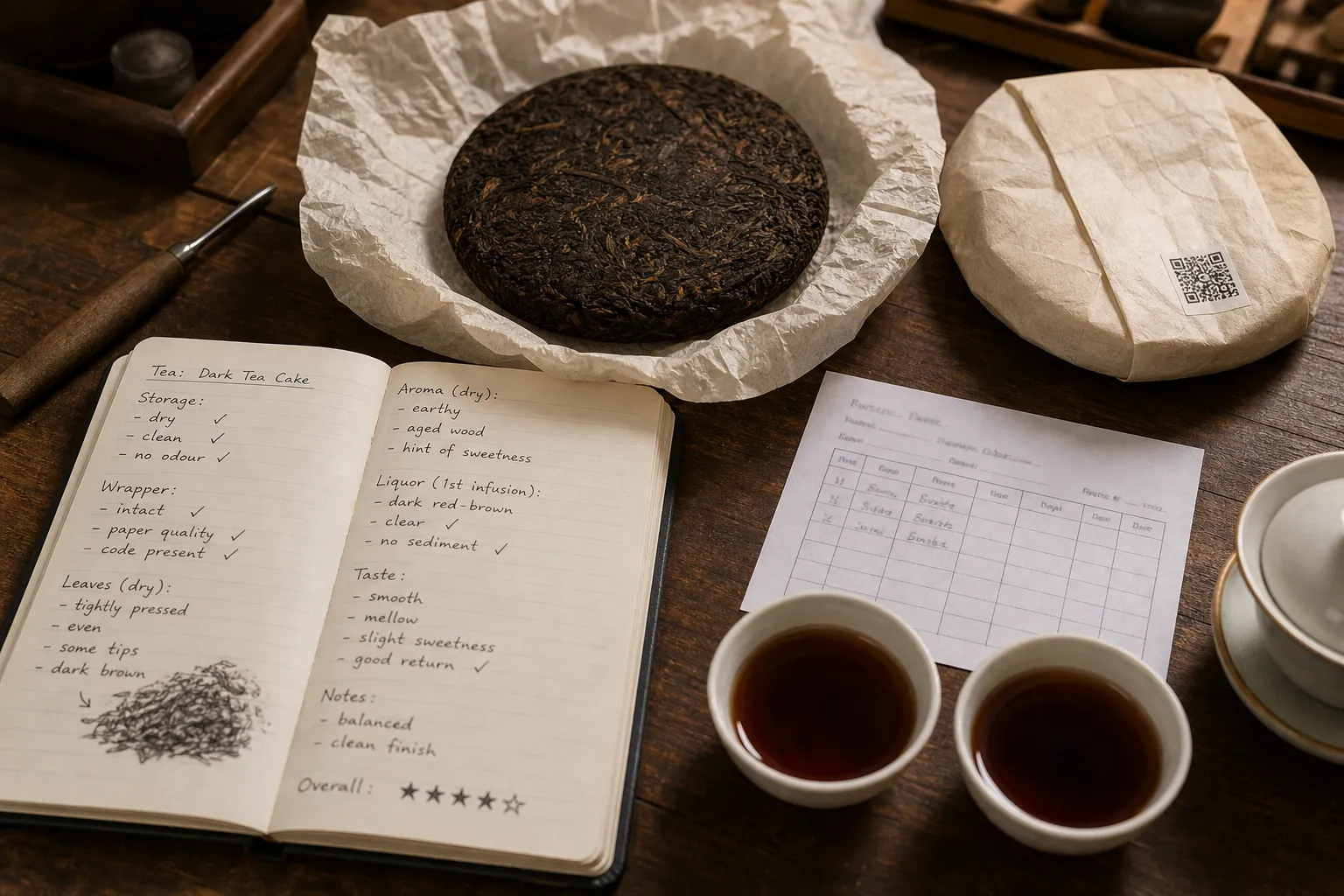
Then return to the tea itself. Check whether the wrapper condition fits the claimed age and handling. Smell for a clean tea aroma rather than obvious off-notes. If part of the cake or brick is visible, look at leaf color, compression, dust level, and surface condition. These are not proof of origin, but they can help you notice whether the physical tea supports or conflicts with the story on the label.
If you can sample the tea, the cup matters more than the code. Watch the liquor color, aroma, mouthfeel, aftertaste, and how the tea changes across steeps.
For your own notes, record:
- Product name
- Production date
- Batch or lot code
- Seller
- Purchase date
- Storage condition after purchase
- First brewing impression
That turns the number into something useful: a way to compare your own cups over time without asking the code to explain everything.
Common Label Confusions on Dark Tea Wrappers
Net weight number
A net weight number is usually simple: 100 g, 250 g, 357 g, 500 g, or another package size. It tells you quantity, not batch identity.
Product identifier code
A product identifier code may describe a tea line, wrapper design, recipe, series, or internal catalog item. It may look important because it is printed prominently, but it may not identify one lot.
QR code
A QR code may lead to a brand page, product lookup, seller record, or traceability page. It can be useful, but it should still be compared with the wrapper, invoice, and seller explanation. Digital identifiers can support traceability systems, but packaging swaps, copied labels, and incomplete records remain practical concerns.
Date code
A date code may be formatted in a way that looks like a batch number. Some traceability systems combine dates and internal codes, so one printed string may carry more than one meaning in the producer’s records.
Distributor or export label
A distributor or export label may add a second layer of numbers. These may belong to the importer, retailer, or market label rather than the tea factory. That does not make them useless, but it changes what they can tell you.
Simple Reading Rule
Use the batch number to identify the tea, not to judge the whole tea.
If the code lines up with the production date, product name, seller documentation, and QR information, it can support a more organized buying decision. If the code is unexplained, missing, inconsistent, or surrounded by unclear label language, do not turn it into either confidence or panic.
Ask what it identifies. Compare it with the rest of the package. Then return to the tea itself: leaf, aroma, liquor, mouthfeel, aftertaste, and storage condition.
A dark tea batch number is most useful when it helps you keep track of a real object in your hands. It is weakest when it is asked to do too much.
Sources
Sources and further reading
Reference links are limited to sources considered suitable for public citation in this page.