
How to Read Dark Tea Liquor Color When Adjusting Brew Time
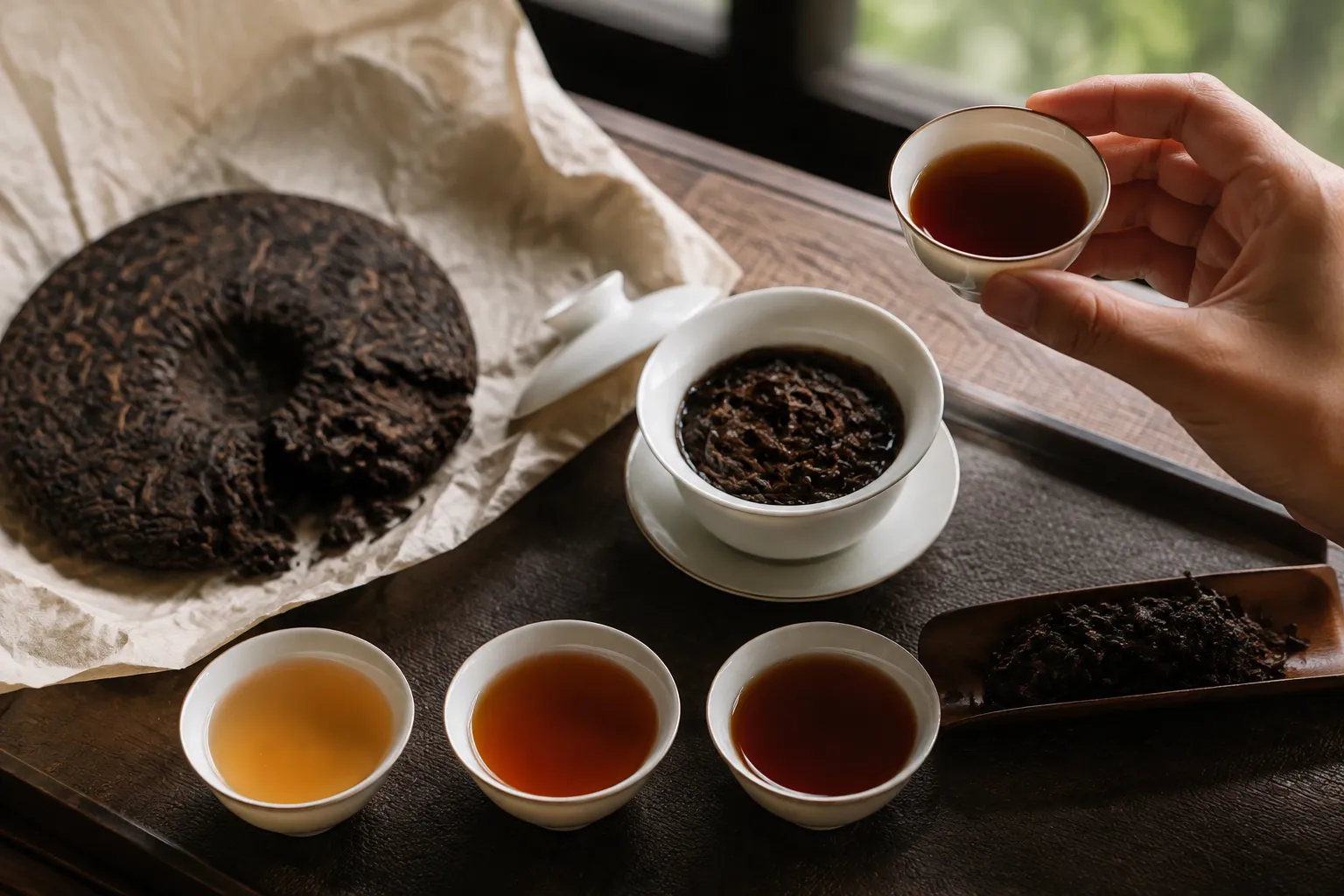
A rinsed cake, brick, or loose-leaf brew can look pale, amber, reddish, brown, or very deep from one steep to the next. For dark tea liquor color brew time adjustments, use that appearance as a prompt, not a verdict. Compare the color with the cup’s taste, aroma, mouthfeel, and aftertaste.
If the liquor looks pale and tastes thin, try a slightly longer steep. If it looks very dark and tastes harsh, drying, or heavy, shorten the next steep. If the color is deep but the cup feels balanced, keep the timing as it is.
Liquor color alone cannot establish strength, age, storage condition, authenticity, or quality. It is one visible cue among several, and the tea, water, vessel, leaf form, and personal preference all affect the result.
upward
Start with the broader guide
Use the broader guide first if you need the full scope before this page.
What Dark Tea Liquor Color Can Tell You
Color is most useful as a comparison tool within the same brewing session. Look at the first proper infusion after any rinse, then watch how the liquor changes as the leaves open.
The useful question is not, “Is this dark enough?” Ask instead:
Does the color match the flavor and mouthfeel I want from this steep?
A pale infusion can be light, clear, and aromatic. It can also be underdeveloped if the leaves have not opened or the steep was too brief. A darker infusion may feel rounded and full, but it can also become bitter, drying, muddy, or heavy.
An Everyday Brew Check
- View the liquor against a light, neutral background.
- Smell the cup before tasting.
- Notice body, bitterness, dryness, sweetness, and aftertaste.
- Decide whether the next steep needs more time, less time, or no timing change.
- Change one main variable so the result is easier to read.
This keeps dark tea color steeping practical rather than turning it into a visual grading system.
When to Extend the Next Steep
A longer steep is worth trying when the liquor is pale and the cup tastes thin, hollow, or short. This can happen when a compressed cake or brick has released only a small amount of leaf, or when the leaves are still beginning to open.
Make the change gradually. Let the next steep run a little longer, then compare the cup rather than assuming that a darker color will automatically improve it. Look for more aroma, a fuller middle of the sip, and a longer, cleaner finish.
- Pale liquor and thin taste: extend the next steep slightly.
- Pale liquor with a pleasant aroma and clean taste: repeat the timing or make only a small change.
- Pale liquor with sour, sharp, or unusual notes: check the tea, water, and preparation before adding more time.
A pale cup may also be intentional. Some teas suit a restrained infusion, and some drinkers prefer a lighter profile. The goal is not to force the liquor darker; it is to find out whether extra contact improves the cup.
When to Shorten the Next Steep
A very dark liquor can be a reason to shorten the next steep when the cup feels harsh, bitter, drying, or too heavy for your preference. Small leaf particles, broken leaves, a tightly packed portion, or a tea that releases color quickly can all produce a deep appearance early.
Taste before changing the timing. If the shorter infusion feels clearer and leaves a smoother aftertaste, the adjustment was useful for that session.
A dark liquor is not automatically over-brewed. Some dark teas naturally produce a deep cup, and some drinkers prefer a dense, earthy profile.
- Dark liquor with harshness or drying: shorten the next steep.
- Dark liquor with a rounded, sweet, balanced cup: keep the timing.
- Dark liquor with muddiness: check leaf quantity, water, vessel, and rinse before repeatedly changing the time.
Steep time is a clear first variable to test, but it is not the only possible cause of a heavy cup.
When to Repeat the Steep
A first infusion does not always show how the whole session will develop. Rinsing, compression, leaf size, and the way the leaves separate can change the appearance and texture of the cup.
If the current steep is balanced and the wet leaves are still opening, repeat the brew before making a much longer infusion. A later cup may become fuller as more surface area is exposed. In another session, a broken portion may release strong color immediately and then soften quickly.
Ask whether the tea needs more time in the current steep or simply another infusion. When the liquor is moderate, the taste is clean, and the leaves are opening, repeating the timing may preserve the balance better than one long steep.
Color can prompt you to watch the next cup, but it does not mark a fixed endpoint.
Why Darker Tea Is Not Always Stronger
Visual darkness and perceived strength are different things. What you experience as strength may include flavor intensity, bitterness, astringency, body, aroma, sweetness, and the length of the finish. Liquor color shows only the appearance of the infusion.
A dark cup may taste soft if its aroma is faint and its body is light. A paler cup may feel intense if it carries a sharp or persistent flavor. Water composition, temperature, leaf size, and vessel proportions can also change both appearance and taste.
For the same reason, do not use color to decide whether a tea is better. A darker infusion may reflect the brewing conditions, the leaf portion, or a tea-specific characteristic. A pale liquor is not evidence that the tea is poor or that the brew has failed.
The clearest comparison is usually between two steeps made with the same tea, water, vessel, and leaf amount. Change the brew time, then compare the color with the sensory result. This is more useful than comparing the shade of unrelated teas.
Variables That Can Change the Color
When the liquor changes unexpectedly, note the surrounding conditions before making a large timing adjustment.
- Tea form: Loose leaf, a cake, and a brick may open at different rates.
- Leaf size: Small or broken pieces can release color differently from larger intact leaves.
- Compression: A tightly pressed portion may need time to separate before later steeps show more of its character.
- Water: Water composition and temperature can affect the appearance and taste of an infusion.
- Vessel size: The amount of water relative to the leaves changes the visual density of the cup.
- Prior rinsing: A rinse can change what remains available for the following steep.
- Tea condition: Age, storage, and the condition of the leaves may alter how the tea presents from one session to another.
- Preference: One drinker may want a clear, lighter cup while another prefers more body and depth.
If you change the brew time, keep the other conditions as steady as possible. Otherwise, the new color may come from the leaf portion, water, or vessel rather than from steeping time.
A Simple Color-and-Taste Check
If the Cup Looks Pale
Taste before adding time. When the flavor is thin and the aroma has little presence, extend the next steep slightly. When the cup is already clean and pleasant, repeat the same timing first.
If the Cup Looks Very Dark
Taste for bitterness, dryness, and heaviness. When those sensations dominate, shorten the next steep. When the cup is full but balanced, leave the timing alone.
If Color and Taste Disagree
Follow the complete sensory picture rather than correcting the appearance. A dark cup that tastes balanced does not need to be lightened simply because it looks deep. A pale cup that tastes intense does not need to be darkened to meet a visual expectation.
If Each Steep Changes Sharply
Check the leaf form, leaf amount, water volume, temperature, vessel, and prior rinse. A compressed tea may not behave like loose leaf, and a small broken piece may not behave like a larger intact portion.
A short note such as “pale, floral, thin,” “deep, rounded, soft,” or “dark, drying, long finish” connects what you see with the adjustment you make next.
The Scope Limit of Color as a Brewing Cue
Liquor color is useful because it is immediate and easy to compare. It is limited because one visual impression reflects several brewing variables at once. No universal shade tells every drinker when to shorten, extend, or stop a steep.
The available material does not establish one fixed relationship between dark tea infusion color and strength, and it does not support a single steeping time for every tea. The practical approach here is narrower: change one condition, compare the next cup, and let taste confirm or reject the visual cue.
Start with the tea form in front of you. Watch the liquor develop, smell the cup, notice the mouthfeel, and follow the aftertaste. When color and sensation point in the same direction, the next brew-time adjustment is easier to choose. When they disagree, keep the color in view and let the cup make the final call.