
Dark tea selection
How Much Does Leaf Grade Matter When Choosing Dark Tea
Dark tea leaf grade matters, but it should not be the main ruler for choosing a tea. It is most useful as a brewing clue: how quickly the liquor darkens, how fast strength appears, whether bitterness or drying texture arrives early, how clear the aroma feels, and how long the tea holds through multiple infusions.
It matters much less when grade is treated as a simple ladder where tender leaf is always better and coarse leaf is always worse.
When choosing dark tea, use grade to set expectations, then confirm those expectations in the cup. Fermentation, processing, compression, storage, water, vessel size, and steeping time can change the result as much as visible leaf size or tenderness.
upward
Read the full overview first
Use the broader guide first if you need the full scope before this page.
What Leaf Grade Can Actually Tell You
When a wrapper, seller note, or tasting description mentions leaf grade, the visible clues usually include:
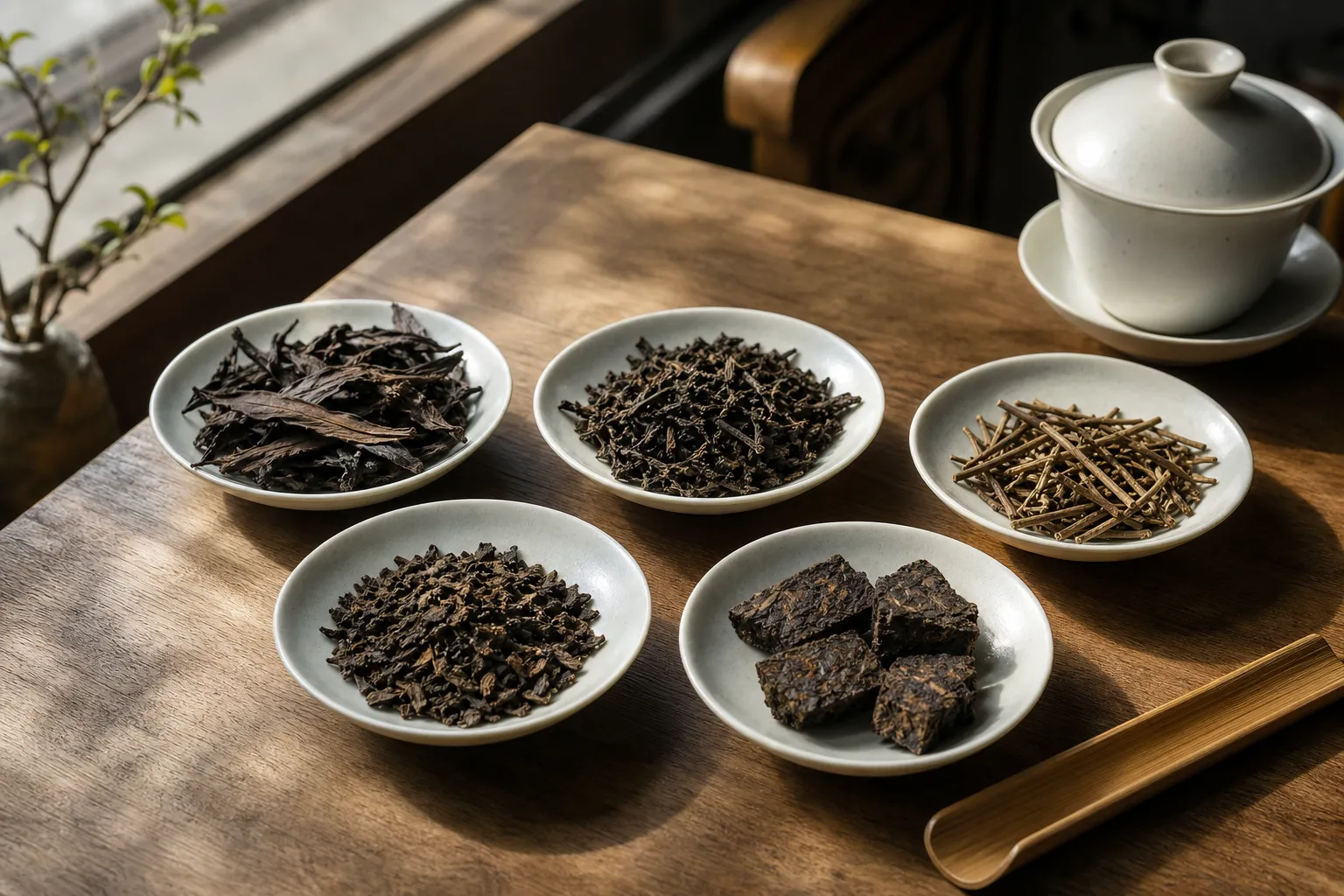
- Leaf size: large, small, mixed, chopped, or finely broken.
- Tenderness: buds and young leaves versus older, broader leaves.
- Stem content: few stems, many stems, or mixed material.
- Brokenness: intact leaf pieces versus fragments and dustier particles.
- Sorting: even-looking material versus mixed sizes.
- Compression: loose tea, basketed tea, brick, cake, tuo, or broken compressed chunks.
These features can affect extraction. Smaller or more broken leaves expose more surface area to water, so they often release color and strength faster. Larger or more intact leaves usually extract more slowly and can be easier to follow across several infusions. Stemmy or coarser material may soften the cup, add body, or make a tea feel more forgiving, though this depends on the tea and its processing.
That is the useful part of dark tea leaf grade: it helps you predict how the tea may behave before brewing.
The less useful part is the market language around grade. In dark tea, visible material does not tell the whole story. Dark tea is shaped by post-fermentation, heat and moisture during processing, drying, compression, and storage. Research on dark tea fermentation describes changes in bitterness, astringency, sweetness, mellow texture, and aroma formation during processing. For a drinker, the takeaway is simple: two teas with similar-looking leaves can drink very differently.
So the better question is not “Is this grade high?” It is: What does this material do in water?
How Coarse, Tender, Broken, and Stemmy Material May Behave
Use this as a starting point, not a ranking system. Dark tea type, age, storage, and brewing style can all change the cup.
Coarse leaf dark tea
What it may do: Often releases sharpness more slowly; may give body, warmth, and a steady daily cup.
Watch for: Can taste flat, woody, or rough if processing or storage is poor.
Tender leaf dark tea
What it may do: May show clearer aroma, faster flavor detail, or a more intense early infusion.
Watch for: Can turn sharp, bitter, or thin if brewed too hard.
Broken dark tea leaves
What it may do: Usually darken the liquor quickly and give early strength.
Watch for: Can become heavy, muddy, drying, or one-dimensional with long steeps.
Intact leaves
What it may do: Often easier to taste across multiple infusions; extraction may feel more gradual.
Watch for: Can seem weak at first if tightly compressed or under-brewed.
Stemmy dark tea material
What it may do: May soften texture, add sweetness, or make the brew more forgiving in some teas.
Watch for: Too much stem can taste hollow, woody, or simple if the rest of the material lacks depth.
Mixed compressed material
What it may do: Can combine body, aroma, strength, and endurance from different leaf parts.
Watch for: Hard to judge from the surface until you break off and brew an even sample.
This is why coarse leaf dark tea should not be dismissed automatically. Coarser leaves and stems can be intentional parts of a dark tea style, especially in compressed or blended material. They may support a mellow body or a steady everyday brew.
Tender leaf dark tea should not be praised automatically either. More tender material can be aromatic and lively, but it still has to pass through processing and storage. If fermentation is uneven, storage is stale, or the brew is pushed too hard, tender material can taste sharp rather than refined.
When Grade Should Influence Your Choice More
Leaf grade deserves more attention when it affects the way you plan to brew the tea.
If you want a quick, strong mug, smaller pieces or moderately broken material may be practical. The tea will often give color and body quickly. This can suit a casual morning cup, an office brew, or a larger pot where you want the tea to show up without careful timing. The risk is over-extraction: too much leaf, very hot water, and a long steep can make broken material taste heavy or drying.
If you want gongfu-style tasting, more intact and evenly sorted material is often easier to read. You can watch the tea open over short infusions and notice whether aroma, sweetness, mouthfeel, and aftertaste continue or fade. Broken pieces are not useless here, but they usually need gentler handling because they release strength quickly.
If you want a mellow daily dark tea, do not reject coarse or stemmy material too quickly. A tea with some older leaf or stems may be less piercing and more forgiving. Look for clean aroma, balanced body, and a finish that does not feel scratchy or stale.
If you are buying a compressed brick or cake, grade is harder to judge from the surface. The outer face may show one kind of material while the inner portion contains a different mix. Compression also changes extraction. A tightly compressed piece may look coarse but brew slowly; a loose broken edge may brew fast and dark. When possible, examine a broken cross-section or brew a small sample that includes both outer and inner material.
When Grade Should Matter Less
Leaf grade should move down your priority list when other clues tell you more.
The first clue is aroma cleanliness. Dry leaf, warmed leaf, rinse, and first infusion should not feel stale, sour in an unpleasant way, dirty-smoky, or storage-heavy beyond your comfort. Dark tea can have earthy, woody, aged, fungal, or cellar-like notes depending on style, but those notes should still feel coherent rather than suffocating.
The second clue is processing balance. Studies on dark tea pile fermentation describe changes in bitterness, astringency, sweetness, mellow taste, and aroma compounds during processing. Visible leaf grade cannot reveal all of that. A cleanly processed coarser tea may drink better than a tender-looking tea with awkward fermentation.
The third clue is storage condition. Storage can preserve, soften, dull, or distort a tea. A well-stored mixed-grade brick may have more pleasant body and aftertaste than a more delicate tea stored poorly.
The fourth clue is your brewing setup. A small pot with short steeps, a large mug, a thermos, and a loose-leaf basket all change how grade behaves. Broken material that tastes too strong in a small pot may work in a quick rinse-and-drink mug. Intact material that seems elegant in short infusions may feel too slow in a large casual brew.
A Simple Way to Test Grade Before Trusting It
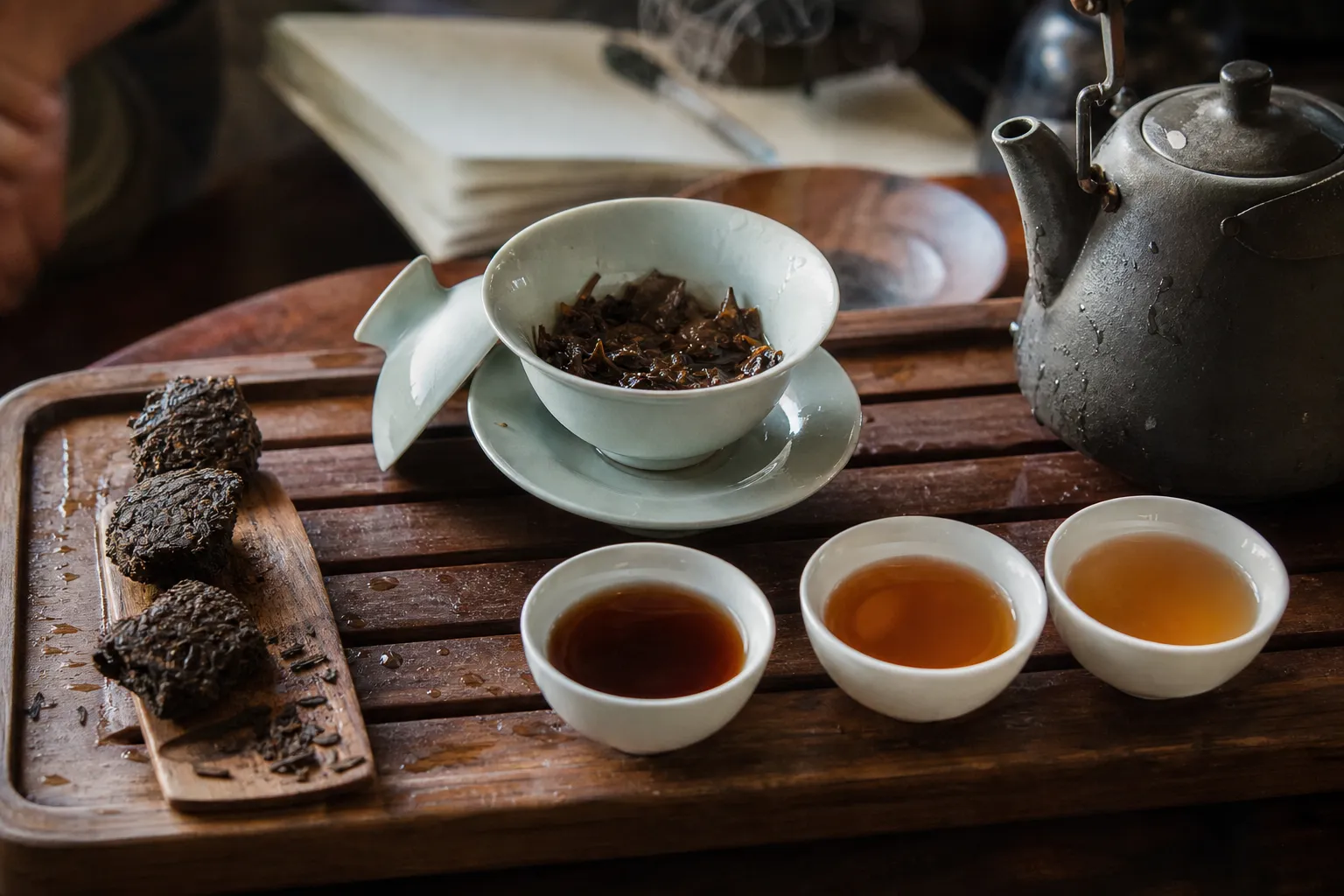
When you have a sample, do not decide from the dry leaf alone. Brew it in a way that shows whether the grade helps or hurts the cup.
Start with a small amount of tea and a familiar vessel. Use hot water, but avoid an aggressive first steep if the material is very broken. For compressed dark tea leaves, let the piece loosen rather than forcing a long first infusion.
Watch these cues:
- Color speed
Does the rinse or first infusion darken immediately? Fast color can come from broken material, fine particles, fermentation level, or loose compression edges. It is not the same as quality. - Aroma clarity
Does the aroma open cleanly after warming and rinsing? Look for readable notes such as woody, sweet, earthy, aged, nutty, or herbal. If the aroma is flat or unpleasantly stale, grade will not rescue it. - Bitterness and astringency timing
A little bitterness or drying texture can be part of the profile, but notice when it arrives. If it appears instantly and dominates the cup, the material may need shorter steeps, less leaf, or may simply not suit your taste. - Body and sweetness
Coarse or stemmy material may surprise you here. A tea does not need tiny tender leaves to feel rounded. Look for whether the liquor has weight, softness, and a sweetness that remains after swallowing. - Multiple infusions
A tea that looks impressive in the first cup but collapses quickly may be less useful for careful tasting. A tea that starts quietly but gains sweetness and steadiness may be worth more attention.
This test keeps grade in its proper place: one clue among several, not the final judgment.
Common Confusion Around Dark Tea Leaf Grade
One common confusion is borrowing ideas from black tea grading and applying them directly to dark tea. Black tea grade language often emphasizes leaf size, brokenness, and tips. That can be useful as a general reminder that smaller pieces brew faster, but it does not create a universal dark tea ranking. Dark tea has different processing and post-fermentation variables.
Another confusion is assuming dark liquor means better tea. A dark infusion may come from fine particles, broken pieces, heavy fermentation, long steeping, or tight compression finally opening. Color is useful only when read together with aroma, texture, taste, and aftertaste.
A third confusion is treating seller grade terms as enough proof. Grade language can describe real material differences, but it can also be used loosely in the market. If the tea is available as a sample, let the cup answer: clean aroma, balanced strength, comfortable mouthfeel, and steady later infusions matter more than a prestige word.
The Practical Answer
Dark tea leaf grade matters most when it helps you choose a tea for a specific use.
For fast, strong brewing, some broken or coarser material may be acceptable. For careful tasting, intact and evenly sorted material can be easier to evaluate. For mellow daily drinking, stems and older leaves are not automatically a flaw. For aromatic clarity, tender material may help in some teas, but it is not a promise of better dark tea.
The best choice is not the tea with the most impressive grade term. It is the tea whose visible material, processing, storage, and brewing behavior match the cup you actually want. Use grade to form a first expectation, then judge the tea by color speed, aroma clarity, body, bitterness and astringency, sweetness, aftertaste, and performance across multiple infusions.
Sources
Sources and further reading
Reference links are limited to sources considered suitable for public citation in this page.