
Everyday Dark Tea Culture
What Chinese Dark Tea Culture Means for Everyday Drinkers
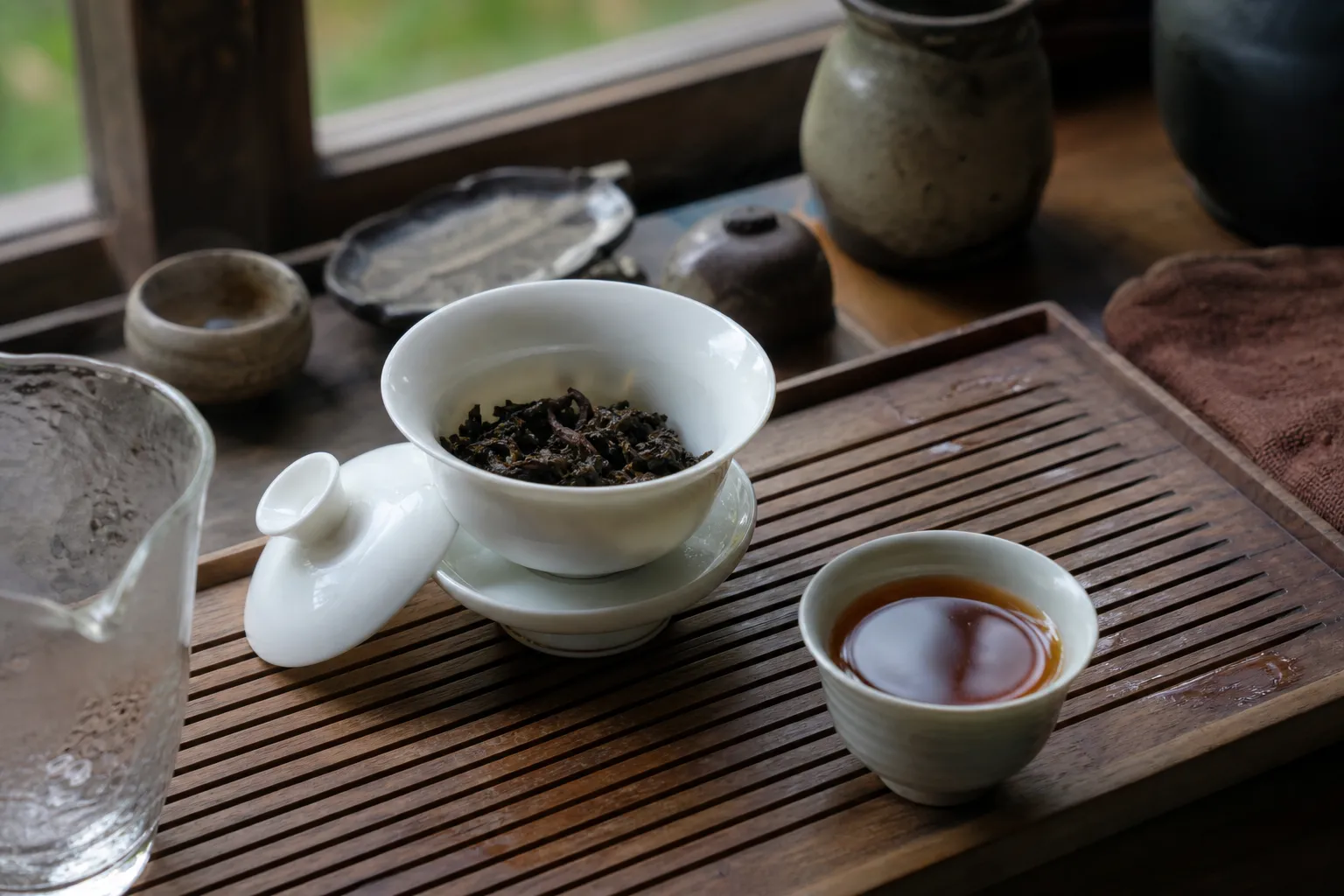
A rinsed piece of dark tea can look modest: broken leaf, dark liquor, a quiet earthy aroma rising from the cup. For everyday drinkers, Chinese dark tea culture means using that moment as practical context, not as performance. It helps you handle a cake or brick, share several short infusions, notice storage aroma, and adjust the next steep when the cup tastes thin, heavy, flat, or sharp.
The useful part is not a rigid ceremony. It is a habit of paying attention to form, water, time, aroma, mouthfeel, and the people drinking with you.
upward
Start with the broader guide
Use the broader guide first if you need the full scope before this page.
Culture Starts With the Tea in Front of You
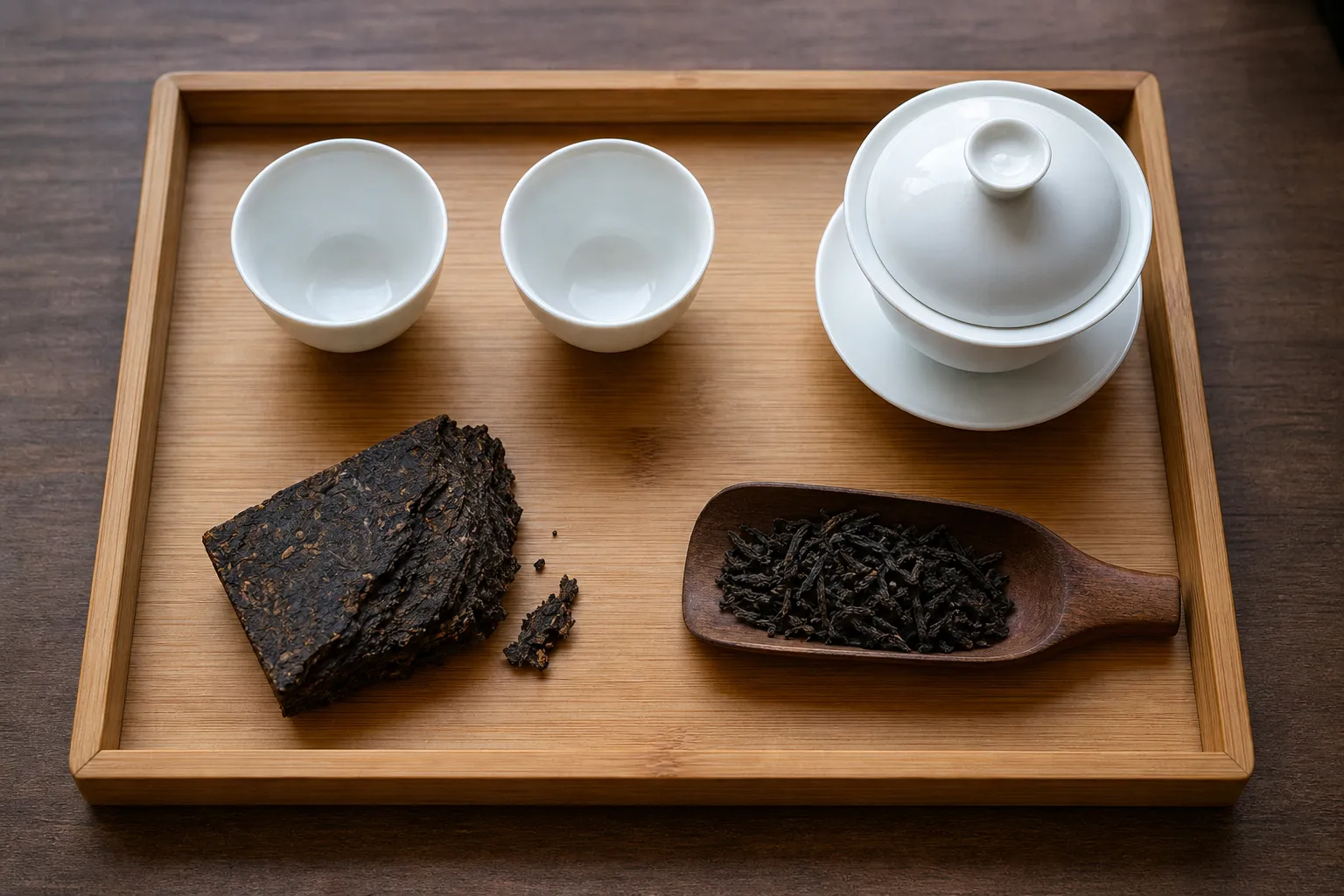
For daily drinking, hei cha culture is easiest to understand through the tea’s physical form. A compressed cake or brick asks for different handling than loose leaf. A tight piece may need a gentle rinse and a little time to open. Loose dark tea may release flavor faster and need a shorter first steep. Neither form is automatically more meaningful; each changes what the drinker controls.
Before the story, check the cup
- Is the tea compressed or loose?
- Does it smell clean, earthy, woody, mellow, stale, smoky, or damp?
- Does the first infusion feel light, rounded, drying, heavy, or muddy?
- Does the tea improve across repeated infusions, or does it fade quickly?
- Is this a tea to taste alone, or to share casually across several cups?
These questions keep the cultural frame close to the cup. They do not require a rare vessel or perfect method. A small pot, gaiwan, or heatproof cup can still support careful drinking if the leaf amount, water temperature, and steeping time are adjusted with attention.
This article stays with ordinary drinking choices: what you can see, smell, brew, share, and store. It does not try to settle regional history, named local customs, or formal classification systems without stronger public references.
What It Changes in Everyday Brewing
Chinese dark tea culture often makes more sense when you stop judging the tea from one cup. Many dark teas can be explored across several infusions. A compressed piece may taste muted at first, then become clearer after the leaves loosen. A loose tea may give its strongest aroma early, then settle into softer cups.
Start with the tea’s behavior rather than a fixed rule. If the liquor is pale and the aroma feels faint, use a little more leaf, hotter water, or a longer steep next time. If the cup turns harsh, heavy, or muddy, shorten the steep, reduce the leaf, or pour more promptly. If the tea has pleasant earthy notes but feels too dense, try a quicker infusion after the rinse.
This is the practical side of fermented tea culture: repeated attention. Some cups may show wood, grain, dried fruit, earth, mineral, or mellow storage notes. Others may be simpler. The useful move is to connect each sensory sign with one brewing variable you can change.
| What You Notice | What It May Mean | What To Try Next |
|---|---|---|
| Thin liquor and weak aroma | Not enough extraction for this leaf or vessel | Add leaf, extend the steep, or use hotter water |
| Heavy, murky, or tiring cup | Too much extraction for your taste | Shorten the steep or use less leaf |
| Pleasant aroma but sharp finish | The tea may need gentler handling | Reduce steep time before changing everything else |
| Mellow cup that fades quickly | The leaf may be giving its best early | Enjoy a shorter session rather than chasing strength |
| Aroma improves after a rinse | Compression or storage scent may be opening | Judge from the next infusion, not only the rinse |
These are not final quality verdicts. They are small adjustments for brewing dark tea to taste. The same tea can behave differently with vessel size, water, leaf breakage, storage condition, and personal preference.
Sharing Without Turning It Into Performance
Sharing dark tea with others can be one of the clearest ways culture appears in daily life. The point is not to stage a flawless ritual. It is to make the tea easy to follow: small pours, repeated infusions, and enough quiet conversation for people to notice changes in aroma and texture.
A shared session works best when the host does not over-explain the tea. Offer a simple starting note: “This one is earthy and mellow,” or “The first cup may be light; it opens more after the second pour.” That gives people a sensory doorway without asking them to perform expertise.
When several people are drinking, brew for comfort before intensity. A slightly lighter first round can help guests notice aroma without being overwhelmed. If the group wants a stronger cup, the next infusion can run longer. If the tea feels too forceful, pour sooner. Shared drinking becomes a small feedback loop rather than a lecture.
This also clears up a common misunderstanding around respectful dark tea culture. Respect does not mean copying a script or pretending every cup carries deep symbolism. It can mean handling the tea cleanly, giving the leaves room to open, listening when someone tastes something different, and not using cultural language to excuse stale aroma, poor storage, or unclear buying claims.
For everyday drinkers, the cultural habit is attention with restraint.
Compressed Versus Loose Dark Tea Is a Practical Choice
Compressed versus loose dark tea is sometimes presented as if one form carries more depth. For a daily drinker, the better question is simpler: which form fits the way you brew, store, and share tea?
Compressed tea
Compressed tea can be satisfying when you like breaking off small portions, watching the leaf open over several infusions, and keeping tea in a compact shape. It also asks for care. Pry gently, avoid crushing the piece into too much dust, and let dense chunks loosen before judging the flavor. Very broken material can brew faster and heavier than an intact flake.
Loose dark tea
Loose dark tea is easier to measure and may suit quick sessions. It can be helpful when you want a weekday cup without tools for prying. It may also expose more surface area to air, so storage habits matter. Keep it away from strong odors, bright light, and damp conditions that make the aroma unpleasant.
Neither form promises better taste, better aging, or greater cultural value. The meaningful choice is the one that matches your routine. If you often brew for several people, a cake or brick can make the session feel shared and gradual. If you mostly drink one mug at a time, loose leaf may keep the habit simple.
The culture is not in the shape alone. It is in how the shape changes your handling, pacing, and attention.
Storage Notes Belong in the Cup, Not in a Forced Story
Dark tea drinkers often talk about storage because aroma can shape the cup before the first sip. In everyday terms, storage is not a romance about age. It is a practical check: does the tea smell clean enough to brew, and does the cup taste pleasant to you?
Mellow storage notes can make a dark tea feel rounded, woody, or calm. Earthy notes can be welcome when they are clean and balanced. But if the dry leaf or brewed liquor smells unpleasantly damp, stale, sour, or like surrounding household odors, do not explain it away with vague cultural language. Adjust storage, compare with another tea, or set that tea aside.
Keep the storage frame modest
- Keep tea away from kitchen, spice, smoke, perfume, and cleaning-product odors.
- Avoid direct sun and large swings in heat.
- Do not seal a tea with a questionable aroma and hope the problem disappears.
- Let compressed tea keep some airflow if your storage setting is stable and clean.
- Check aroma before brewing, especially if a cake, brick, or bag has been sitting untouched.
These are ordinary storage habits, not promises about long-term transformation. Tea age, material, compression, humidity, airflow, and prior handling can all change what happens. If the cup tastes flat, dirty, or uncomfortable, the next useful move is not a theory of aging; it is a storage and brewing check.
What This Culture Does Not Mean
The most helpful boundary is simple: dark tea culture context should not replace evidence, taste, or common sense.
It does not mean every dark tea should be brewed the same way. A dense chunk from a brick, a loose handful of fermented tea, and a small broken piece from a cake may need different timing. It does not mean every earthy note is desirable. Earthy can be rounded and pleasant, but it can also become too heavy depending on the tea and storage. It does not mean older tea is automatically better, more valuable, or more suitable for your cup.
It also does not mean dark tea should be framed around body-result promises. Some people include tea in a broader daily routine, but this page treats it as beverage culture: brewing, tasting, sharing, and storage. If a seller, post, or casual description leans heavily on outcome-based claims, treat that as marketing language rather than a reason to buy or brew.
The same caution applies to authenticity language. Without strong supporting documentation, claims about place, grade, special status, or rare value should not override what you can inspect: leaf condition, aroma, packaging clarity, seller transparency, and how the tea performs in your own cup.
A respectful approach is not suspicious of everything. It is simply grounded. Let cultural interest invite better attention, then let the brewed tea answer in practical terms.
A Simple Way To Use It at Your Next Session
The next time you brew dark tea, use culture as a quiet structure for attention:
- 1. Look at the form first: cake, brick, or loose leaf.
- 2. Smell the dry tea before heating water.
- 3. Rinse if the tea is compressed, dusty, or slow to open.
- 4. Taste the first real infusion without deciding too quickly.
- 5. Adjust one variable at a time: leaf, water, steep length, or vessel.
- 6. If sharing, pour lightly at first and let the group’s taste guide the next round.
- 7. After the session, check whether the tea’s storage aroma helped or hurt the cup.
That is enough. Chinese dark tea culture, for everyday drinkers, is not a grand claim about what tea must mean. It is a practical habit of noticing how fermented leaves, water, time, storage, and company shape the cup. The next decision can stay small: loosen the piece more gently, shorten the steep, share the second infusion, or move a tea away from a shelf that changes its aroma.