
Daily selection guide
How to Choose Dark Tea for Daily Drinking
Choose dark tea for daily drinking by looking for a tea that smells clean in storage, brews smoothly at ordinary strength, and stays pleasant when your steep is a little short or long. For everyday use, the right choice is usually not the rarest cake or the most forceful cup. It is a forgiving Chinese dark tea, or hei cha, with a mellow body, low harshness, and a form that fits the way you actually brew.
A good daily candidate may taste earthy, woody, gently sweet, lightly nutty, or aged. It should not smell damp, stale, unpleasantly sour, or visibly moldy. The cup should feel easy to return to, not like something you have to manage carefully every time.
upward
Read the full overview first
Use the broader guide first if you need the full scope before this page.
Start with the tea form you can repeat
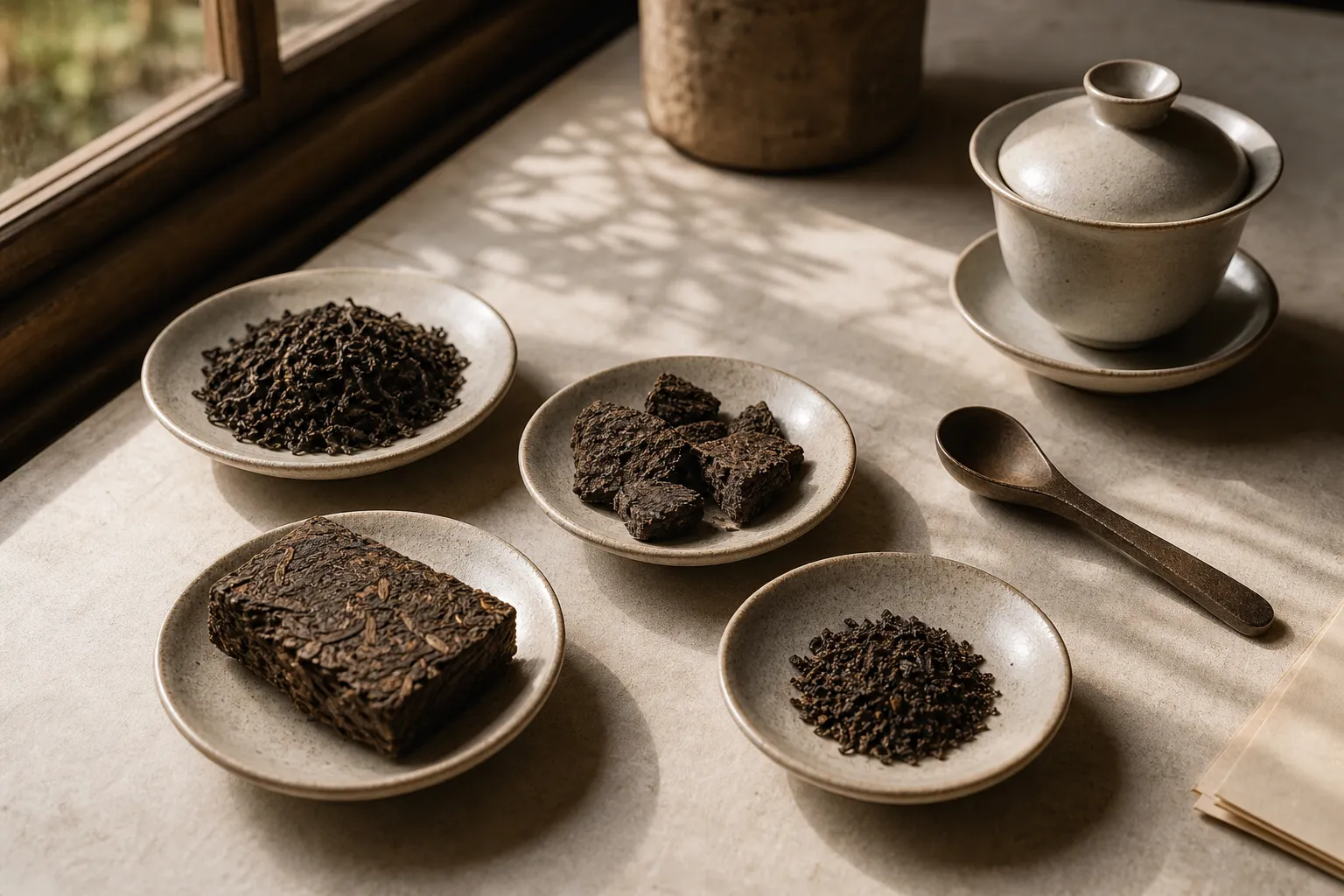
Dark tea comes as loose material, compressed bricks, cakes, basket-packed teas, and broken pieces taken from larger compressed tea. For daily drinking, the form matters because it changes how quickly the tea opens, how easy it is to measure, and how much attention the brew needs.
Loose dark tea is often the easiest starting point if you want a predictable weekday cup. You can scoop it, adjust the amount quickly, and see the leaf condition before brewing. It is also useful while you are still learning what strength you like.
Small broken pieces from compressed dark tea can also work well for daily dark tea brewing. They usually open faster than a large dense chunk, which makes them practical in a mug, small teapot, or casual gaiwan session. The tradeoff is that very fine fragments can release strength quickly and may turn heavy, dusty, or sharp if you use too much leaf or steep too long.
Larger pieces from compressed dark tea cakes or bricks may give a slower, more layered session, but they ask more from the drinker. You may need to pry carefully, rinse or wake the piece, and give it time to loosen. That can be enjoyable on a quiet day, but it may be less practical before work.
Loose dark tea
Daily advantage: easy to measure, easy to adjust, visible leaf condition.
Watch for: can brew quickly if the leaf is small or broken.
Small compressed pieces
Daily advantage: convenient, often opens faster than dense chunks.
Watch for: strength may rise suddenly as the piece breaks apart.
Large cake or brick chunks
Daily advantage: good for slower repeated infusions.
Watch for: less predictable in a quick daily vessel.
Very fine fragments
Daily advantage: fast color and strength.
Watch for: can taste muddy, harsh, or over-extracted.
If you want one simple rule, choose the form you can brew consistently three days in a row. A tea that tastes good only when handled perfectly may be interesting, but it is not always the most forgiving daily tea.
Smell the storage before judging the flavor
For everyday dark tea, storage aroma is one of the most useful selection cues. Chinese dark tea is post-fermented and often stored after processing, so aroma can reflect both tea style and storage conditions. Research on dark tea processing and storage supports the broader point that fermentation, storage environment, tea form, and regional production differences can all influence aroma and taste. That does not mean every aged smell is desirable.
Look for a clean stored aroma. Pleasant directions may include:
- dry wood
- clean earth
- old books without dampness
- warm grain
- gentle sweetness
- light herbal or nutty depth
- a calm aged note that does not dominate the room
Be more cautious with aromas that suggest poor storage rather than tea character:
- wet basement
- sour damp cloth
- mildew-like odor
- sharp mustiness that remains after airing
- stale smoke that covers everything
- visible fuzzy growth or suspicious damp patches
Dark tea drinkers sometimes use words like earthy, aged, cellar-like, or fungal in loose ways. Those words can be confusing. A clean earthy dark tea note should still feel drinkable and integrated in the cup. It should not make you wonder whether the tea was kept wet, sealed with odors, or stored carelessly.
If the tea has visible mold, an unpleasant moldy odor, or a storage history that seems questionable, do not treat that as a special flavor feature. For daily drinking, choose a cleaner tea.
Brew a small test cup and judge forgiveness
A daily tea should not punish normal variation. Before buying more, brew a small test cup in the kind of vessel you actually use. Do not test only under ideal conditions if your real routine is more casual.
A practical starting point for many dark teas:
- use a modest amount of leaf rather than packing the vessel
- use hot water
- start with a short first steep for gongfu-style brewing, or a moderate steep in a mug or small pot
- taste before deciding the tea is too weak or too strong
- adjust one variable at a time: leaf amount, steep time, or water volume
The goal is not to find a universal recipe. The goal is to see how the tea responds. An easy drinking dark tea usually gives useful feedback. If it is thin, a little more leaf or time can help. If it is heavy, a shorter steep or less leaf may bring it back into balance. If it becomes sharply bitter, drying, or muddy with only a small timing change, it may be less suitable as an everyday tea.
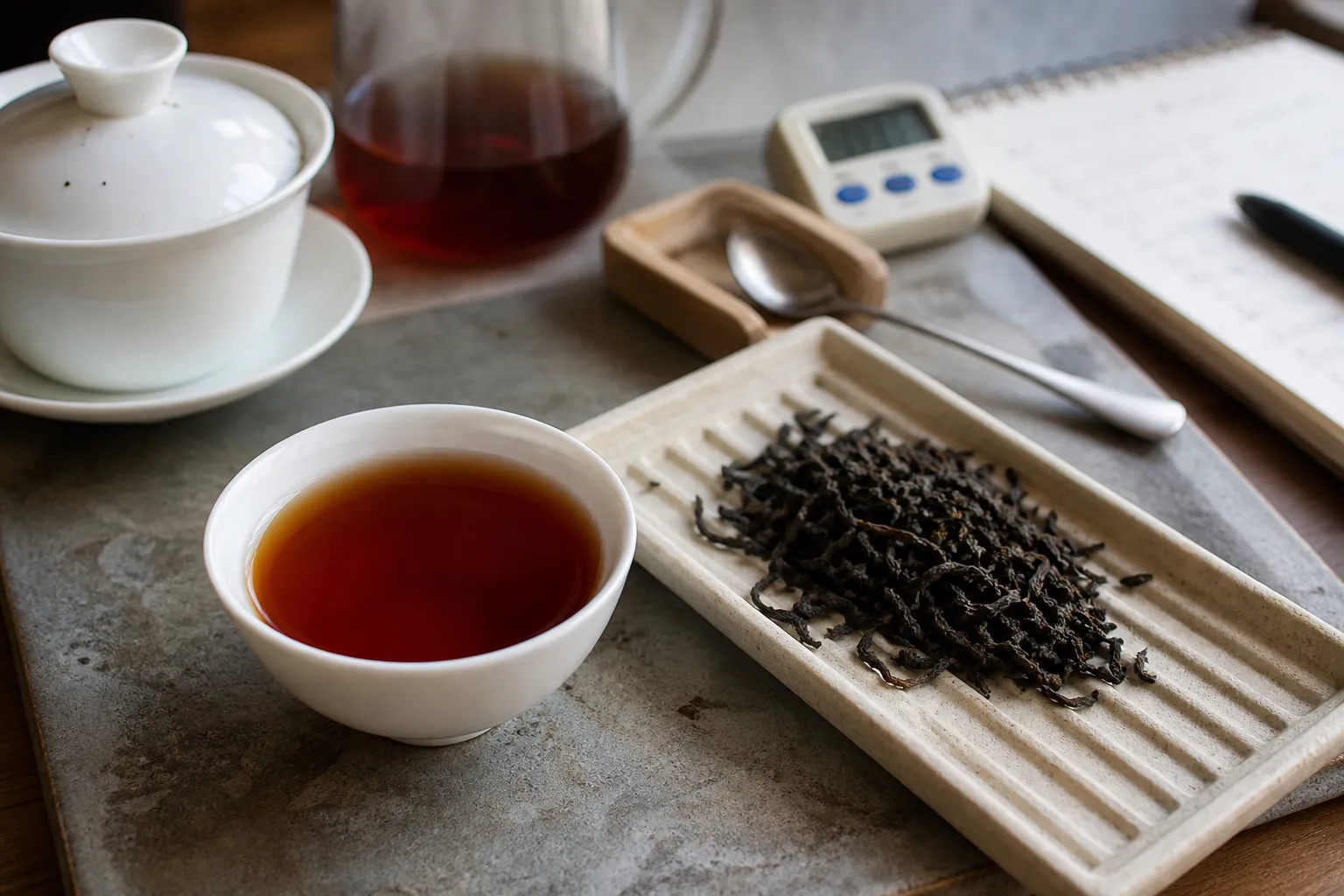
A good daily cup feels settled
For daily drinking, a smooth dark tea cup often has enough body to feel present, but not so much weight that it becomes tiring. Some ripe Pu-erh and other post-fermented dark teas are studied for mellow, thick mouthfeel; in everyday terms, this may show up as roundness, softness, or a lingering smoothness rather than a thin finish.
Not every dark tea has this texture, and not every drinker wants a heavy cup. The useful question is simpler: would this mouthfeel still be pleasant after several cups in a week?
Bitterness and astringency should fit your tolerance
Some bitterness or astringency can be part of tea. The issue is whether they dominate your daily cup. If your mouth feels rough, dry, or tight after ordinary brewing, ask whether you would want that sensation again tomorrow.
For many people choosing hei cha for daily drinking, low harshness matters more than dramatic strength.
The liquor does not need to be very dark
A very dark infusion is not automatically more satisfying. Dark tea can produce red-brown, amber-brown, deep brown, or nearly opaque liquor depending on type, age, leaf amount, and steeping. Color can help you track your own brew, but it should not be your only quality signal.
A cup may look dark and still taste flat. Another may look lighter and feel clean, sweet, and balanced.
Match flavor weight to your routine
Everyday dark tea should match when and how you drink. A tea that is fascinating once a month may be too intense for daily use. A quieter tea may become more useful because you actually reach for it.
If you drink dark tea in the morning, you may prefer a clean, steady cup with moderate body and little storage funk. If you drink during work, you may want something rounded and repeatable that does not become bitter when forgotten for a minute. If you drink in short gongfu sessions, you may enjoy a compressed tea that changes across several infusions. If you brew in a thermos or large mug, look for low harshness and good tolerance for longer contact with water.
Use flavor weight as a selection tool:
Light to medium weight
Easier for frequent sipping, often less tiring, good when you want clarity.
Medium to full weight
Satisfying when you want body, warmth, and a more present cup.
Very heavy or earthy
Can be enjoyable, but may become too much for daily drinking if it turns muddy or storage-heavy.
Words like bold, premium, traditional, aged, and complex are not enough by themselves. They can describe style, marketing, or preference, but they do not prove that a tea will suit your daily vessel. Let the cup decide.
Clarify what “dark tea” means before buying
In English, “dark tea” can be misunderstood. Some readers use it to mean strong black tea, a dark-colored breakfast tea, tea brewed for milk, or a very tannic cup. This page is about Chinese dark tea, also called hei cha: a post-fermented tea category that includes several regional forms and compressed styles.
That distinction matters because choosing everyday dark tea is not the same as choosing a brisk black tea. Black tea is usually discussed as fully oxidized tea. Chinese dark tea is shaped by post-fermentation, processing choices, storage, and often compression. Those differences are why the selection cues here focus on storage aroma, mouthfeel, brew forgiveness, and clean aged character rather than only briskness or strength.
You do not need to memorize every regional category to choose a daily tea. Liu Bao, Fu brick, Anhua dark tea, Qing brick, ripe Pu-erh, and other hei cha forms can all appear in daily-drinking conversations, but no single name guarantees the right cup. Within a category, processing, storage, leaf material, compression, and age can change the result. Use the name as a starting clue, then return to the observable tea.
A compact checklist for choosing everyday dark tea
Before buying more than a small amount, ask:
- Does the dry tea smell clean, stored, and drinkable rather than damp or stale?
- Is the form practical for my routine: loose, small pieces, or compressed chunks?
- Can I brew it in my normal vessel without careful timing every time?
- Does it stay pleasant if I slightly over-steep or under-steep?
- Is the mouthfeel smooth enough for repeated drinking?
- Are bitterness and astringency within my comfort range?
- Do the earthy, woody, sweet, or aged notes feel clean rather than musty?
- Would I want this same cup several times a week?
If most answers are yes, the tea is a strong candidate for daily use. If the tea is impressive but fussy, sharp, or storage-heavy, it may still be interesting, just not the right everyday dark tea.
Where the answer stays limited
No source can tell every drinker which dark tea is best for daily drinking. The available research helps explain why dark tea varies: processing, pile-fermentation, microbial and chemical changes, storage environment, region, and tea form can all affect aroma, taste, and mouthfeel. That supports a cautious tasting method, not a ranking system.
So the practical answer is this: choose a clean-smelling, forgiving, smooth Chinese dark tea in a form you can brew repeatedly. Start with a small amount, test it in your real vessel, and trust the cup more than the label. For daily drinking, reliability is not a compromise. It is the point.
Sources
Sources and further reading
Reference links are limited to sources considered suitable for public citation in this page.