
Compressed tea forms
Bing, Zhuan, Tuo, and Other Compressed Tea Shape Names
Bing, zhuan, and tuo are compressed tea shape names, not tea types. In Pu’er and dark-tea listings, bing cha usually means a round cake or disc, zhuan cha means a brick, and tuo cha means a bowl- or nest-shaped compressed tea. Related words such as tie bing, long zhu, qi zi bing, and san cha also point to form, portioning, or packaging language.
These words help you picture the tea before you buy, break, or brew it. They do not prove age, origin, storage condition, processing style, flavor, or value.
upward
Read the full overview first
Use the broader guide first if you need the full scope before this page.
Quick shape-name decoder
Read these terms as practical marketplace vocabulary. They are useful on wrappers, shop menus, and compressed tea listings, but they should not be treated as grading terms.
If you remember one thing, make it this: shape words describe what the tea looks like in your hand. They are not the same layer of information as sheng, shou, hei cha, storage notes, mountain names, harvest year, or tasting descriptions.
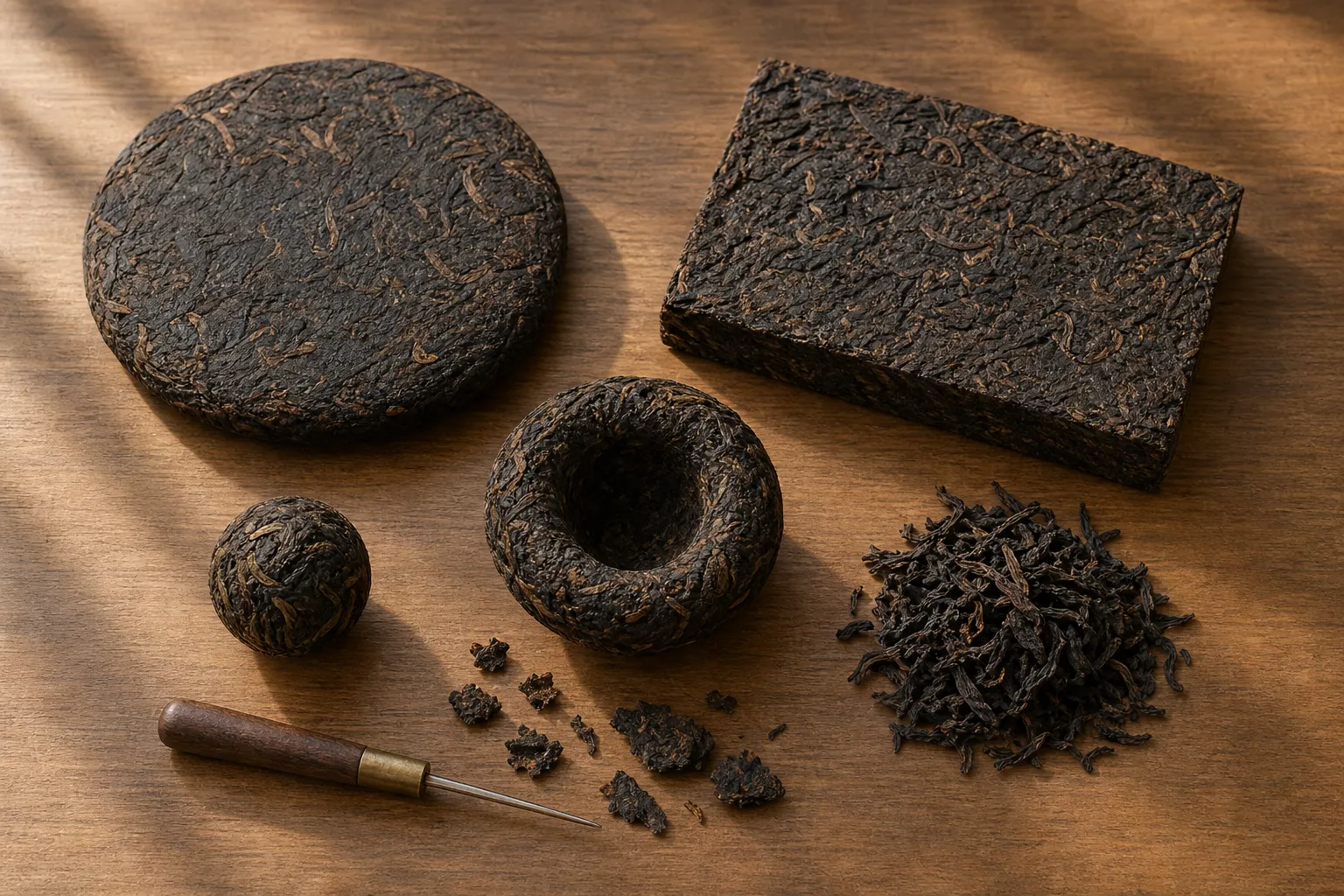
What each name tells you in practice
A shape name gives you a first physical expectation. That matters because compressed tea has to be handled before it is brewed. You may need to loosen a piece, avoid making too much leaf dust, or decide whether one small unit is enough for your pot.
Bing cha: the tea cake shape
Bing cha or cha bing is the familiar tea cake form: a round compressed disc, common in Pu’er and other dark-tea contexts.
The word “bing” does not tell you how tightly the cake was pressed. Some cakes flake apart easily; others hold firm. In everyday brewing, many drinkers begin at the edge, the back depression, or an area that has already started to separate. A clean flake with some intact leaf usually brews more evenly than a pile of powder and splinters.
Zhuan cha: the compressed tea brick
Zhuan cha points to a brick. The rectangular shape gives you obvious starting points: corners, edges, and sometimes visible layers.
A brick can be loose and layered, or dense and stubborn. The word “brick” also does not automatically mean Fu brick tea, although Fu brick is one well-known dark-tea context where brick form appears. The shape and the tea category still need to be read separately.
Tuo cha: the bowl-shaped compressed tea
Tuo cha usually refers to a bowl- or nest-shaped compressed tea. The outside may look rounded, while the underside often has a hollow or curved center.
This form is easy to recognize but can be less tidy to portion. If the tuo is firm, it is usually better to loosen around a seam or outer edge than to push a tool straight into the tight middle.
Tie bing: a dense “iron cake”
Tie bing is commonly used for a very densely compressed cake. The phrase is usually about compression feel, not metal or mineral content.
A tie bing may need more patience when opening. Dense compression can also affect how quickly water reaches the inner leaf, especially if you brew a thick chunk. If the leaves stay tight in the first infusions, you can give them time to open, use a brief rest after the rinse, or lengthen the early steeps slightly. Adjust by what happens in the cup, not by the name alone.
Long zhu: a small tea ball
Long zhu means “dragon ball” in common tea-shop wording: a small rolled ball of tea.
These are often convenient because one ball can act as a portion, though the actual size matters. A ball may open slowly in the first infusion. If the first cup tastes thin, let the leaf unfurl before deciding the tea itself is weak.
Qi zi bing: cake language, not a complete product description
Qi zi bing is a familiar Pu’er phrase often rendered as Seven Sons Cake. It belongs partly to cake and packaging language, not just shape.
Some seller glossaries attach traditional weights or bundle details to the phrase, but listings still vary. Check the actual cake weight, number of cakes, year, processing style, and storage description instead of assuming those details from the name.
San cha: loose tea
San cha means loose or uncompressed tea. In a Pu’er listing, “loose leaf puer tea” or san cha tells you there is no cake, brick, tuo, or ball to pry apart.
Loose tea can be easier for daily measuring, but it still varies by leaf grade, processing, storage, age, and breakage. It may also extract quickly if there is a lot of broken leaf or dust.
Shape versus tea type: the common mix-up
A compressed tea cake is not automatically Pu’er, and Pu’er is not always in cake form. Compression is a physical form and manufacturing variable; it is not the same thing as tea category.
Keep the naming layers separate:
- Shape or form: bing, zhuan, tuo, tie bing, long zhu, san cha.
- Processing style: sheng and shou in Pu’er contexts; other dark-tea processing terms where relevant.
- Tea category or translation layer: hei cha is dark tea; hong cha is the Chinese category commonly called black tea in English.
- Origin or source claim: province, mountain, village, factory, cultivar, or old-tree wording.
- Storage and age: year, warehouse condition, dry or humid storage descriptions, wrapper condition, and aroma notes.
- Tasting language: earthy, woody, camphor-like, sweet, bitter, mellow, astringent, musty, flat, or clean in the sensory sense.
A listing might say “2018 shou Pu’er tuo cha.” In that phrase, 2018 points to year, shou points to processing style, Pu’er points to tea category, and tuo cha points to shape. If you collapse those layers into one meaning, you may expect the shape name to answer questions it cannot answer.
Research on Pu’er processing, Fu brick tea, compression, volatile compounds, and storage also supports the same practical boundary: processing, compression, microbial change, and storage can all affect the tea, but they are not interchangeable with the visible form word on a wrapper.
What shape names do not prove
A bing, zhuan, or tuo does not by itself prove:
- the tea is Pu’er;
- the tea is raw or ripe;
- the tea is old;
- the storage has been well managed;
- the origin claim is accurate;
- the tea will taste better than loose tea;
- the compression will be easy to open;
- the leaf inside is whole, broken, coarse, or fine;
- the cake has special value because of its form.
This matters when seller language becomes romantic. “Cake,” “iron cake,” “old tea,” “traditional,” and “Seven Sons” can sound meaningful, but you still need ordinary details: tea type, production year, storage description, origin information, compression level, wrapper photos, and, when buying online, the seller’s sample or return terms.
For brewing, shape is only the starting point. A tight chunk from a zhuan may open slowly. A loose flake from a bing may release flavor quickly. A long zhu may begin lightly and deepen after it unfurls. A tuo that was forced apart may give dustier early cups. Watch the liquor color, aroma, and leaf opening, then adjust steep time and leaf amount.
How to read a compressed tea listing
Start by translating the shape word into a physical image:
- Bing? Expect a round cake.
- Zhuan? Expect a brick.
- Tuo? Expect a nest or bowl shape.
- Tie bing? Expect a dense cake.
- Long zhu? Expect a small ball.
- Qi zi bing? Expect Pu’er cake and packaging language; verify the details.
- San cha? Expect loose tea.
Then ask the questions the shape word cannot answer:
- What tea is it? Pu’er, Fu brick, another dark tea, a white tea cake, or something else?
- What processing style is named? For Pu’er, is it sheng or shou?
- What year or batch information is given? Is it clearly stated, or only implied?
- How was it stored? Look for concrete storage language and photos rather than vague praise.
- How compressed is it? Edge, surface, and broken-sample photos can help.
- How will you brew it? Loose pieces, flakes, dense chunks, and balls behave differently in water.
That separation prevents the main mistake: treating a shape name as a full product description.
A practical note before you pry
Compressed tea rewards patience. With a cake or brick, aim to loosen layers instead of crushing the leaf. With a tuo, work around the curve rather than forcing the tightest point. With tie bing, use small movements and accept that the first session may produce uneven pieces. With long zhu, let the ball open before judging the cup. With san cha, watch for broken leaf and dust because loose material can extract quickly.
The shape name gives you the first clue. The tea in the cup is shaped by more than that: leaf material, processing, storage, compression density, water temperature, vessel size, steeping time, and your own taste all matter. Use bing, zhuan, tuo, and the related compressed tea shape names as a map of the object, not as a verdict on the tea.
Sources
Sources and further reading
Reference links are limited to sources considered suitable for public citation in this page.