
Brewing adjustment
How to Keep a Compressed Dark Tea Piece From Overbrewing After It Opens
A compressed piece of dark tea can sit quietly through the first pour, then open in the pot and release much faster than expected. To keep compressed dark tea overbrewing after opening, shorten the next steeps as soon as the piece separates, treat the loosened leaf more like loose leaf, and check liquor color, aroma, bitterness, and body before adding more time.
Do not keep using the timing that worked while the chunk was still tight. Once the opened dark tea piece has fanned into flakes, strands, or small fragments, the same steep can become heavy, bitter, or flat.
upward
Read the full overview first
Use the broader guide first if you need the full scope before this page.
Read How Far the Piece Has Opened
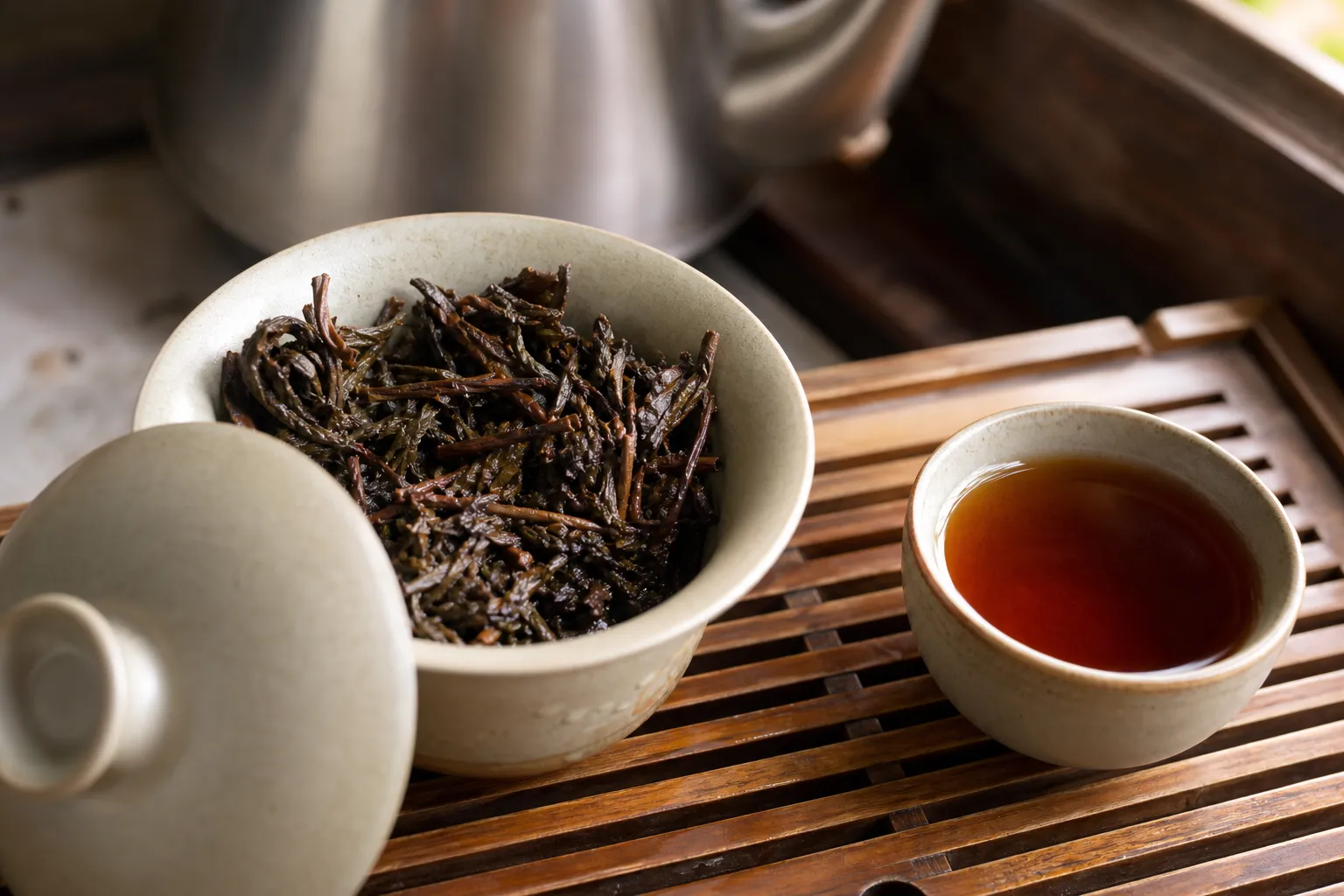
The main change is exposed leaf surface. A tight corner from a cake or brick releases slowly because water reaches the outer layers first. Once it softens, cracks, or spreads apart, more leaf touches the water at the same time. In many everyday brewing setups, that makes the cup stronger without any change in water or vessel.
Look between infusions. If the piece is still compact, the first steep may need a little patience. If the edges are lifting and the center is still firm, shorten the next pour slightly. If the piece has opened into many small bits, extraction can move quickly and the cup may turn dark or bitter if it sits too long.
| What You See | What It Often Means | Brewing Move |
|---|---|---|
| Hard, tight piece | Water is still entering slowly | Keep the first steep modest, then check color |
| Edges lifting, center firm | Strength is starting to increase | Shorten the next steep slightly |
| Piece mostly opened | More leaf is exposed | Use shorter steeps and pour promptly |
| Many small fragments | Extraction can move fast | Reduce time, leaf amount, or temperature |
This is not one rule for every dark tea cake or opened tea brick piece. Age, storage, leaf size, compression, vessel shape, water, and personal taste can all change the cup. The useful point is narrower: after the piece opens, timing should follow the leaf in front of you.
Shorten the Next Steeps First
If the first infusion tasted balanced but the second suddenly became dark, thick, or bitter, the tea probably opened faster than your timing. Correct the next steep before changing the whole setup.
In a small gaiwan or pot, where the leaf-to-water ratio is high, cut the next infusion sharply. If you were steeping for about 20 seconds, try 8–12 seconds after the piece opens. If you were using a larger mug or pot for about 45 seconds, try 20–30 seconds and taste from there. These are starting points, not fixed instructions.
Later steep shortening matters because compressed tea does not always release in a smooth line. A tight piece may under-release early, then open and catch up all at once. If you lengthen every infusion by habit, the cup can move from mild to over-extracted before you notice.
Use these cup cues
- If the liquor jumps from amber-brown to very dark brown in one steep, pour sooner next time.
- If the aroma becomes dense but less clear, reduce time before reducing leaf.
- If bitterness appears at the back of the tongue, shorten the contact time.
- If the body feels heavy, earthy, and dull rather than rounded, use quicker pours.
- If the cup turns thin after correction, add a few seconds back.
The goal is not to make the tea weak. It is to keep compressed dark tea strength from arriving all at once.
Use Leaf Amount, Vessel Size, and Rinse as Secondary Controls
Timing is the fastest fix. If the opened piece still brews too strongly with quick pours, adjust the setup around it.
A dry chunk that looked modest can become a large pile of wet leaf after it opens. If the vessel is small and the leaves fill much of the space, the brew may stay dense even with short steeps. For the next session, start with a smaller piece. If the pot is clearly crowded after the rinse, you can remove a little opened leaf before continuing.
Vessel size also matters. A small pot packed with loosened leaf makes a concentrated cup quickly. A slightly larger vessel, or the same vessel with less tea, gives the opened material more water around it. In a mug or larger pot, the issue is often long sitting time instead; decant fully or separate the leaves from the liquor when the color and taste are where you want them.
The rinse should follow the condition of the piece. A quick rinse can help loosen a tight compressed piece. If the rinse already turns dark and aromatic, the first drinkable steep should be brief. If the rinse is pale and the piece remains firm, wait until the leaf surface opens before shortening sharply.
Watch the Cup, Not Only the Clock
A clock helps at the start, but it can mislead after a compressed piece opens. Watch how fast the liquor color develops, then taste how the body lands.
A balanced infusion may look clear, deep, and steady for its style. When overbrewing begins, the color may deepen quickly, the aroma can feel crowded, and the mouthfeel may become thick without clarity. Bitter dark tea is not always a leaf problem; sometimes it is simply too much contact time after the piece has loosened.
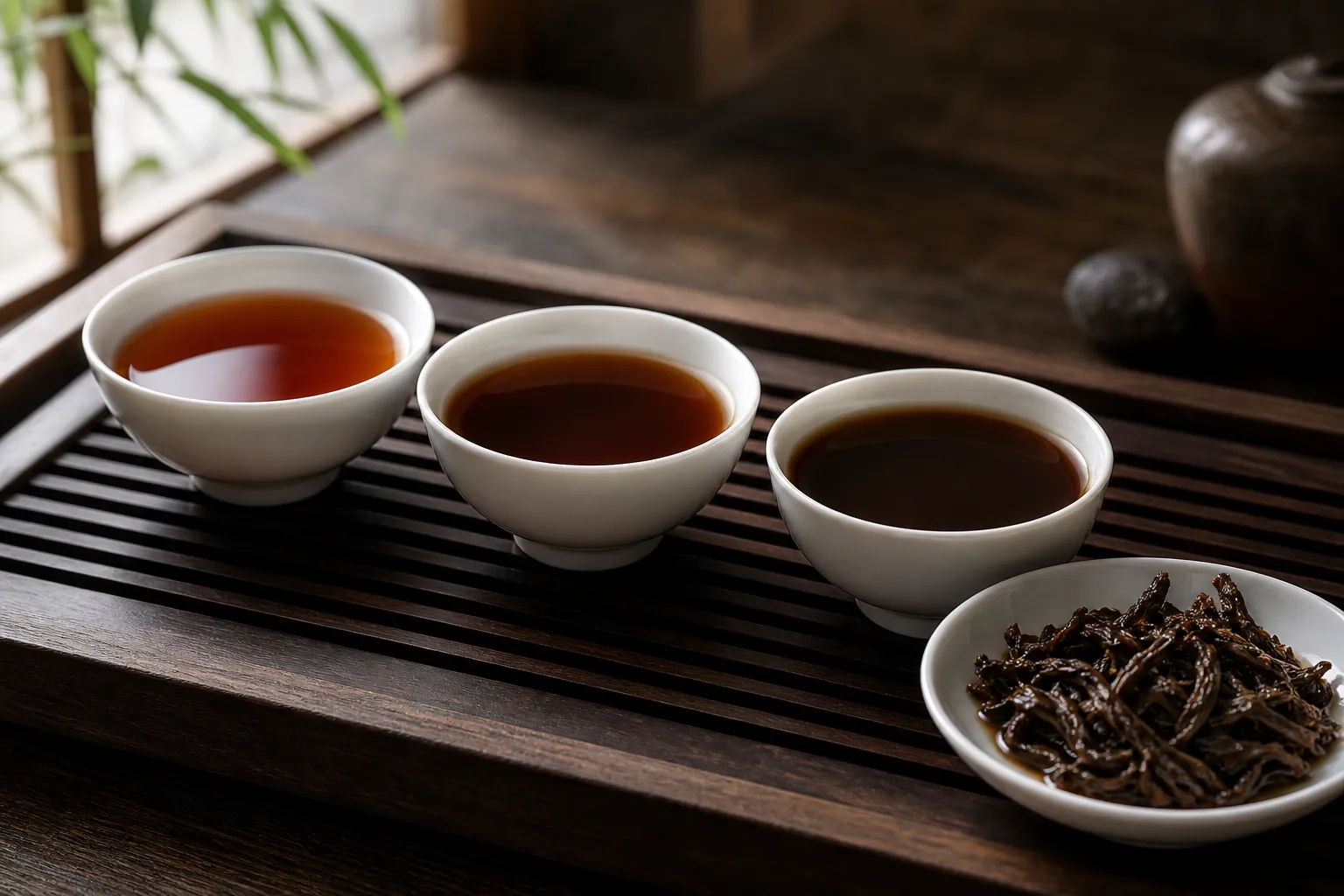
A small tasting loop
- Pour earlier than you think after the piece opens.
- Compare the liquor color with the previous steep.
- Taste for bitterness, heaviness, and clarity.
- Add time back only if the cup feels too light.
- Keep later steeps flexible instead of lengthening by habit.
Temperature can help, but it should not be the first lever every time. If the tea is pleasant but too intense, shorter steeps usually preserve more of its character. If quick steeps still taste harsh or overly heavy, slightly cooler water may help. If the cup turns flat, the water may be too cool or the steep too short.
Change one variable at a time when possible. If you shorten the steep, reduce the leaf, enlarge the vessel, and cool the water all at once, you may fix the strength but lose track of what helped.
Common Confusion With an Opened Piece
Assuming it stays compressed
A cake chip, brick corner, or tuo-style fragment can open at its own pace. Once it opens, the brew may need a new rhythm.
Blaming the tea first
If the first steep was mild and the next one suddenly turned heavy, the change may come from exposed surface area and timing.
Adding time by habit
Many dark teas can handle repeated infusions, but that does not mean every opened piece wants a long steep.
Relying on color alone
Some infusions darken quickly and still taste rounded; others look similar but feel bitter, dry, or flat.
Pair liquor color with aroma and mouthfeel before deciding the next pour.
Rescue the Current Session
If the tea is already too strong, pour the liquor off the leaves first. Separating leaf from liquid stops the current extraction and gives you a cleaner next step.
For the next infusion, use a short pour. In a small gaiwan or pot, that may mean adding water and decanting almost immediately. In a mug or larger pot, it may mean steeping briefly, then removing the leaves or using a strainer. Taste before extending.
| Problem in the Cup | Likely Brewing Fix |
|---|---|
| Bitter edge | Shorter steep or slightly cooler water |
| Heavy, dull body | Less leaf or more water space |
| Very dark liquor too quickly | Faster pour after water contact |
| Crowded aroma | Shorter middle infusions |
| Thin after correction | Add a few seconds back |
If you are between sessions, let the remaining opened leaf drain well and avoid leaving it soaking. For the next brew, start with a smaller amount or a larger vessel. The point is to reset the ratio between opened leaf and water, not to make the piece behave as if it were still tight.
What This Answer Can Safely Cover
This page stays with tea-table variables a drinker can observe: compression, exposed leaf surface, leaf amount, vessel size, water contact time, liquor color, aroma, bitterness, and body. It does not assign quality grades, judge authenticity, promise aging behavior, or make body-outcome claims.
The practical answer is simple: when a compressed dark tea piece opens and starts brewing too fast, shorten the steeps first. If the cup still tastes too strong, use less leaf, give the leaves more water space, or separate the liquor from the leaves sooner.
Let the next cup make the decision. If the opened leaf tastes rounded after shorter pours, keep the rhythm quick. If it turns thin, add seconds back. If it stays heavy no matter how fast you pour, use less leaf or more water next time. The tea has changed shape; let the brewing change with it.