
Brewing Guide
How to Brew Compressed Dark Tea Bricks and Cakes
A compressed brick or cake does not brew quite like loose dark tea. The leaves may lift apart in thin flakes, stay locked in a dense chunk, or shed crumbs that color the water faster than the larger piece. That is the main reason people look up how to brew compressed dark tea: the same tea can taste pale, heavy, cloudy, sweet, earthy, rough, or flat depending on how the piece opens in the vessel.
Start before the water touches the leaf. Look at the piece, decide whether it needs loosening, give it enough room, and adjust by liquor color, aroma, texture, and taste. Compression, storage, age, leaf size, water temperature, steeping time, vessel size, and personal preference all change the cup.
upward
Read the full overview first
Use the broader guide first if you need the full scope before this page.
Start by Reading the Piece, Not the Wrapper
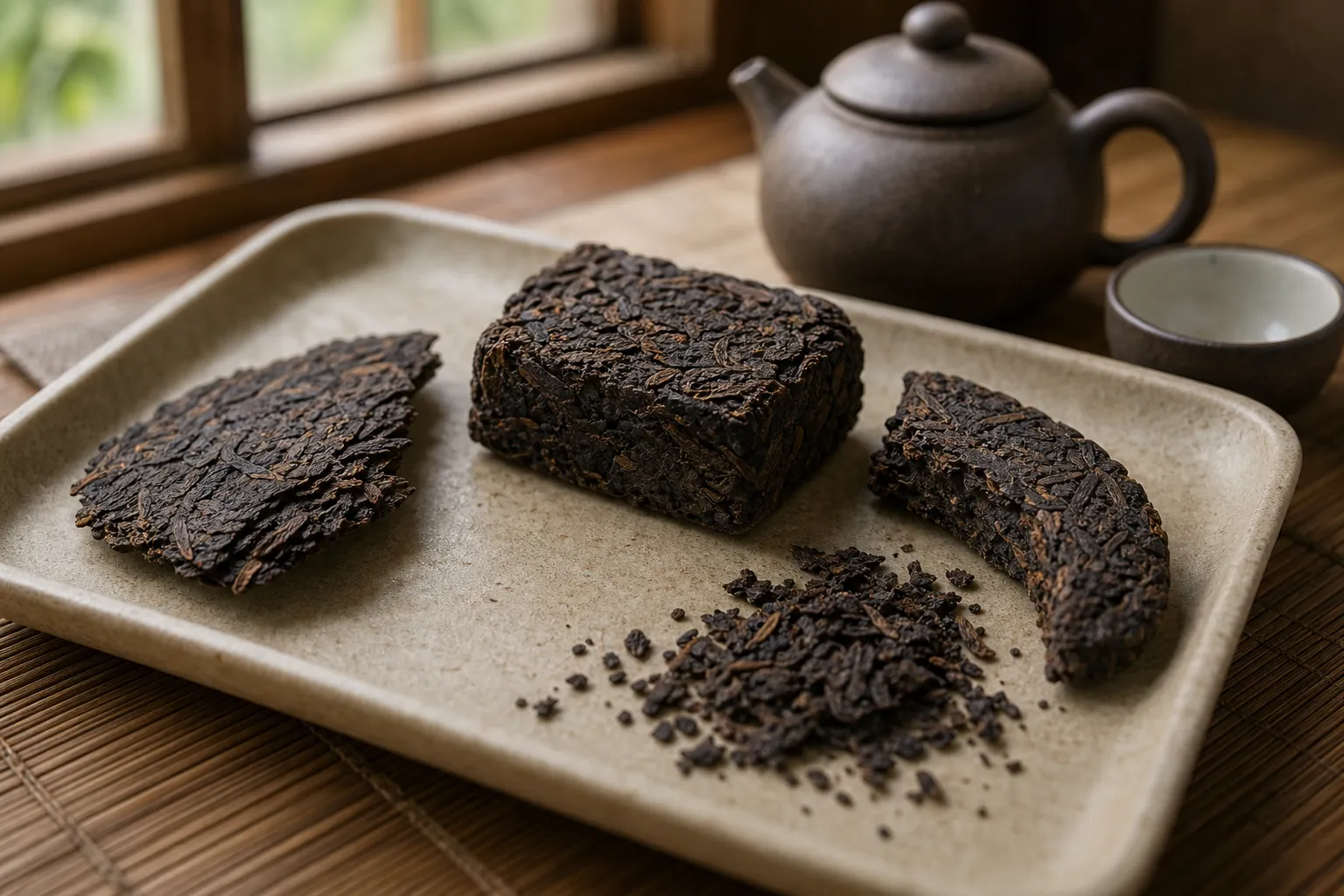
A brick corner, cake edge, center piece, flake, and pile of crumbs can all come from compressed dark tea, but they do not brew the same way.
A thin layered piece gives water more contact and may release quickly. A dense brick chunk can look quiet in the first infusion because the center is still dry or only partly softened. A newly broken piece may include both intact layers and tiny fragments, so the small bits can brew faster than the main piece.
Use the dry piece to set your first move:
These are starting cues, not fixed rules. A tightly stored cake may behave differently from a looser one, and a small teapot will concentrate the liquor faster than a large mug. Let the shape guide the first decision, then let the cup correct you.
Should You Loosen a Compressed Dark Tea Piece Before Steeping?
Loosening compressed dark tea is useful when the piece is thick enough that water cannot enter it evenly. You do not need to turn every piece into loose leaf. The aim is to create openings, not dust.
For a cake or brick piece with visible layers, separate along natural seams. A thin flake can often be brewed as it is. A dense chunk may do better opened into two or three smaller pieces. If the tea starts breaking into many crumbs, stop; those fragments will brew much faster than intact layers.
A simple decision frame
- If the piece is thin, keep it mostly whole and shorten the first steep.
- If the piece is thick but layered, open it gently along the layers.
- If the piece is hard and compact, use a smaller amount and expect slower release.
- If it turns into crumbs, reduce steeping time and avoid crowding the vessel.
- If the cup stays hollow after several steeps, loosen the softened core before the next infusion.
You can brew a small compressed piece whole if it fits the vessel and you are willing to accept a lighter start. It is less forgiving with a large chunk, because the outside can extract while the center is still closed.
The common mistake is using more force than the tea needs. Crushed fragments can make the cup muddy or blunt. Carefully opened layers usually give the water more even contact.
A Practical Setup for Bricks and Cakes
For dark tea brick brewing or dark tea cake steeping, begin with a moderate amount of tea, hot water, and a vessel that lets you observe the liquor. Exact numbers depend on the tea and vessel, but the first setup should leave room for the compressed leaf to open.
In a small teapot, gaiwan, or compact brewing vessel, use a piece that covers the bottom lightly rather than packing it tight. For a mug or larger pot, use a little more tea, but keep the first steep controlled. Compressed tea can strengthen quickly once the interior opens.
Hot water is commonly useful because compressed leaf often needs heat to soften and release body. Still, heat is only one variable. If a thin flake tastes rough, shorten the steep before changing everything else. If a dense piece stays pale and flat, give it more time or open it slightly.
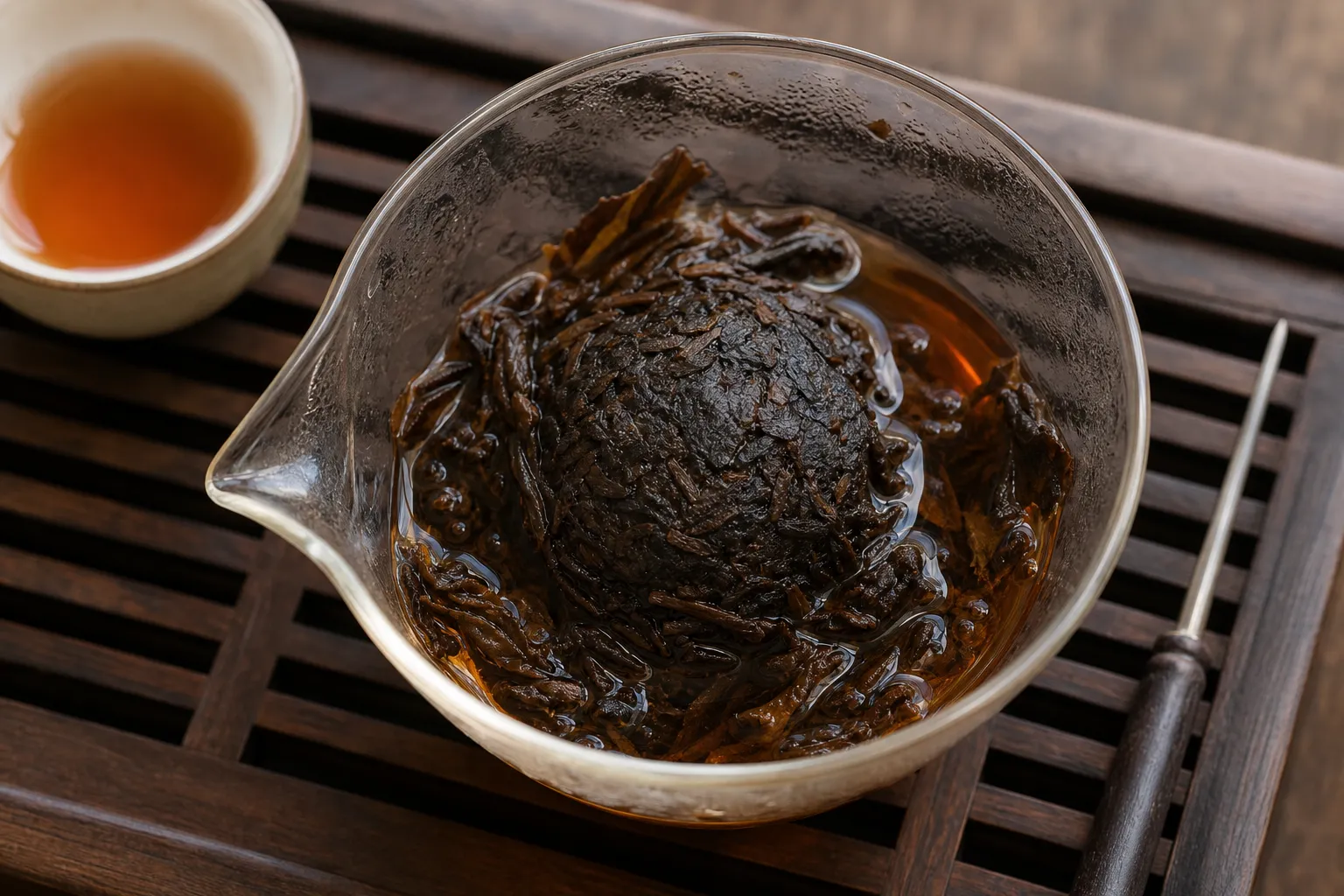
A rinse can help with compact pieces. Pour hot water over the tea, wait briefly, discard that first liquid, then let the softened piece rest for a short moment before the first drinking infusion. The rest gives heat and moisture time to move inward. For crumbs or fragile flakes, keep the rinse very brief or skip it if the tea already extracts quickly.
A good starting path
- 1. Place the piece in the vessel without crowding it.
- 2. Rinse briefly if the piece is compact or dusty with broken bits.
- 3. Let a dense piece rest for a short moment after the rinse.
- 4. Use a short first infusion for thin flakes or crumbs.
- 5. Use a longer first infusion for a dense piece that still looks closed.
- 6. Adjust the next steep by color, aroma, texture, and taste.
Do not judge the tea from one pour. Early cups may show storage aroma and light body. Middle cups may become rounder as the piece opens. Later cups may soften or fade.
How Piece Shape Changes the Brew
Dark tea brick chunks and flakes can come from the same brick but behave like different brewing materials.
A chunk has less exposed surface area for its weight. The outside releases first and the inside follows later. This can create uneven brewing: a pale early cup, a strong middle cup, then a slower decline. If that happens, do not automatically add more leaf. First check whether the chunk has opened. If it has not, separate it gently after the rinse or first steep.
A flake has more exposed leaf. It may give color quickly and show aroma sooner. The risk is a drying edge when the steep runs too long. To brew a thin flake without harshness, start short, pour fully, and lengthen only after the first cup tastes balanced.
Crumbs and small bits are their own case. They are useful for a quick cup or for using fragments left in a wrapper, but they are also the easiest path to a cloudy, heavy brew. Use less tea, keep steeping short, and consider a strainer if fine particles bother you. Cloudiness is not automatically a flaw, but if the mouthfeel turns muddy or the flavor becomes blunt, the small pieces are extracting faster than the cup can stay clear.
Fu brick tea pieces may release extra fine material as they open. A careful approach is to use a moderate amount, rinse briefly if the piece is compact, and pour through a strainer if the liquor becomes cloudier than you like. Avoid stirring the piece aggressively; agitation can break off more fine particles.
Rinse, Rest, and First Steep
The rinse is not a fixed ritual. For compressed dark tea, it is mainly a practical tool: it warms the vessel, wets the layers, and shows how quickly the piece begins to open.
A dense piece may need a brief rinse followed by a rest. If you pour the first drinking infusion immediately, the outside may brew while the middle remains tight. If the piece is crumbly, a long rest can make the tea release before you intend it to.
After the rinse, look at the leaf
- If the piece has softened and separated slightly, begin with a normal short steep.
- If it is still a hard block, extend the first steep or loosen it gently.
- If many crumbs have fallen away, shorten the first steep and pour cleanly.
- If the aroma is already strong and earthy, avoid pushing the next infusion too long.
- If the liquor is pale and the aroma is faint, increase time before increasing leaf.
The first steep should answer one question: how quickly is this piece giving itself to the water? Once you know that, the rest of the session becomes easier.
Adjust by Liquor, Aroma, Texture, and Taste
Compressed dark tea rewards small corrections. Instead of holding one timer for the whole session, use the cup as feedback.
If the liquor looks pale and tastes thin, the tea may need more time, more heat, more leaf, or better opening. With a dense chunk, open the softened piece before adding more tea. If the aroma is present but the body is weak, the leaves may be wet but not fully separated.
If the cup tastes too heavy, earthy, or flat, shorten the next steep and pour more completely. A heavy cup can come from too much leaf, too many crumbs, a long steep, or a piece that finally opened after earlier infusions.
If the texture feels rough or drying, especially from a thin flake, reduce time first. You can also use a smaller piece next time. Roughness is not always a sign of poor tea; it can come from exposing too much broken surface area at once.
If the aroma is muted but the liquor is dark, the steep may be extracting weight without clarity. Try less leaf, a cleaner pour, or shorter infusions. If the liquor is clear but too light, lengthen the steep or give the piece more room to open.
These cues do not identify every cause perfectly. They simply give you the next adjustment to test.
Brewing Different Parts of a Cake or Brick
An edge piece and a center piece can brew differently because they break differently. The edge of a cake may lift into flakes or layered pieces. The center may be tighter, thicker, or more resistant. A brick corner may separate in sheets, while a middle chunk may behave like a compact block.
For an edge piece, start with care because the layers may open quickly. Keep the first steep short and watch for fast color. For a center piece, expect slower opening. A rinse and rest can help, and the first infusion may need more patience.
A newly broken piece often includes both intact layers and loose debris. Before brewing, separate the usable piece from dust and tiny fragments. You can brew the fragments, but do not treat them like the main piece. If they go into the vessel together, they may dominate the first cup while the larger piece is still waking up.
When a compressed cake brews unevenly, the cause is often physical rather than mysterious. Water reaches exposed surfaces first. The center follows when the layers soften. Adjust the piece shape, steep length, or leaf amount before making a dramatic correction.
Keep the Cup Balanced After the Piece Opens
One easy mistake is continuing the same steeping time after the compressed piece has fully opened. The first two infusions may need time because the tea is compact. Once it separates, the same timing can make the cup too strong.
After each pour, glance at the wet leaf. If the piece has expanded into loose layers, reduce the next steep or keep it brief. If it remains a compact knot, maintain or lengthen the time. Dense brick pieces can move from under-extracted to too strong in a single infusion.
Pouring completely also matters. If liquid remains trapped with the leaves, extraction continues between steeps. In a small teapot or gaiwan, empty the vessel fully. In a mug, remove the infuser or decant the liquor when the taste is where you want it.
Think in phases
- Opening phase: rinse, rest, and let the compressed piece soften.
- Building phase: adjust time until the liquor has enough body.
- Open phase: shorten or steady the steeps once the layers separate.
- Fading phase: lengthen again as the flavor becomes lighter.
This is more flexible than a single timer. It also respects the main difference between compressed and loose dark tea: the leaf does not become available to the water all at once.
What Not to Overstate
This page is about practical brewing, not exact standards. The available material does not support universal temperature rules, quality rankings, origin claims, or broad promises about aging results. Everyday brewing is variable enough without pretending every brick or cake follows one method.
Stay with what you can observe. Is the piece dense or flaky? Does the rinse open it? Is the liquor pale, red-brown, dark, cloudy, clear, thin, round, rough, sweet, earthy, or flat? Does the aroma grow after the second steep or fade quickly? These cues are more useful than a rigid claim that every compressed dark tea brick should be brewed the same way.
A reliable starting method is simple: open the tea only as much as needed, rinse compact pieces briefly, let dense pieces rest, begin with controlled steeps, and adjust once the leaves separate. The goal is not to force the strongest possible cup. It is to let the compressed leaf open at a pace that gives you color, aroma, texture, and taste in balance.
Quick Answers for Common Brewing Situations
Can you brew a compressed dark tea piece whole?
Yes, if the piece is small enough for the vessel and not so dense that only the outside extracts. Expect a slower start. If the first cups stay thin while the outside darkens, loosen the softened piece before continuing.
How do you brew a dense dark tea brick piece that opens slowly?
Use a moderate amount, rinse briefly with hot water, let it rest, and give the first drinking infusion more time. If the core remains hard after the first steep, separate it gently rather than simply adding more leaf.
How do you brew crumbs from a dark tea brick?
Use less than you would with intact pieces, steep briefly, and pour through a strainer if fine particles bother you. Crumbs extract fast, so judge them by taste and texture rather than by the amount of leaf in the vessel.
Why did my compressed dark tea suddenly become too strong?
The piece likely opened between infusions. Once the layers separate, reduce steeping time and pour completely. Compressed tea can move from quiet to strong quickly when the inner leaf finally meets the water.