
Brewing adjustment
Why a Compressed Dark Tea Cake Brews Unevenly and How to Adjust
A compressed dark tea cake often brews unevenly because water does not reach every part of the leaf at the same speed. Loose edges and small flakes release color and aroma quickly, while a tight inner chunk may stay slow to open for several steeps. That is why the first cup can taste thin, then a later one can suddenly turn heavy, harsh, or muddy.
When compressed dark tea brews unevenly, start with extraction before judging the tea itself. Loosen the piece more evenly, give the leaves enough room, use hot water, read the rinse, and adjust steep duration by what the cup shows.
The useful question is not “What is the one correct method?” It is “Which part of this cake is releasing too slowly or too fast, and what can I change in the next brew?”
upward
Read the full overview first
Use the broader guide first if you need the full scope before this page.
Why a Compressed Cake Extracts Unevenly
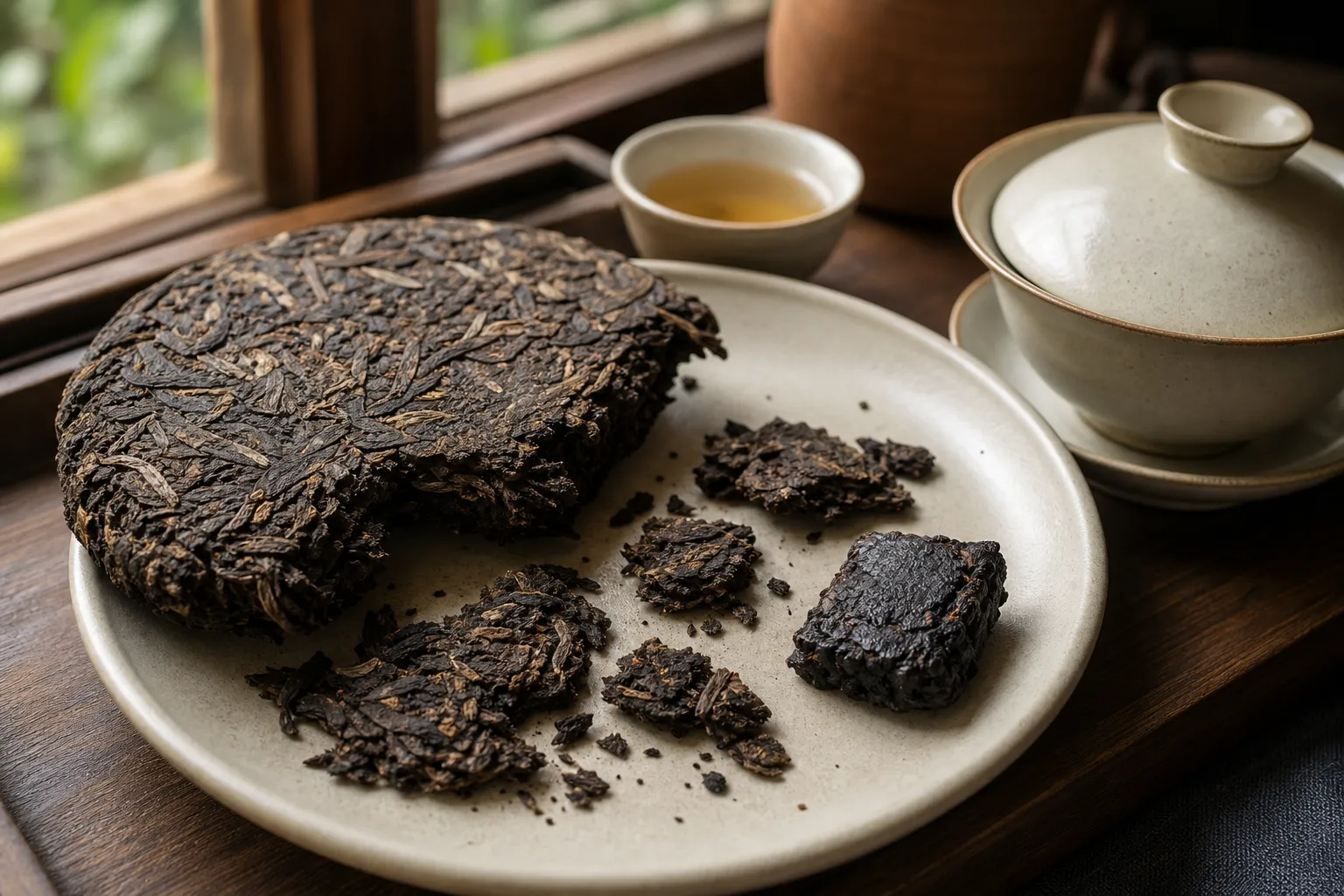
Compression changes how water moves through the tea. Loose leaf separates easily, so water can touch more surfaces at once. A cake or brick asks for more patience because the leaves have been pressed into a dense shape. Some layers may open quickly, while the center of a broken piece remains compact.
Tight compression is the most common cause. A hard piece can look wet on the outside while the inside is only partly opened. The first cup may show pale liquor and a quiet aroma, not because the tea has nothing to give, but because the water has not reached enough leaf surface yet.
Fragment size matters too. If your portion includes dust, tiny chips, broad flakes, and one hard lump, each part releases differently. The smallest material can darken the liquor quickly and add roughness, while the larger piece is still opening. This is one reason a brew can look strong but taste hollow: color arrives before full aroma and mouthfeel.
Vessel shape can make the problem more obvious. In a small gaiwan or teapot, a bulky chunk may press against the wall and reduce water movement around the compressed center. In a roomier vessel, the same piece may open more gradually. This does not mean a larger vessel is always better; it means the brewing portion needs enough space to unfold.
Storage and age can change how a cake breaks, but they do not give a simple answer by themselves. A cake that flakes apart may brew differently from one that splits into hard nuggets. Those observations help you adjust steeping; they do not prove origin, quality, storage condition, or value.
Start With the Leaf Before Changing the Brew
Before adjusting timing, look at the piece you are about to brew. The best correction often happens before the kettle reaches the table.
If the portion is one solid chunk, loosen it gently into layers or smaller connected flakes. Do not crush it into dust. Too much breakage can create fast, rough extraction from fine particles. A better target is a piece with visible openings and fewer sealed inner faces.
If the portion already contains many small fragments, use shorter early steeps. Fine particles release quickly, so a long first infusion can turn sharp before the larger leaves contribute sweetness, depth, or a rounded finish. If you see both powder and dense chunks in the same portion, expect the first cup to need closer attention.
Leaf condition and first adjustment
One hard, sealed chunk
Often means slow opening, pale early liquor, and delayed aroma. Try loosening it into layered flakes before brewing.
Many tiny chips and dust
Often means quick color with possible roughness or heaviness. Shorten the rinse and early steeps.
Mixed dust and dense pieces
Often creates strong-looking liquor with uneven taste. Use shorter steeps, then extend once the chunk opens.
Large flakes with visible gaps
Often gives more even water contact. Start with short steeps and adjust by taste.
This is a brewing chart, not a grading chart. The same cake can behave differently depending on where the piece came from, how much dust came with it, and how tightly that area was pressed.
Use the Rinse as a Reading
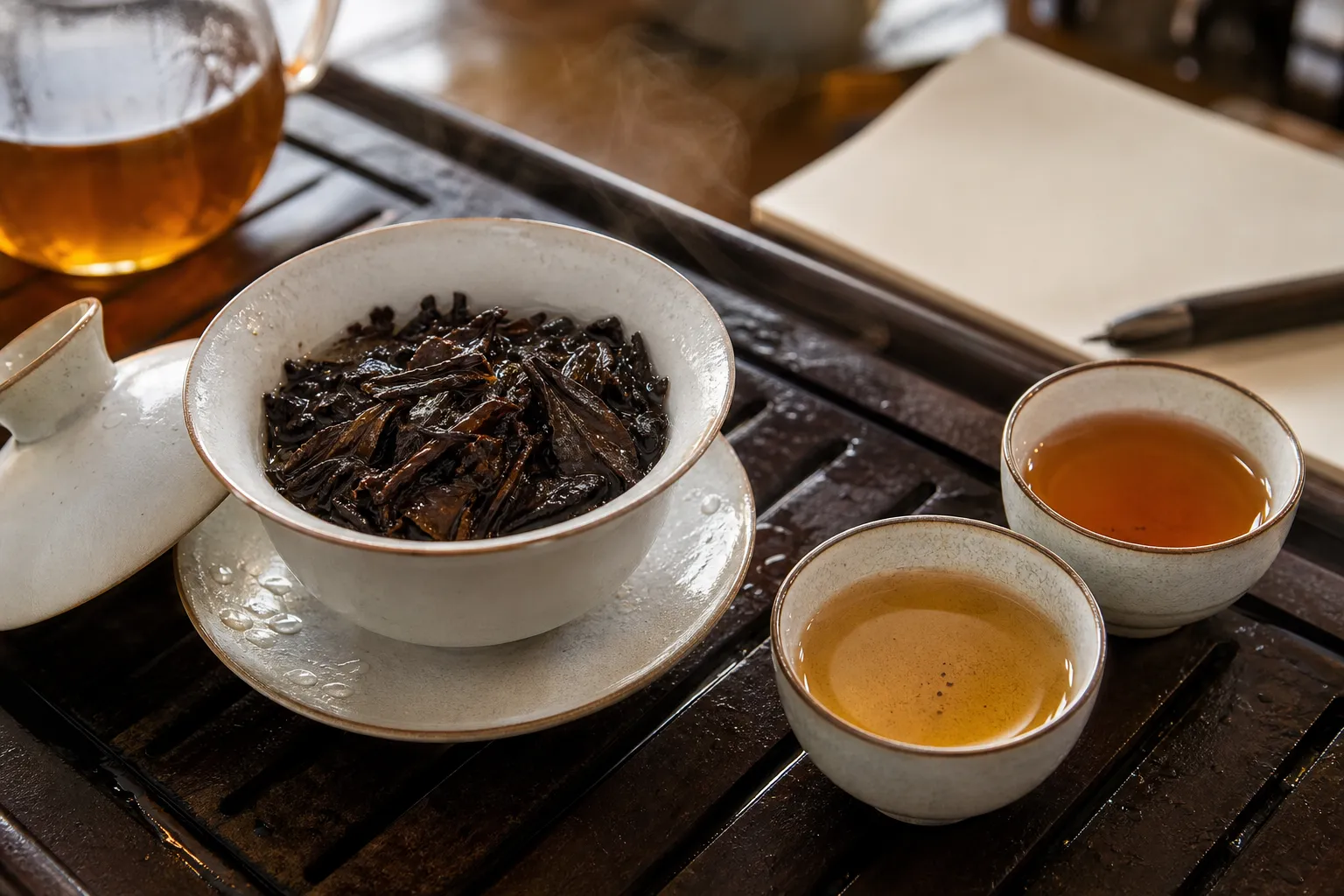
A rinse can help a compressed piece begin to open, but its main value here is observation. Watch what happens when hot water first touches the tea. Does the surface darken immediately? Does the piece stay stiff? Does the aroma rise quickly, or does it remain quiet after the water is poured off?
If the rinse liquor turns dark almost at once while the main chunk is still closed, the small fragments are releasing faster than the core. Keep the next steep short. If the rinse is pale and the cake remains firm, the tea may need a little more opening time, a hotter pour, or a slightly longer first drinkable steep.
A rinse should not become an automatic excuse for over-brewing. If the rinsed leaves already smell deep, warm, earthy, woody, sweet, or active, the next infusion may not need much time. If the aroma is still faint and the leaves have barely separated, a slightly longer first steep may be more useful than adding more leaf.
For many everyday setups, hot water close to a full boil is a practical starting point for dense compressed dark tea. The point is not to force one rule; it is to give the leaves enough heat to open. If the tea becomes too heavy, rough, or drying for your taste, adjust timing and leaf amount before blaming water temperature alone.
Adjust Vessel, Water Contact, and Time
When you need a compressed tea brewing adjustment, change one variable at a time. If you loosen the leaf, switch vessels, raise water temperature, and double the steep all at once, you will not know which change helped.
Start with vessel space. A small pot can work well with a small, loosened portion. A cramped pot with a bulky chunk often makes extraction less predictable because water cannot move freely around the dense center. If the leaves expand and fill nearly all the space after a few steeps, use less tea next time or choose a roomier vessel.
Then consider water contact. Pour in a way that wets the whole portion rather than striking only one edge. If a chunk floats, press it gently with the lid or let it settle during the rinse. Do not grind it in the vessel; rough breaking at this stage can release too many fines into the cup.
Let steep duration follow the liquor and taste. With a dense piece, early steeps may need a little more time once the rinse shows slow opening. With a dusty or fragmented piece, early steeps often need to be shorter, then lengthened after the quick particles have given their first rush.
Cup cues for the next steep
Pale liquor, faint aroma, watery body
The dense leaf is likely opening slowly. Extend the next steep slightly or loosen more next time.
Dark liquor, thin taste
Small particles may have colored the cup before deeper extraction developed. Shorten early steeps and use a more even leaf portion.
Harsh or drying edge
Fine fragments or long timing may be over-extracting. Reduce steep time or use fewer broken bits.
Heavy, flat cup
Too much leaf, too long a steep, or a crowded vessel may be involved. Use less tea, more space, or a shorter pour.
Aroma appears late, sweetness arrives after several steeps
The core is opening gradually. Keep timing moderate and extend slowly.
Liquor color cues help, but they are not enough on their own. Some dark teas naturally brew deeper; others stay clearer while still carrying flavor. Use color together with aroma release, mouthfeel, and aftertaste. A cup that looks dark but tastes thin is telling a different story from a cup that looks medium-dark and feels rounded.
How to Correct a Thin, Harsh, or Delayed Cup
If the tea tastes thin, first ask whether the leaves have opened. Look at the spent leaf between steeps. If much of the portion is still clumped, improve water contact instead of simply adding more leaf. Loosen the piece more carefully next time, use a vessel with more room, and let the first drinkable steep run a little longer if the rinse was very pale.
If the tea tastes harsh, look for fine fragments. Powder and small chips can release quickly, especially with long early steeps. Use a shorter rinse, pour off the first drinkable infusion sooner, and avoid scraping the cake into dust when breaking your portion. If the harshness remains after timing changes, that may be how that portion tastes in your setup.
If the tea tastes flat or heavy, reduce crowding. Too much compressed leaf in a small vessel can produce a dense cup without clear aroma. Use a smaller amount, separate the leaves more evenly, or move to a vessel where the expanded leaf does not pack itself into a wet wall.
If sweetness, aroma, or body arrives late, do not assume the first steep failed. Some dense pieces open in stages. Keep a steady rhythm: short to moderate steeps once the leaf begins to open, then gradual lengthening as the flavor fades. A late-opening cake can be pleasant if you stop chasing strength in the first cup.
A simple correction sequence
- Break a portion with fewer sealed chunks and fewer dusty scraps.
- Rinse with hot water and watch whether the piece opens.
- Keep early steeps short if many small fragments are present.
- Extend slightly if liquor, aroma, and body remain weak.
- Change only one variable in the next session.
This keeps dark tea cake steeping practical. The cup gives feedback, and the next pour answers it.
Common Misreadings of Uneven Tea Extraction
Uneven extraction is easy to over-interpret. A compressed cake that opens slowly is not automatically poor tea. A rough first steep is not automatically a storage problem. A dark rinse is not automatically a sign that the whole portion is fully extracted. These are brewing clues first.
The biggest misunderstanding is expecting a compressed cake to behave like loose leaf. Loose leaf gives water immediate access to more surfaces. A cake asks you to manage density, fragment size, and opening speed. If you brew both forms with the same timing and the same visual expectations, the compressed tea may seem unpredictable even when it is only responding to its shape.
Another common confusion is treating stronger color as better extraction. With compressed tea, color can come from the smallest material before the larger leaves have opened. That is why a cup can look ready but taste narrow. Aroma and mouthfeel are better companions to color than color alone.
It is also worth separating brewing adjustment from bigger claims. Uneven brewing does not establish whether a tea is authentic, well stored, unusually aged, or worth buying again. Those questions need more information than one session can provide. For this page, the reliable ground is what you can see and change: the piece, the vessel, the water, the steep, and the cup.
A Compact Routine for the Next Session
For your next compressed dark tea session, begin with a moderate portion that still fits the vessel after expansion. Loosen the cake into layered pieces instead of powder. Use hot water, rinse briefly, and watch whether the leaf opens or stays tight.
If the rinse is dark and aromatic, keep the first steep short. If the rinse is pale and the chunk is still closed, allow a little more time. If the first cup is thin, extend slowly. If it is harsh, shorten. If it is heavy, reduce leaf or increase vessel space next time.
The best adjustment is usually small. A few seconds, a more open fragment, or a less crowded pot can change the way a compressed cake brews. Let the next cup decide the next move.