
Brewing adjustment
Edge Piece vs Center Piece: Brewing Different Parts of a Dark Tea Cake
An edge piece and a center piece from the same dark tea cake can brew differently, but the difference is usually about compression, breakage, and leaf release—not about one part being better.
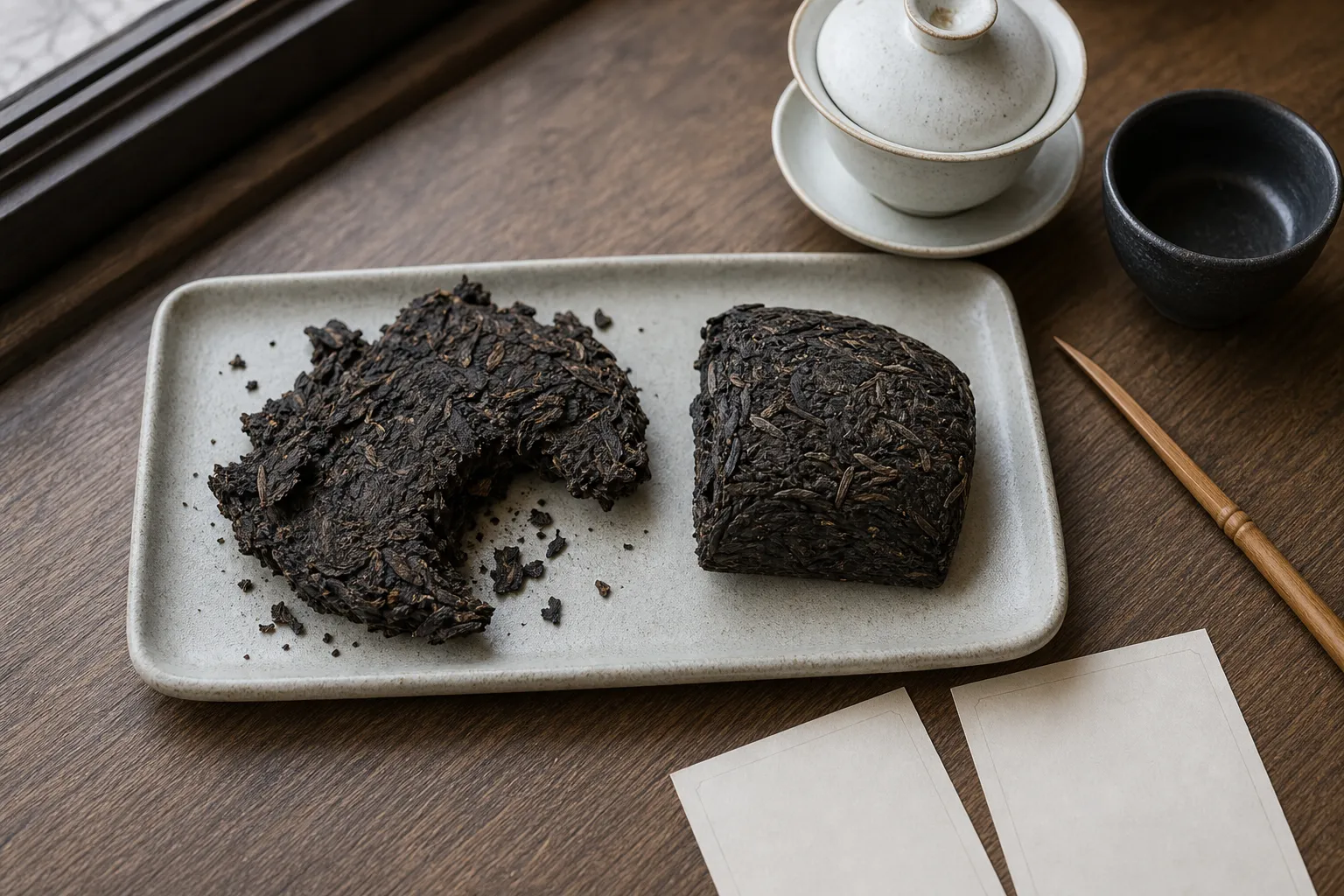
For dark tea cake edge vs center brewing, start with the piece in your hand. A looser, chipped edge often opens faster and may give color, aroma, and body earlier. A dense center piece may need a longer rinse, a slightly longer early steep, or one or two patient infusions before the inner layers loosen. If the rinse darkens quickly, shorten the first steep. If the first infusion tastes thin, give the next steep more time before judging the tea.
upward
Start with the broader guide
Use the broader guide first if you need the full scope before this page.
What Usually Changes Between an Edge Piece and a Center Piece
A compressed tea cake is not always even from rim to middle. Some cakes have thinner, more exposed edges. Some have a tighter center. Others are pressed evenly enough that the difference is small.
The practical question is not “which part is stronger?” It is “how quickly is this piece releasing into water?”
A tea cake edge piece may contain more broken leaf, flakes, and dust, especially if it came from a brittle rim or has been handled often. Smaller fragments contact water quickly. In the cup, that can mean a fast-darkening rinse, early aroma, and a first infusion that turns heavy sooner than expected. If the edge is loose but mostly intact, it may simply open smoothly.
A center piece can behave the opposite way. It may be thicker, more compact, or still clumped after the rinse. The liquor may look pale at first, the aroma may arrive late, and the mouthfeel may seem light even when you used enough leaf. That does not always mean the center is weak. It may mean water has not reached the inner layers yet.
Loose edge with flakes
This can mean fast leaf release. Shorten the first steep.
Edge with much dust
This can mean quick color and possible roughness. Use a brief rinse and careful early steeps.
Dense center piece
This can mean slow opening. Try a longer rinse or slightly longer first steep.
Center still clumped after rinse
Water has not fully entered. Wait through the second infusion before judging.
Liquor darkens quickly
Extraction is moving fast. Reduce steep time.
First infusion tastes thin
Leaves may still be closed. Add time gradually.
These are brewing cues, not fixed rules. Cake style, age, storage, prying method, vessel size, water temperature, and personal taste can all change the result.
Brewing an Edge Piece Without Letting It Run Too Fast
For dark tea cake edge brewing, the main risk is not that the edge is automatically too strong. It is that small pieces can release faster than you expect.
Start with your usual leaf amount if the piece is mostly intact. If the fragment is crumbly and full of small particles, use slightly less leaf or keep the first steep shorter. A quick rinse can help settle dust and show how fast the tea is opening. Watch the rinse color rather than following a rigid count. If the rinse darkens quickly and already smells full, the first drinkable infusion probably needs less time.
In a small vessel, an edge piece can move from pleasant to heavy within seconds. Look for these signs:
- The liquor turns dark before the leaves have visibly expanded.
- Aroma appears immediately in the rinse or first infusion.
- The first cup has a thick body but a rough or drying finish.
- Fine leaf particles gather in the pour or at the bottom of the cup.
If that happens, adjust gently. Shorten the next steep, pour cleanly, and avoid shaking the vessel. If the flavor feels earthy and flat rather than sweet or rounded, too much broken material may be extracting at once. A shorter steep often helps more than diluting the cup after it is already heavy.
Not every edge behaves this way. A neatly pried edge with broad, intact leaves may brew almost like a middle section. The rim matters only because it may be thinner, more exposed, or more easily broken. Let the cup decide the adjustment.
Brewing a Center Piece That Opens Slowly
For dark tea cake center brewing, patience is usually more useful than force. A dense center piece can look quiet at first. The rinse may be lighter than expected, the first infusion may taste thin, and the aroma may seem tucked inside the leaf.
Do not immediately compensate with a very long steep. That can make the outside layers heavy while the inside remains closed. Help the piece open in stages:
- Place the center piece so water can reach as much surface as possible.
- Rinse with hot water and watch whether the block loosens.
- If it stays clumped, give the first infusion a little more time, not a dramatic jump.
- After pouring, look at the wet leaf before deciding the next steep.
- Increase time only if the liquor, aroma, and mouthfeel remain light.
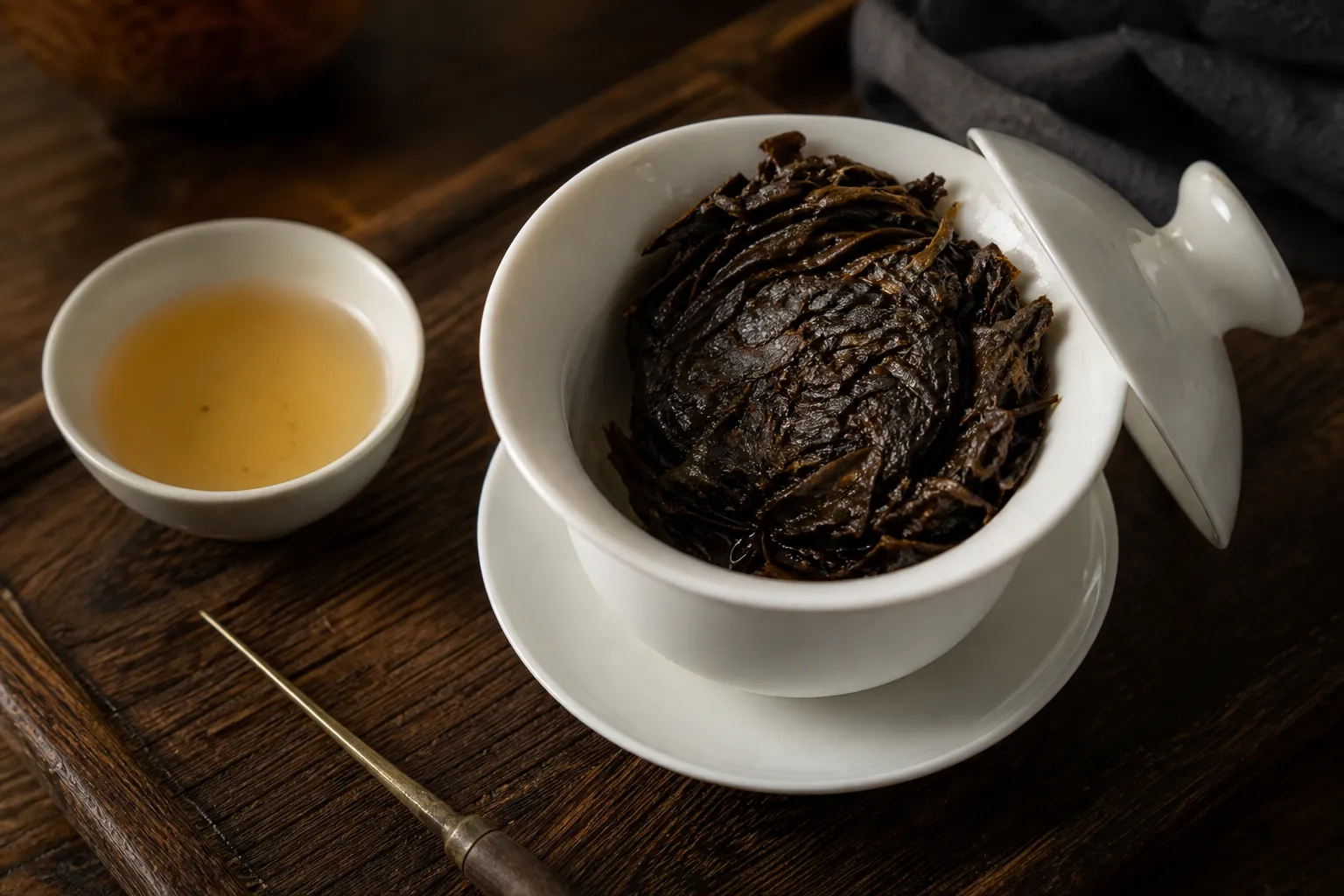
The wet leaf is the best clue. If the outside has softened but the middle is still tight, the tea is still opening. If the liquor is pale and the aroma is quiet, a longer second or third infusion may be more useful than trying to pull everything from the first cup.
A center piece can also brew unevenly. The first cup may be thin, the second more balanced, and the third suddenly stronger as the compressed layers separate. If that happens, shorten the following steep. Center piece leaf release can feel delayed, then quick. Watch the moment when the block begins to spread; that is often when the session changes.
If the piece refuses to open, you can gently separate it after the rinse with clean tea tools or choose a smaller fragment next time. Avoid crushing it into powder unless you want a faster, rougher cup. More surface area speeds extraction, but it also increases the chance of broken-leaf heaviness.
A Simple Side-by-Side Check
If you want to understand one cake better, brew a small edge piece and a small center piece side by side. This is not a formal test. It is a practical way to learn how your cake behaves.
Use similar weights if possible, the same vessel size, the same water, and the same starting steep times. If the shapes are very different, do not force the comparison too hard. A flat, flaky edge and a thick center chunk will not extract the same way even at the same weight.
Before adding water, compare:
- Thickness: is one piece noticeably chunkier?
- Surface: does one show more exposed leaf?
- Breakage: is there dust or many small flakes?
- Compression: does the piece bend, crumble, or stay hard?
- Dry aroma: does one smell more open before brewing?
During the rinse, watch color and leaf movement. If the edge rinse darkens quickly while the center rinse stays pale, the edge is releasing sooner. If both rinses look similar, the cake may be pressed evenly, or the two pieces may be more alike than their positions suggest.
In the first three infusions, pay attention to liquor color, aroma timing, mouthfeel, and taste shape. A fast edge may give early color and a fuller first cup. A slow center may build later. The reverse can happen if the edge was tightly pried or the center broke into many small pieces. The piece matters more than the label.
“Edge opened quickly; first cup dark and full, shortened second steep. Center stayed tight through rinse; second infusion became rounder after leaves loosened.”
That kind of note helps with the remaining cake more than a general rule about rim versus middle.
Common Misunderstandings
The center is not automatically the “true” taste.
It may be less exposed and more compact, but that does not make it automatically more representative. The edge is still part of the cake, and if handled carefully, it can show the tea clearly.
Edge pieces are not always weaker.
A loose edge may actually brew faster than a compact inner piece. Thinness, breakage, and exposed leaf can all increase early extraction.
A dark first rinse is only an early cue.
It only tells you the outer material released quickly. If you shorten the first infusion and keep watching the leaf, the session may still balance out.
A thin first infusion does not always mean too little tea.
With a compressed tea cake center, a thin start may simply mean the leaves need time to open. If the wet leaf is still clumped, adjust steeping time gradually before adding more leaf.
Broken leaf and dust are practical variables.
They are not always a judgment on the cake itself. They can come from prying, shipping, storage handling, or the natural brittleness of an edge, but they still affect brewing.
What This Comparison Cannot Tell You
Edge and center behavior can help you adjust a brew, but it cannot tell you everything about a dark tea cake. It does not establish age, storage quality, grade, value, or overall character. It also does not show that one part is universally cleaner, stronger, smoother, or more desirable.
This comparison is narrow on purpose. It stays with what you can observe in the moment: compression, leaf release, liquor color, aroma, mouthfeel, and taste. That is enough to improve the next infusion, but not enough for broad conclusions about the whole cake.
Use the comparison when it helps you brew better. If an edge runs fast, shorten the steep. If a center opens slowly, give it time. If dust makes the cup heavy, pour carefully and reduce early extraction. If a compact piece suddenly opens in the third infusion, adjust from that point forward.
The simplest rule is the most useful: brew the piece you actually have, not the position it came from. Edge and center pieces can suggest different starting points, but the wet leaf and the cup should make the final decision.
FAQ
Is an edge piece worse than a center piece?
No. An edge piece is not automatically worse. It may have more broken leaf or faster release, but a cleanly pried edge with intact leaves can brew clearly and smoothly.
Why does my edge piece get dark so quickly?
It often has more exposed surface, small flakes, or dust. Those parts release color and flavor quickly, especially in a small vessel. Try a brief rinse and shorter early steeps.
Why does my center piece taste weak at first?
The leaves may still be compressed. If the wet leaf remains clumped after the rinse, give the next infusion a little more time and watch for the moment the piece begins to open.
Should I break a dense center piece apart before brewing?
You can gently loosen it if it stays closed after the rinse, but avoid crushing it into powder. Smaller pieces extract faster and may make the cup heavier or rougher.
Can I use the same steeping time for edge and center pieces?
You can start with the same time, but adjust quickly. Edge pieces often need shorter early steeps, while dense center pieces may need more time once you see how slowly they open.