
Slow-opening brick brew
How to Brew a Dense Dark Tea Brick Piece That Opens Slowly
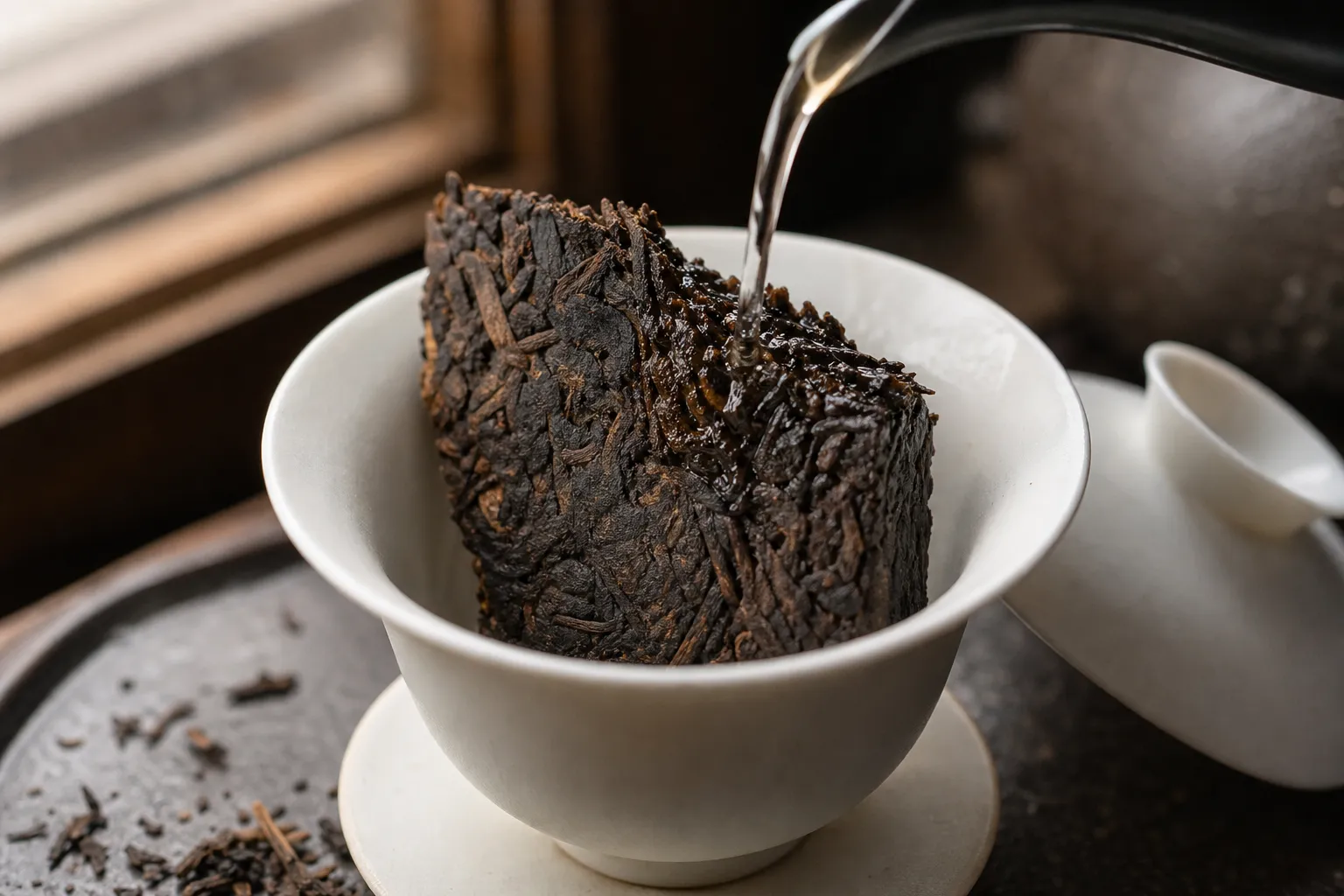
A dense dark tea brick piece usually needs patience at the beginning and restraint later. Start with a quick surface rinse, give the first drinkable steeps more contact time than you would give loose leaf, and watch the liquor, aroma, mouthfeel, and leaf separation together. If the early cups are pale and quiet, extend the next steep. Once the piece opens and the liquor deepens quickly, shorten later pours so the cup does not become heavy, rough, or muddy.
This is not a fixed formula. Piece size, compression, storage condition, water, vessel size, and personal taste can all change how slowly the brick opens.
upward
Start with the broader guide
Use the broader guide first if you need the full scope before this page.
Read the Brick Before You Brew
A tightly compressed tea brick does not take in water like loose leaf. The outside wets first, while the center may stay firm through the first few steeps. That is why a dense tea brick piece can look almost unchanged even after the cup begins to show color.
Before brewing, check four simple cues:
- Thickness: a thick chunk usually opens more slowly than a thin flake.
- Edges: exposed layers give water more entry points.
- Loose crumbs: small broken bits may brew quickly while the core stays closed.
- Aroma: a clean dry aroma is easier to work with than a flat or sharply unpleasant smell.
If the piece has a natural seam, corner, or layered edge, place that side where the water can reach it. If it is a hard cube with no visible opening, keep the brick piece whole at first and let time do the work. You can gently open one edge later if the cup stays watery after several patient steeps.
Avoid crushing the piece into powder just to make it brew faster. Fine fragments can give a dusty, strong first impression while the middle of the piece still has not opened.
A Slow-Opening Brewing Rhythm
Use this rhythm when a dark tea brick opens slowly and the first pour looks weak. Treat the timings as a sequence of decisions, not a strict schedule.
Surface check
Place the dense piece with an exposed edge facing the water. Watch whether color appears around the edge.
Rinse
Rinse the brick surface briefly, then discard the rinse. Watch whether the surface softens or releases aroma.
First steep
Let the first drinkable steep run longer than usual. Watch for pale liquor, thin body, and quiet aroma.
Middle steeps
Keep slightly longer contact while the edge softens. Watch for darker liquor, fuller body, and visible separation.
Later steeps
Shorten once the piece opens. Watch for sudden heaviness, roughness, or very dark liquor.
The rinse mainly wets the surface and shows how the brick responds. If the rinse stays very light and the piece still looks sealed, the first real steep may need more time. If the rinse already turns dark and aromatic, the outer leaf is active, so push less.
In a small gaiwan or teapot, pour water directly over the piece rather than only around it. Let the vessel sit still for the first steep so the compressed face stays in steady contact with hot water. Too much swirling can overwork loose crumbs while the tight center remains slow.
A simple everyday pattern
- Rinse once to wet the surface.
- Extend the first drinkable steep if the liquor is pale.
- Continue patient middle steeps until the edge softens.
- Shorten later steeps once leaf separation becomes visible.
- Stop pushing if the cup turns thick, dull, rough, or muddy.
With compressed dark tea brewing, the early cups may need more time, while the later cups may need less.
When to Keep It Whole
Keeping a tightly compressed dark tea brick piece whole can give a slower, steadier session. This works best when the piece is small enough for the vessel, has visible leaf layers, and releases flavor gradually. The cup may begin lightly, then gain depth as the inner leaf softens.
Keep it whole if:
- The liquor is pale but getting deeper each steep.
- The aroma is slowly opening.
- The mouthfeel is light but not empty.
- The piece is softening at the edge.
- You want a longer session with a gradual build.
In this case, the brick is not failing. It is simply opening in stages. Give it water contact, watch the cup, and adjust one steep at a time.
When to Open One Edge
Gently opening an edge can help when the tea brick piece is not loosening after several longer steeps. The goal is not to shred it. Look for a corner, seam, or layered side, then loosen only enough to expose more leaf surface.
Open one edge if:
- The cup stays watery after repeated longer steeps.
- Only the outer crumbs seem to brew.
- The core remains hard and dry-looking.
- The piece is too large for water to move around it well.
- The vessel is crowded, so only one face gets good contact.
A few larger flakes are easier to manage than a pile of fine dust. If you pry too aggressively, the brew can become uneven: fragments release quickly, while larger chunks continue opening underneath.
Adjust by Liquor, Aroma, and Leaf Separation
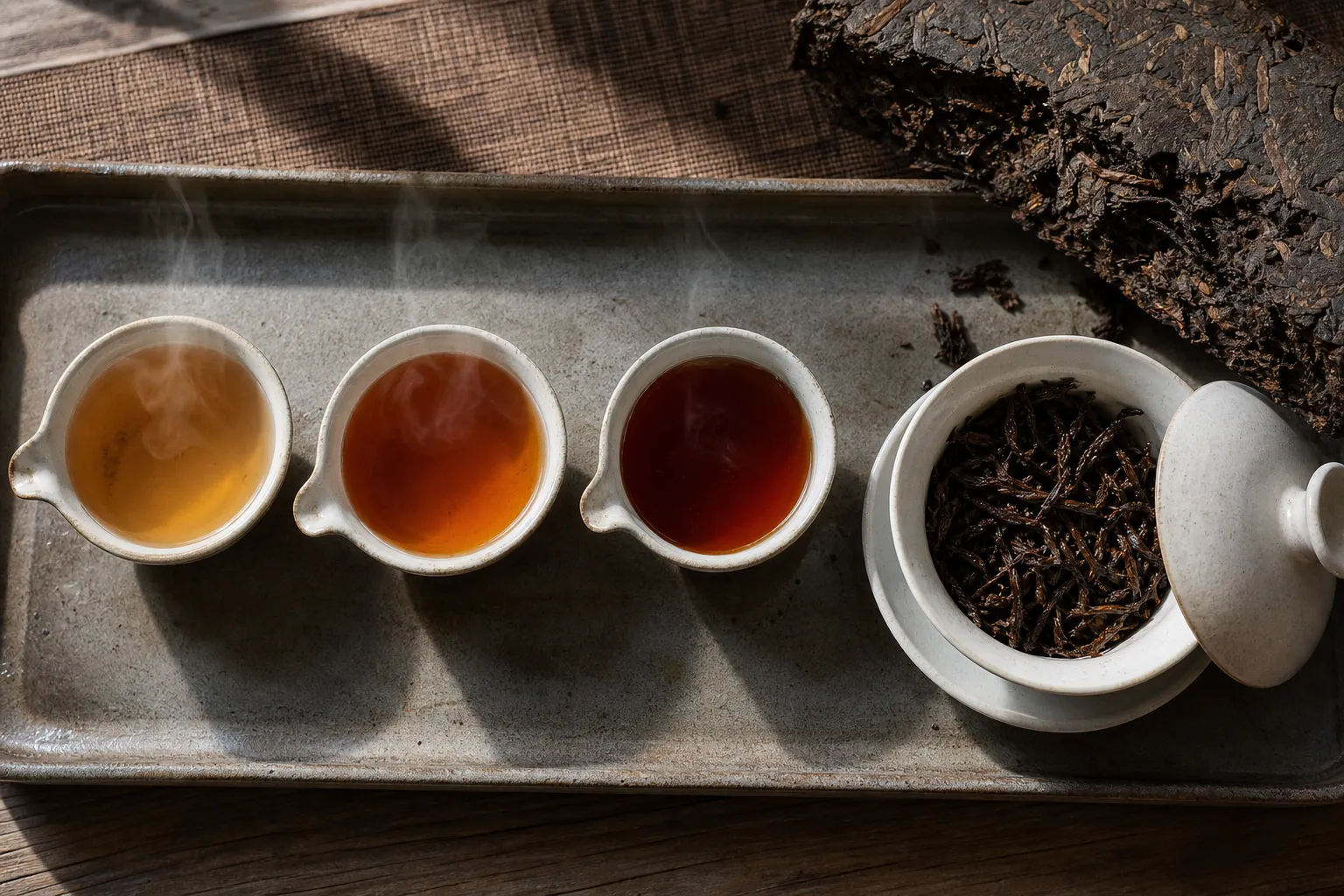
The clock helps, but the cup tells you more. A dense dark tea brick piece can change pace during the same session.
If the liquor is pale and the aroma is faint, extend the next steep. The water may not have reached enough leaf surface yet. Pour directly over the piece and avoid judging the tea by the first cup alone.
If the liquor darkens but the cup still tastes thin, continue patient middle steeps. Color may be coming from the outside while the inner leaf has not added much body. Look for softening edges, small flakes, and visible leaf separation.
If the liquor turns dark quickly and the taste becomes heavy, shorten later steeps. Once the compressed part finally opens, it can release more strength than the first cups suggested.
If the cup tastes rough, dusty, or too earthy, reduce agitation and shorten contact. Fine particles may be brewing faster than the larger leaf. Let the session calm down rather than forcing more extraction.
If the cup tastes flat, check the setup before blaming the brick. The piece may be too large for the vessel, pressed against the wall, or sitting where water cannot circulate. Reposition it so water can reach more than one face, or use a slightly larger vessel if the pot feels crowded.
The best sign is not dramatic expansion. It is a cup that becomes more coherent: clearer aroma, fuller body, and a taste that does not swing from watery to harsh.
Common Misunderstandings
A tea brick piece not loosening is not always a problem. Compression is part of the form, and some pieces open gradually. The mistake is treating slow opening as a reason to crush the tea, over-steep every pour, or give up after one pale cup.
The first steep may not represent the whole session. With a tightly compressed tea brick, the first cup can show only the outer layer. If the aroma is clean and the liquor is slowly gaining color, extend the next steep instead of assuming the tea has no flavor.
Color is not the only strength marker. Dark liquor can come from surface fragments. A better check includes aroma, mouthfeel, and whether the leaf mass is separating. If color rises but the cup feels hollow, the inner part may still need time.
Longer is not always better. Longer contact helps while the piece resists water. Once the brick opens, long steeps can make the cup too dense. The rhythm should change: patient at first, lighter later.
Dense compression also should not be treated by itself as a quality promise or a defect. For this brewing question, the useful frame is simpler: observe how the piece behaves in your vessel, then adjust the brew.
Quick Troubleshooting
Very pale liquor after rinse and first steep
Water has reached mostly the surface. Extend the next steep and pour over the piece.
Color appears, but taste is thin
Outer leaf is active, inner leaf is still tight. Continue patient middle steeps.
Piece stays hard after several cups
There may be too little exposed edge or poor water contact. Reposition it or gently open one edge.
Cup suddenly turns very dark
The brick has started opening quickly. Shorten later steeps.
Taste becomes rough or heavy
There may be too much contact after separation. Use shorter pours and less agitation.
Aroma is quiet but clean
The session may still be early. Watch body, color, and edge softening.
Use the table as a brewing note, not a rule sheet. A thin flake, a thick cube, and a layered brick corner may all need different pacing.
Scope Limit
This page stays within observable brewing behavior: compression, rinse, water contact, steeping rhythm, liquor color, aroma, mouthfeel, and leaf separation. No public references or cross-checkable tasting records were supplied for this specific question, so the guidance should be read as cautious tea-table practice rather than a formal standard.
This method cannot confirm origin, age, storage history, product value, or category status. It can help with the narrow brewing problem in front of you: a dense piece, slow water contact, pale early liquor, delayed opening, and the need to change steeping rhythm as the session develops.
If the tea smells sharply unpleasant, looks visibly compromised, or gives you a cup you do not want to drink, set it aside rather than trying to force a better result through longer steeps.
For an ordinary slow-opening brick piece, keep the piece mostly whole at first, give the early cups more time, and shorten as soon as the leaf opens and the liquor begins to deepen on its own.