
Tea tool choice
How to Choose a Tea Knife for Compressed Dark Tea
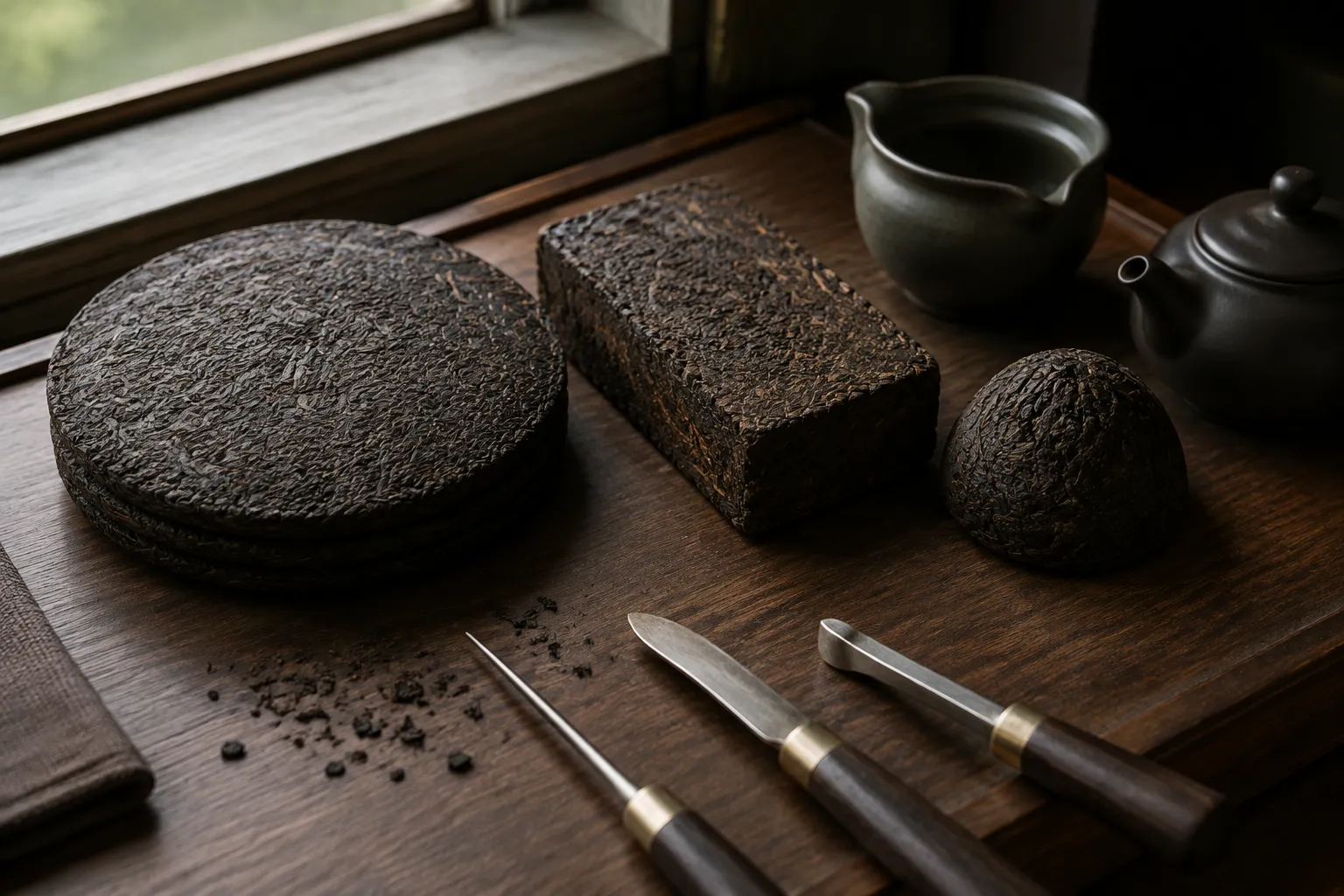
Choose a tea knife for dark tea by matching the tool to the tea’s compression before you think about style. A tight cake or tuo often needs a slim pointed pick that can enter from the edge and follow a layer. A looser cake or brick may respond better to a flat blade tea knife once a small gap has opened. A very dense brick may call for a thicker tea pry tool, but only if it gives you controlled leverage rather than encouraging force.
The useful tool is not the sharpest or most dramatic one. It is the compressed tea tool that lets you loosen enough leaf for a brew without driving the tip straight through the tea, scattering unnecessary dust, or putting your supporting hand in the tool’s path.
upward
Start with the broader guide
Use the broader guide first if you need the full scope before this page.
Start With the Compression, Not the Tool Shape
Compressed dark tea does not open the same way in every form. A cake may show a layered rim. A brick may feel blocky and less forgiving. A tuo can be awkward because the curved surface gives fewer flat entry points. Before choosing the tool, look at what the tea is already allowing.
If the tip enters the side with light pressure and the tea begins to lift in flakes, you do not need much leverage. A slimmer pointed pick for tea is usually enough. It can work between layers and loosen a brewing portion without turning the surface into crumbs.
If the tea resists but shows a seam, choose a firmer shaft and a handle you can guide steadily. The point still matters, but stiffness and grip matter more. You want pressure to move through the tool cleanly, not a flexing motion that makes your hand wobble.
If the tea breaks into grit whenever you push, the tool may not be the only issue. The angle may be too steep, the entry point may be too central, or the portion may need to come from the edge instead of the face. A thicker tea brick knife can help with leverage, but force alone usually makes crumbling compressed tea worse.
A simple first check: press the tip gently into the edge, not the middle. If the tea opens in layers, choose a tool that follows those layers. If it splinters, choose a tool that gives more control and use smaller movements.
Pointed Pick, Flat Blade, or Thick Pry Tool?
Most everyday choices fall into three shapes: a slim pointed pick, a flat blade, and a thicker pry tool. None is automatically better. Each changes how pressure enters the tea.
| Tool style | Often suits | Main advantage | Watch for |
|---|---|---|---|
| Slim pointed pick | Tight cakes, tuos, layered edges | Enters narrow gaps with less surface damage | Can puncture too deeply if pushed straight in |
| Flat blade tea knife | Looser cakes, some bricks | Lifts wider flakes once a gap opens | Can crush leaf if used like a chisel |
| Thick tea pry tool | Hard bricks or very dense compression | Gives more leverage and stiffness | Can invite too much force |
A pointed pick is useful when the compressed tea compression level is high but the tea still has a layer to follow. It lets you make a small entry, widen it slowly, and lift a few grams for a brew. The tradeoff is depth control. If you push straight inward, the tool can tunnel through the tea instead of loosening the surface.
A flat blade tea knife works better when the cake or brick already separates in thin sheets. The blade can slide under a loosened section and lift it with less stabbing. It is less helpful when the tea is too tight for the blade to enter cleanly; then it may scrape, crush, or leave compressed tea flakes mixed with powder.
A thick tea pry tool is not a shortcut for hard tea. It can help when a brick is dense enough that a thin tool bends or feels unstable. Its value is controlled leverage. If you find yourself twisting aggressively, move to a smaller edge section, change the angle, or stop and reset.
For most dark tea drinkers, one slim pointed tool and one flatter, firmer tea tool for tea bricks cover more real situations than a drawer of specialized shapes.
Handle Control Matters More Than a Fancy Tip
A compressed dark tea tool has to turn small hand movements into small movements in the tea. If the handle is too short, slippery, or awkward, even a good tip becomes hard to control. The best sign is simple: you can hold the tool with a relaxed grip and change pressure gradually without your wrist jumping.
Look for a handle that lets your index finger guide direction. The tool should feel stable when angled into the side of a cake or brick. If you need to squeeze hard just to keep it from turning, the handle is working against you.
Length also changes control. A longer tool may give reach and leverage, but it can feel clumsy on a small tuo or a thin cake edge. A shorter tool may feel precise, but it may not give enough leverage for a dense brick. For daily brewing, choose the size that matches the tea you actually open most often.
When comparing tools in hand, ignore decorative language and ask three questions:
- Can I angle the tip away from my supporting hand?
- Can I stop pressure quickly if the tea shifts?
- Can I loosen a small piece without crushing the surrounding leaf?
If the answer is no, the tool is not a good fit for your tea table, even if it looks like the right category.
Choose for the Tea Form You Open Most
Cakes
For cakes, start with the edge. Many cakes show some layered structure along the rim. A slim pick can enter the side; a flat blade can help lift if the cake loosens in sheets. If the cake flakes cleanly, keep the tool light and narrow. If it sheds powder, reduce the angle and work closer to an existing separation.
Bricks
For bricks, stiffness becomes more important. A tea brick knife or thicker pry tool may help because bricks can offer fewer easy layers. Work from a corner or edge when possible. Trying to split a thick brick from the center tends to make control harder and leaf breakage more likely.
Tuos
For tuos, shape is the challenge. The curved surface can make the tool skate if the entry point is poor. A pointed pick often works better than a wide blade at first, especially when you can find a small side gap. Once the tuo opens, shift from drilling to lifting.
For mixed use, avoid choosing the most aggressive tool as your only option. A narrow, controlled pick is usually more adaptable for small portions. A flatter or thicker tool can stay nearby for bricks and looser sections. The goal is not perfect leaf separation. It is enough intact material for a balanced brew, with less dust than forcing would create.
What Leaf Breakage Tells You
Some breakage is normal when opening compressed tea. The better question is whether the tool is helping the tea separate or grinding it apart.
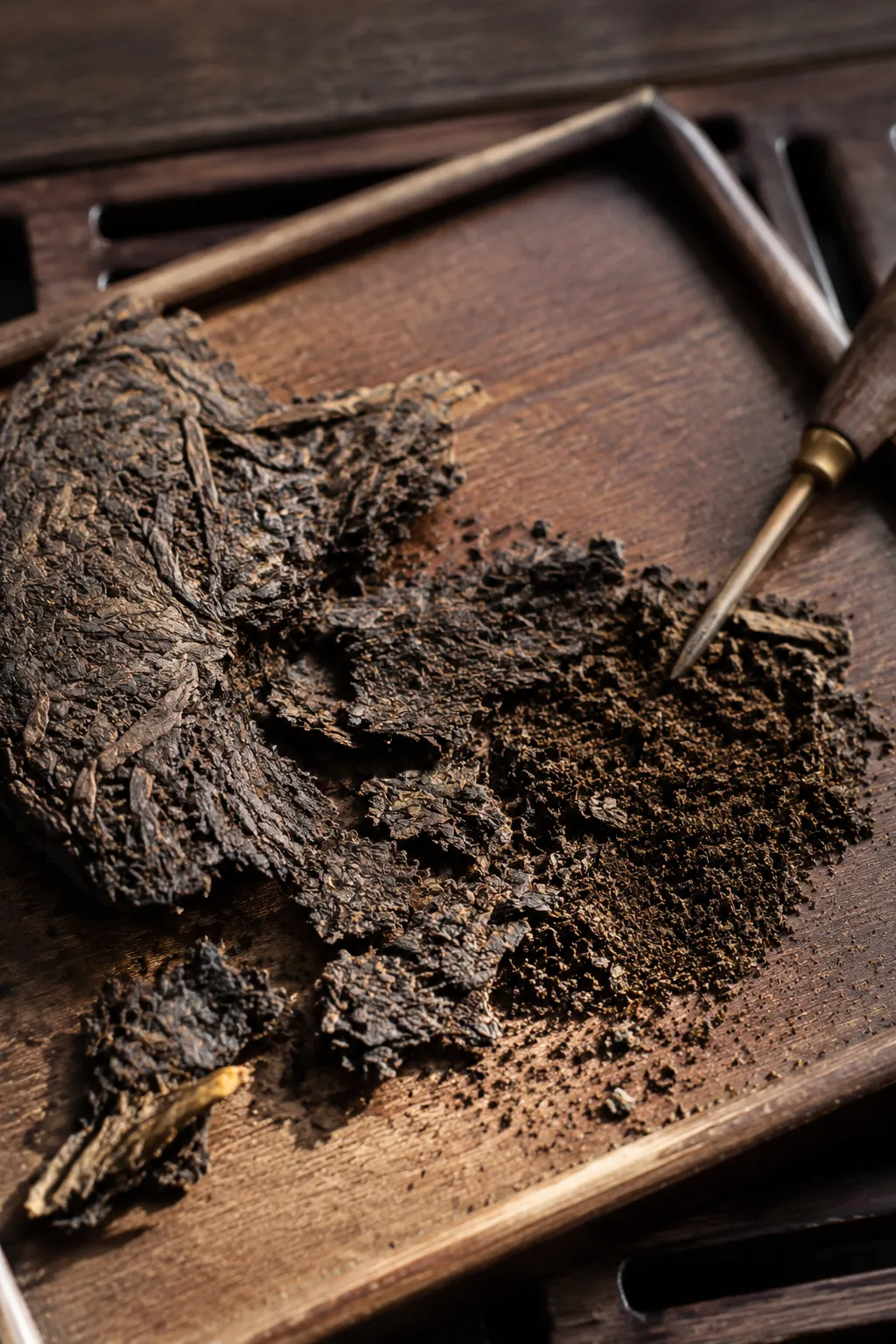
Large flakes or layered pieces suggest that the tool is following the structure of the compression. These pieces often brew more predictably because the leaf mass has not been reduced mostly to fragments. You may still break the flake before brewing, but that becomes your choice.
Fine dust and uneven crumbs suggest that pressure is too direct, the angle is too steep, or the tool is too wide for the entry point. Dust can make a first steep heavier, cloudier, or sharper in some setups, especially when the vessel is small and the leaf-to-water ratio is high. It does not mean the tea is ruined, but it is a sign to adjust your opening method.
If you see both flakes and powder, slow down. Insert from the side, lift a small section, then stop once you have enough tea for the session. Many brewing portions do not need to look neat. They need to fit the vessel and rinse evenly.
If every tool produces powder, the tea may be tightly compressed, brittle from storage conditions, or simply difficult to open cleanly. Choose the tool that gives the most tea knife control and take smaller pieces from the edge. Do not keep increasing force just because the portion is not pretty.
Basic Handling Boundaries
This is ordinary tea-table handling, not a claim that one design has special approval or a fixed safety status. The practical rule is control: stable surface, slow pressure, clear hand position, and no hard twisting when the tea or tool starts to slip.
Place the tea on a surface that does not wobble. Keep your supporting hand out of the tool’s path. Angle the point away from your fingers, and use gradual pressure rather than sudden thrusts. If the tool catches, back out, change the entry point, and work with a smaller section.
Avoid using a sharp kitchen knife as a substitute if it makes you cut downward rather than pry between layers. The task is separating tea layers, not slicing food. A tea pry tool should let you work sideways and gently lift while keeping your hand position predictable.
Also be cautious with market-style claims. Words about premium material, ceremonial appearance, or collector value do not tell you whether the tip enters your tea cleanly, whether the handle fits your grip, or whether the shaft gives controlled leverage. For this task, practical fit matters more than display language.
A Simple Buying Check
When you choose a tea knife, picture the exact tea you will open next.
If it is a tightly pressed cake or tuo, choose a slim pointed tool with a comfortable handle and enough stiffness to avoid bending. If it is a looser cake that opens in sheets, a flat blade tea knife may be easier once the first gap is made. If it is a dense brick, consider a thicker tool, but only if it still lets you apply pressure slowly.
Then check the fit against your brewing habit. If you brew small portions in a gaiwan or small pot, precision matters. If you often break larger pieces from bricks for short-term storage in a small jar, leverage may matter more. If you switch among cakes, bricks, and tuos, keep the first tool narrow and controlled, then add a stronger tool only when your tea actually calls for it.
A good compressed dark tea tool should make the next brew easier to set up. It should help you remove enough leaf, keep dust reasonable, and leave the remaining tea in better shape for the next session. The final test is at the tea table: if the tool lets you loosen a portion calmly, with flakes instead of mostly powder, it is doing its job.
FAQ
Is a pointed pick always better for compressed dark tea?
No. A pointed pick is often useful for tight cakes and tuos because it can enter narrow gaps. For looser cakes or bricks that already lift in sheets, a flat blade tea knife may give better surface contact with less drilling.
Do I need a thick tea pry tool for hard bricks?
Only if the brick is dense enough that a thinner tool bends or feels unstable. The thicker tool should give controlled leverage, not more force. If you have to twist hard, work from a smaller edge section instead.
Is dust a sign that I chose the wrong tea knife?
Not always. Some compressed tea breaks unevenly, especially when it is dense or brittle. But if each attempt creates mostly powder, adjust the entry point, lower the angle, and use smaller movements before blaming the tea.
What is the best first tea knife for dark tea?
For most everyday use, start with a slim pointed pick that has a stable handle and a firm shaft. It handles many cakes and tuos well enough. Add a flatter or thicker tool later if bricks are part of your regular brewing.