
Practical Tool Guide
Dark Tea Tools for Brewing, Breaking, Serving, and Storing
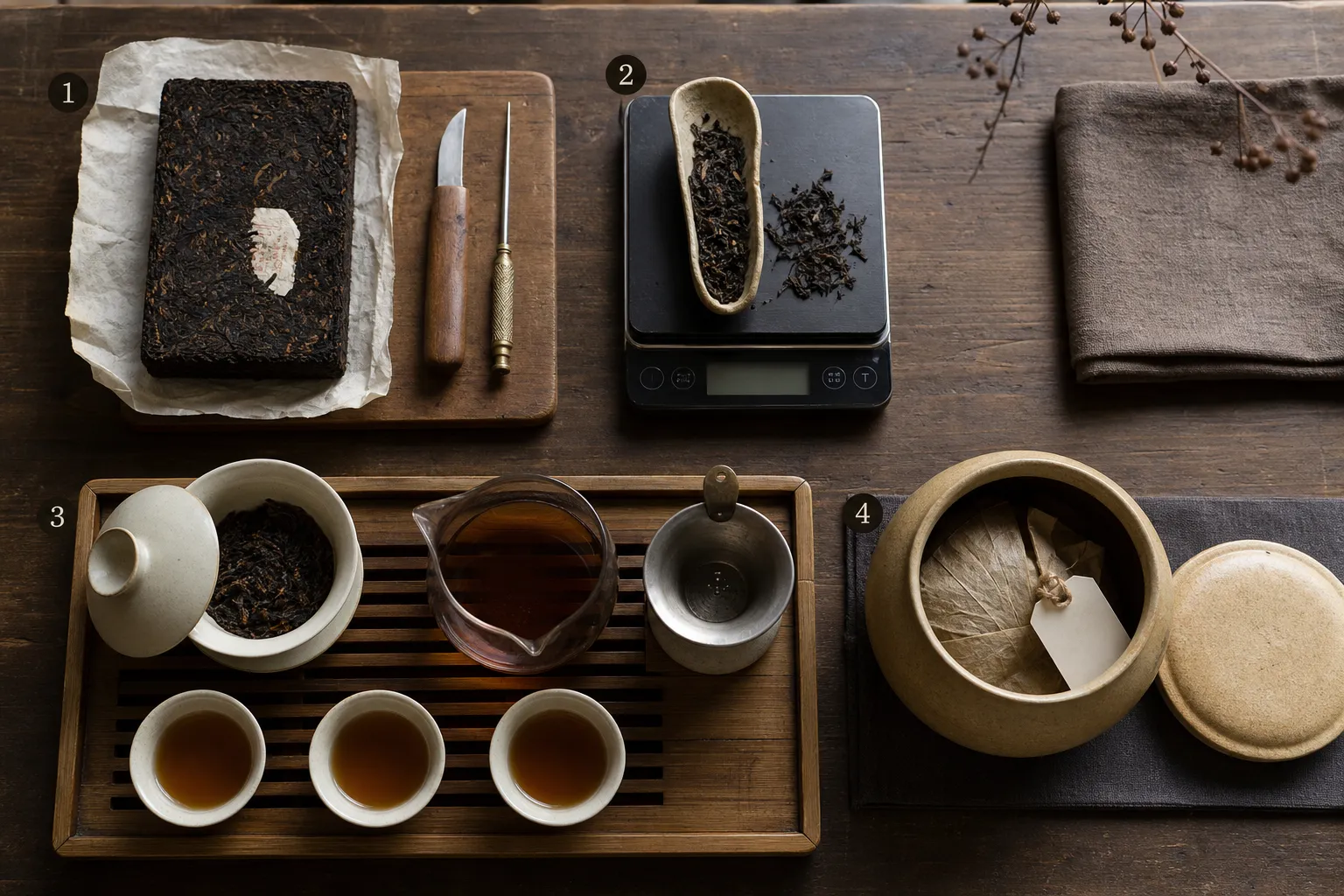
A dark tea setup can look crowded at first: a tea knife, gaiwan, fairness pitcher, strainer, tray, tongs, jars, towels, scoops, and small dishes may all appear on the same table. The better question is not whether every piece belongs there. It is what job each tool does, what problem it solves, and whether your tea actually creates that problem.
Dark tea tools are most useful when they answer something visible: a brick is too tight to open cleanly, loose fragments are hard to dose, liquor pours unevenly between cups, sediment distracts from the texture, or stored tea starts picking up light and surrounding odors. A simple home setup can be spare, but it still needs to respect compression, leaf size, water flow, serving pace, and storage exposure.
upward
Start with the broader guide
Use the broader guide first if you need the full scope before this page.
Start With the Task, Not the Full Tool Table
For everyday brewing, dark tea tools fall into four working groups:
Breaking compressed tea
Tea knife, tea needle, tea pick, and a clean tray or board control fragment size, dust, leaf damage, and hand control.
Measuring and moving leaves
A scale, tea scoop, small dish, and tongs help with dose, tidiness, and reducing direct contact with hands.
Brewing and serving
A gaiwan, teapot, kettle, fairness pitcher, tea strainer, cups, and tea tray control steep time, heat, liquor clarity, pour order, and spills.
Storing tea
A wrapper, box, bag, jar, breathable container, and label help manage light, odor exposure, handling frequency, and humidity shifts.
A beginner does not need a full set of gongfu tea tools to make a good cup. For loose dark tea or lightly compressed pieces, a steady kettle, one brewing vessel, a cup or pitcher, and a clean place to handle leaves may be enough. The tool list grows when the tea asks for more control.
A hard brick asks for a breaking tool. A crumbly edge asks for a tray so fragments do not scatter. A shared session asks for a fairness pitcher so the stronger final part of the pour does not land in only one cup. Tea kept for daily use asks for a container that keeps broken pieces tidy without trapping kitchen smells.
The practical rule is simple: add a tool when it reduces a repeated problem, not because a fuller table looks more complete.
Breaking Compressed Dark Tea Without Turning It Into Dust
Compressed dark tea can come as bricks, cakes, logs, small pieces, or other pressed forms. Density varies, so the right breaking method depends on how tightly the tea is pressed, how brittle the edge feels, and how much leaf you want to loosen.
A tea knife is usually a flat, narrow tool used to enter the side or seam of compressed tea and lift layers apart. A tea needle or tea pick is slimmer and may work better when a tight brick has only small gaps. The tool matters, but the motion matters more: find a natural opening, use controlled pressure, and separate layers instead of chopping downward.
Aim for usable pieces, not perfect flakes. Larger chunks may open slowly during the rinse or first steep. Very small dust can brew quickly, taste heavier, and pass through a strainer more easily. A mixed portion is normal for many daily cups. If the whole dose turns powdery, the angle or pressure is probably too aggressive.
Tea Knife vs Tea Needle for Dark Tea Bricks
A tea knife may feel steadier on broad, layered edges because it can lift a wider section. A tea needle or pick may be easier to insert into a compact brick where a flat blade cannot find space. Neither is automatically better for every compressed dark tea.
Let the tea shape guide the choice:
- Choose a tea knife when you can see layers or seams and want to pry away a small sheet.
- Choose a tea needle or pick when the surface is dense and needs a narrow entry point.
- Use short, controlled pressure rather than a deep stab.
- Work from the side when possible, not through the most compact face.
- Stop when the piece loosens; forcing the tool farther can create dust and uneven fragments.
The tool should feel like it is opening the tea, not cutting it like food.
Can You Use a Kitchen Knife to Break Dark Tea?
A kitchen knife can physically break some compressed tea, but it is often poorly matched to the task. The blade is wide, sharp in the wrong way, and designed for downward cutting. Compressed tea usually responds better to controlled prying along layers. A kitchen knife may slip, crush too much leaf, or transfer food odors if it is not completely clean.
If no tea knife is available, a small dedicated blunt tool is usually a better fallback than a strongly scented kitchen blade. The important boundaries are stability, cleanliness, and control. Place the tea on a steady surface, keep fingers away from the pressure path, and avoid tools that smell of garlic, oil, soap, or metal polish.
A specialized tea knife is not magic. It is simply shaped for the job.
Choosing Brewing Tools: Vessel, Scale, Strainer, and Pour Control
Once the tea is broken or measured, the main brewing tools control contact between leaf and water. Dark tea can be brewed in a gaiwan, small teapot, larger pot, mug infuser, or another practical vessel. The better choice depends on how closely you want to manage steep time and how the leaf behaves once wet.
A small gaiwan or teapot suits repeated short infusions because it lets you pour quickly and watch aroma, liquor color, and leaf expansion. A larger mug or pot can suit relaxed daily brewing, but it gives less precision if the leaves sit in water for a long time. Neither style is the one correct method; they answer different habits.
A scale is optional, but useful when your cups swing between thin and too heavy. Compressed pieces are easy to misjudge by sight because a dense chunk may weigh more than it looks. If you brew casually, you can learn from repeated portions: a coin-sized piece, a small scoop, or a familiar pinch. If you compare teas, adjust recipes, or share notes, weighing the leaf gives you a steadier starting point.
A tea scoop helps move dry leaves without chasing small pieces around the table. It can keep broken fragments together and reduce direct hand contact. Tongs are more useful for handling hot cups, rinsed pieces, or small tools than for measuring leaf. A small dish can be just as helpful when you want to inspect broken tea before brewing.
Tea Strainer or No Strainer?
A tea strainer catches dust, small stems, and loose particles as the liquor moves from the brewing vessel to a pitcher or cup. It can make the pour look cleaner, especially when broken compressed tea contains small fragments. It can also slow the pour slightly, and if it is not cleaned well, it may hold old aromas.
Skip the strainer when the leaf is large, the pour is clear enough for your taste, or you want the simplest cleanup. Use one when the tea sheds many small pieces, when you serve several cups, or when sediment distracts from the texture of the liquor.
This is a sensory choice, not a rule. Some drinkers do not mind a little sediment. Others prefer a cleaner cup. The tool only changes what reaches the cup; it does not fix overbrewing, stale storage, or a dose that is too heavy.
What a Fairness Pitcher and Tea Tray Actually Do
A fairness pitcher, sometimes called a serving pitcher, solves a timing problem. When tea is poured directly from a gaiwan or pot into several cups, the first cup may receive lighter liquor and the last cup may receive stronger liquor because extraction continues during the pour. Pouring into one pitcher first blends the infusion, then each cup receives a more even share.
This helps in shared gongfu-style brewing, but it can also help one person. A pitcher lets you stop the steep by emptying the brewing vessel, then drink at your own pace. It also gives you a clear look at liquor color before serving.
A tea tray solves a different problem: water management. Rinsing cups, warming vessels, missed pours, and quick emptying all create drips. A tray catches that water and gives tools a defined place. It is useful if you brew with a gaiwan, small cups, and repeated infusions. It is less necessary for a single mug or a large pot beside a sink.
Gongfu Tea Tools by Function
Gaiwan or small teapot
Used for short, controlled infusions. Optional if using a mug, thermos, or large pot.
Fairness pitcher
Blends each infusion before serving. Optional if brewing one cup directly.
Strainer
Catches small fragments. Optional if the leaf pours cleanly enough.
Tea tray
Catches rinse water and spills. Optional if brewing simply near a sink.
Scoop
Moves and presents dry leaf. Optional if measuring directly by hand or scale.
Tongs
Handle hot cups or tools. Optional if cups stay cool enough to hold.
Tea towel
Wipes drips and vessel bottoms. Only optional if the setup stays dry without it.
The phrase “gongfu tea tools” can make the setup sound more formal than it needs to be. For dark tea, the useful part is control: small vessels, quick pours, clean serving paths, and enough order to notice how the tea changes from steep to steep.
Storage Tools: Keeping Tea Accessible Without Flattening Its Character
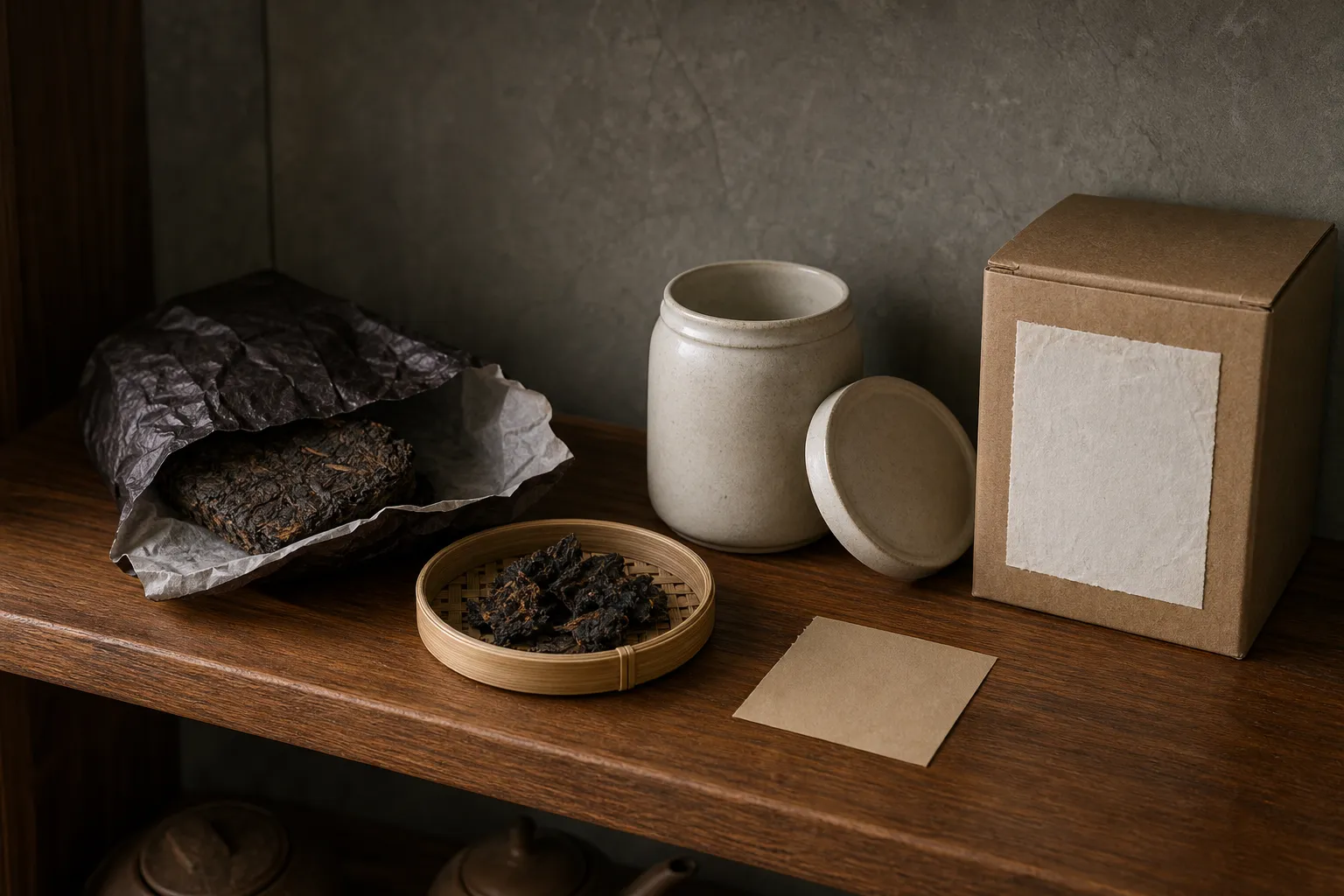
Storing dark tea is not only about long-term keeping. Most home drinkers also need a daily-use plan for broken pieces, opened wrappers, and tea that moves between shelf and table. Storage tools should reduce light, odor exposure, unnecessary handling, and sudden environmental swings.
A whole brick or cake is often easiest to keep in its wrapper inside a clean box or cabinet, away from strong smells. Once pieces are broken off, they need a separate place if you do not plan to brew them immediately. A small dark tea storage jar, clean tin, paper bag inside a box, or other container can work if it suits the tea and the room. The key is not the label on the container; it is what the container does to air, aroma, moisture, and handling.
A very airtight jar may protect against kitchen smells, but it can also trap any odor already inside. A loose paper wrap may allow more air exchange, but it offers less protection from nearby spices, smoke, detergent, or sunlight. A display jar may look attractive but can expose tea to more light if it sits in a bright room. These tradeoffs matter more than romantic storage language.
For daily brewing, keep only a small amount of broken tea in the easy-access container. Leave the rest less disturbed. Label the tea if you keep several similar dark tea bricks or loose portions; once pieces are separated from the wrapper, visual memory becomes unreliable.
Practical Storage Cues
- Dry leaf aroma should not smell like soap, perfume, cooking oil, or damp cardboard.
- Broken pieces should not be handled so often that they crumble before brewing.
- Containers should be clean and fully dry before tea goes in.
- Tea stored near kitchens, bathrooms, scented shelves, or sunny windows needs more protection.
- If a container keeps an old smell after washing and drying, choose another one.
No storage jar can promise better aging or better flavor. It can only manage exposure.
Cleaning Tools Without Leaving Odors Behind
Dark tea tools often touch hot water, mineral residue, leaf oils, and small particles. Cleaning should keep them neutral. The main risk is not visible dirt alone; it is lingering smell that returns in the next session.
Rinse brewing vessels, pitchers, strainers, and cups soon after use. A strainer needs special attention because fine particles can stay in the mesh. A tea towel should dry clean surfaces, not spread old tea smell from a previous session. Scoops, knives, and picks should be wiped clean and dried before storage, especially if they have touched damp leaves.
Strongly scented dish products can cling to porous or textured materials. If a tool smells like fragrance after cleaning, that smell may move into warm tea vapor. In many everyday setups, hot water, careful rinsing, and full drying are enough for tools that touched only tea. If a deeper wash is needed, rinse until the tool smells neutral, then let it air fully before putting it back with tea.
Keep breaking tools separate from kitchen work. A tea knife stored with food tools may pick up oil or spice residue. A tray that stays wet can develop stale odors. A storage jar closed before fully dry can carry damp smells into the tea. Match the cleaning habit to the tool’s job: anything that touches dry tea should be especially odor-neutral; anything that handles water should dry completely.
A Simple Home Setup That Covers Most Dark Tea Sessions
A practical starter setup does not need to look complete. It needs to let you break, brew, serve, and store without fighting the tea.
For compressed dark tea, start with:
- A tea knife or tea pick for opening compressed tea.
- A stable tray, board, or clean paper surface for catching fragments.
- A small brewing vessel such as a gaiwan, teapot, or infuser cup.
- A kettle that lets you use hot water consistently.
- A cup, or a fairness pitcher plus cups if serving more than one pour.
- A strainer if your tea sheds fine particles.
- A clean container for broken pieces you will brew soon.
- A dry, odor-aware place for storing dark tea away from strong smells and light.
From there, add only what solves a real inconvenience. Add a scale if dosing feels inconsistent. Add a tea tray if repeated pours make the table messy. Add tongs if hot cups are awkward. Add a second storage container if broken pieces and wrapped tea keep getting mixed.
The best dark tea tools make the next step clearer: the brick opens with less damage, the dose becomes easier to repeat, the pour stops on time, the cups taste more even, and the stored tea stays away from things it should not absorb. That is enough. A dark tea table can stay quiet, practical, and attentive without becoming crowded.