
Selection guide
How to Choose Dark Tea If You Dislike Musty Flavors
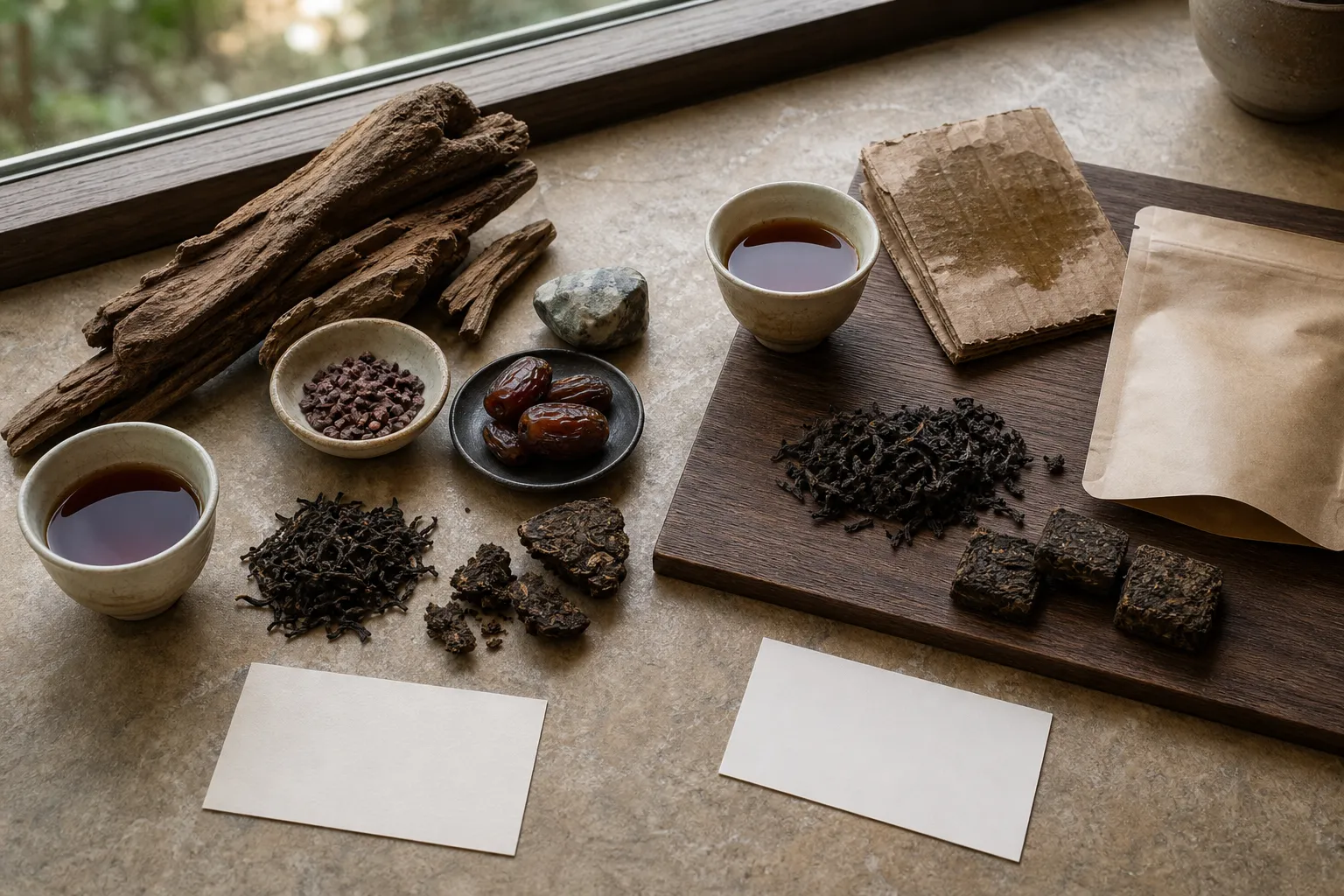
If you want dark tea without musty taste, choose by aroma language first, tea form second, and age claims last. Look for descriptions such as clean wood, cocoa, dates, molasses, coffee-like depth, mineral earth, dry forest floor, or gentle petrichor. Be cautious with teas described as fishy, swampy, moldy, stagnant, wet-basement, heavy wet storage, or intensely wet-pile.
When possible, buy a sample before committing to a cake, brick, tuo, or large bag. Smell the dry leaf, then smell it again after warming it in a dry vessel. The goal is not “no earthiness at all.” A better target is a clean earthy dark tea: warm, rounded, and deep without stale storage aroma.
upward
Read the full overview first
Use the broader guide first if you need the full scope before this page.
Earthy is not the same as musty
Dark tea often sits in a lower aroma range than green tea, white tea, or lightly oxidized oolong. That does not automatically make it musty. Many post-fermented teas can taste woody, mellow, sweet, mineral, cocoa-like, or softly earthy.
For a mustiness-sensitive drinker, the useful question is:
Is this earthiness clean, or does it feel damp, stale, and closed?
Clean earthiness often feels integrated. It may remind you of dry wood, old books without dampness, warm soil after rain, unsweetened cocoa, dates, molasses, coffee, or a mineral note after the cup cools. The liquor can be dark and full, but the aroma should not feel trapped, sour, stagnant, or decaying.
Musty dark tea flavor reads differently. It may suggest wet cardboard, closed basement air, pond mud, fish tank, stale closet, sour-damp cloth, or moldy wood. Some drinkers use “funky” loosely, so do not reject every unusual note. But if the product language or sample aroma points toward wet basement tea smell, fishy dark tea aroma, swampy dampness, or stagnant storage, it is probably the wrong direction for your taste.
If you dislike mustiness, favor
- clean wood
- cocoa or dark chocolate
- dates or molasses
- smooth earth
- mineral depth
- coffee-like body
- gentle petrichor
- warm old books
Be cautious with
- wet basement
- fishy
- swampy
- moldy
- stagnant
- sour-damp
- heavy wet storage
- stale storage tea aroma
“Clean tasting” here means sensory clarity. It does not prove storage history or anything beyond what you can observe in the dry leaf, warmed leaf, liquor, finish, and empty cup.
Read product notes like a mustiness-sensitive buyer
Product descriptions are imperfect, but they can still help you avoid the wrong tea. Sellers and drinkers often use earthy language positively, especially for ripe pu-erh and other dark teas. The trick is to separate rounded depth from damp heaviness.
For a cleaner cup, look for tasting notes that suggest sweetness, wood, and clarity:
- Clean wood tea notes: cedar, aged wood, dry wood, sandalwood-like warmth, old books without dampness.
- Sweet dark notes: dates, jujube, molasses, brown sugar, cocoa, dark chocolate, raisin.
- Rounded body: smooth, mellow, soft, thick, syrupy, gentle, warming.
- Fresh earth language: petrichor, mineral, loam, forest floor after rain, especially when not paired with sour or stagnant terms.
- Roasted or bitter-sweet depth: coffee, cacao, walnut shell, dark crust, toasted grain.
Be more cautious when a description celebrates storage intensity more than flavor clarity. Words like “cellar,” “wet storage,” “very humid,” “old warehouse,” “strong aged aroma,” or “traditional storage” are not automatically bad, but they may point toward the exact dark tea storage aroma you are trying to avoid. If you are sensitive to those notes, treat such teas as sample-only purchases.
Also be careful with vague prestige language. Origin, mountain name, old-tree language, rare batch claims, and dramatic age claims do not tell you whether the cup will taste clean. They may be part of a seller’s market vocabulary, but they do not replace smell, sample size, and plain tasting notes.
If a listing only says “earthy,” ask: earthy like cocoa and dry wood, or earthy like mud and damp storage? If the description does not help you answer, do not start with a full cake or brick.
Choose forms that reduce the size of the mistake
The safest practical move for a mustiness-sensitive drinker is to reduce commitment. Dark tea can vary by production, storage, compression, age, and vendor handling. Even within one broad category, one tea may taste sweet and woody while another feels stale or fishy to you.
Start with samples, mini cakes, small loose-leaf amounts, or broken pieces before buying compressed tea in quantity. Compression matters because cakes, bricks, and tuos can hold storage aroma differently from loose leaf. A tightly compressed piece may need a rinse and a little airing before it shows its cup character, but airing will not turn a tea you dislike into a clean one.
Loose-leaf dark tea can be easier to evaluate quickly because more surface area is exposed. You can smell it, warm it, and brew a small amount without prying into a cake. Compressed tea can still be excellent, but if you dislike mustiness, buy a small piece first and avoid judging from wrapper language alone.
Ripe pu-erh, also written shou or shu pu-erh, deserves a middle position. It is often chosen by drinkers who want a dark, smooth, earthy, low-astringency cup. Some examples are sweet, clean, and mellow. Others can carry wet-pile taste, fishy aroma, or storage-heavy notes, depending on production, age, storage, and personal sensitivity.
So the goal is not “avoid all ripe pu-erh” or “ripe pu-erh always works for beginners.” The better goal is ripe pu erh without mustiness, chosen through samples and specific tasting language.
Sheng, or raw pu-erh, can be less immediately earthy when young, but young examples may be sharper, greener, more bitter, or more astringent than expected. Aged raw pu-erh can develop woody and aged aromas, but storage style becomes especially important. If your main dislike is wet-basement aroma, storage notes matter more than the sheng-versus-shou label.
Smell the leaf before brewing if you can
Dry-leaf aroma is not the whole story, but it is a useful first filter. Put a small amount of leaf in a warm, dry vessel, cover it briefly, then smell. Warmth releases aroma before bitterness, thickness, and color enter the cup.
For a clean tasting dark tea, the warmed leaf may smell like wood, cocoa, dates, sweet earth, mineral dampness, or roasted grain. It may also have a mild aged note. That is different from a closed, sour, fishy, moldy, or wet-cardboard smell that makes you hesitate before brewing.
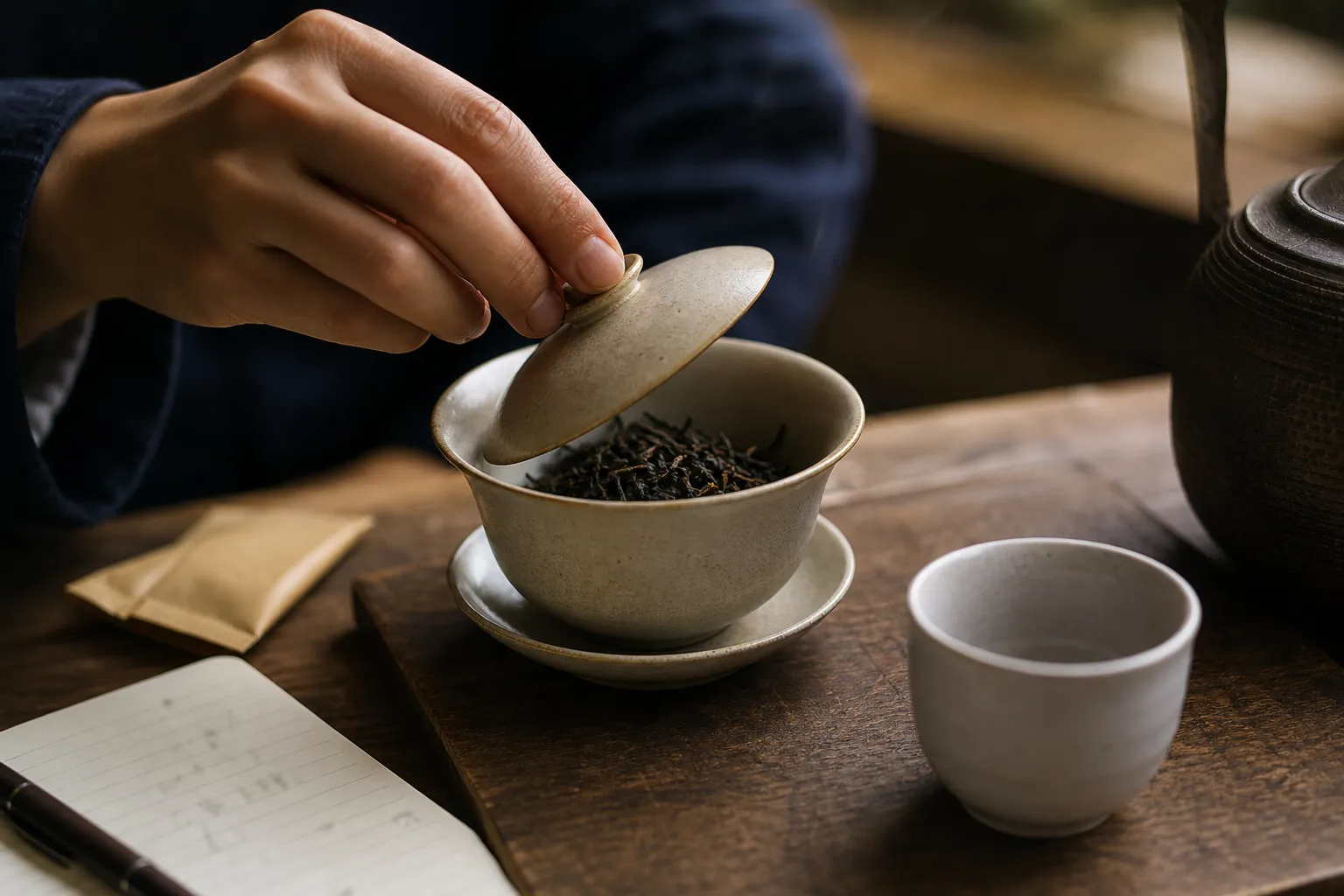
If the dry leaf smells slightly heavy but not unpleasant, a quick rinse may help you evaluate the first real infusion more clearly. Use hot water, pour it off quickly, then smell the warmed leaf again. If the aroma opens into wood, sweetness, and depth, the tea may simply have needed waking. If the same stale storage tea aroma becomes stronger, the tea is probably not for you.
Do not use rinsing as a way to talk yourself into drinking a tea with obvious spoilage-like signs. Visible mold, intense spoilage-like odor, or a smell that reads as strongly moldy, rotten, stagnant, or aggressively off-putting is a practical reason to avoid that tea, especially if your goal is a clean-tasting cup.
Brew a small test cup before deciding
Some dark tea off notes become louder when the tea is brewed heavily. If you are evaluating a new tea and already worry about mustiness, do not begin with the strongest possible infusion.
For a simple evaluation brew, try:
- Leaf amount: moderate rather than packed.
- Water: hot, near boiling for most compressed dark tea, unless the tea is delicate or the seller suggests otherwise.
- First contact: optional quick rinse, especially for compressed tea or very dark ripe pu-erh.
- First tasting infusion: short, often around 10–20 seconds in a small vessel, or a lighter Western-style steep if that is your normal setup.
- Cup check: smell first, then sip after the liquor cools slightly.
A tea that is only too concentrated may become cleaner with less leaf, shorter steeps, or a slightly larger vessel. A tea with persistent off-notes usually keeps the same fishy, swampy, sour-damp, or wet-basement impression even when brewed lighter.
Pay attention to the finish. Clean earthy dark tea often leaves warmth, sweetness, wood, cocoa, or mineral dryness after swallowing. Musty tea often leaves a stale coating, sour dampness, or a smell that lingers unpleasantly in the empty cup.
The empty-cup aroma can be revealing. After you finish the infusion, smell the cup. If it smells like clean wood, dates, cocoa, or warm mineral earth, the tea may be a good match. If the empty cup smells like damp cardboard, fish, cellar air, or moldy cloth, do not argue yourself into liking it because the tea is famous, old, or expensive.
What can change the answer
There is no single category that always gives dark tea without musty taste. Several variables can shift the cup.
Storage environment matters
Dark tea aroma changes during storage. Research on post-fermented teas commonly connects aroma changes with storage time, humidity, temperature, microbial activity, and volatile compounds. For a buyer, the practical takeaway is modest: storage can shape aroma, and older does not automatically mean cleaner.
Fermentation aroma and storage aroma are not the same
Some ripe pu-erh may carry wet-pile taste from processing. Some dark tea may carry storage-heavy aroma from where and how it was kept. Both can read as damp to sensitive drinkers, but they are not identical. You do not need to identify the exact cause to make a good buying decision; you only need to decide whether the cup smells clean to you.
Age claims are less useful than sensory clarity
A few years of rest can sometimes soften rough or heavy notes in some teas, but this depends on the tea and storage conditions. Do not buy a tea only because it is described as old. For this specific preference, “clean wood, dates, cocoa, smooth earth” is more useful than a dramatic age number.
Brewing style can exaggerate heaviness
Too much leaf, long steeps, or very concentrated early infusions can make earthy dark tea feel muddy. Adjust brewing before rejecting a tea that otherwise smells clean. But if the aroma itself is fishy, stagnant, or mold-like, brewing changes may only make the problem louder or quieter.
Personal sensitivity is real
Some drinkers enjoy deep cellar-like notes; others cannot get past them. You are not required to like every traditional aged aroma to enjoy dark tea.
Quick buying checklist
Before buying a dark tea when you dislike musty flavors, run through this check:
- Does the description give clean notes? Wood, cocoa, dates, molasses, coffee, mineral, smooth earth, or gentle petrichor are promising.
- Does it lean into damp warning words? Fishy, swampy, moldy, stagnant, wet basement, sour-damp, or heavy wet storage should make you pause.
- Can you buy a sample first? If not, choose the smallest practical amount.
- Is the seller relying mostly on age, rarity, or origin language? That does not answer your flavor question.
- Can you smell the dry or warmed leaf? If yes, trust your reaction to stale or fishy aromas.
- Does the brewed cup finish clean? Look for sweet wood, cocoa, mineral depth, or warmth rather than stale coating.
- Are there visible mold-like signs or a strong spoilage-like odor? Do not treat that as a flavor preference problem; avoid the tea.
The best choice is a dark tea that keeps its depth without closing into dampness. For many mustiness-sensitive drinkers, that means choosing small samples, favoring clear sweet-woody tasting notes, being skeptical of storage-heavy language, and remembering that earthy tea versus musty tea is a real distinction. You are looking for body, warmth, and aged character that still smells alive in the cup.
Sources
Sources and further reading
Reference links are limited to sources considered suitable for public citation in this page.