
Taste choice guide
How to Choose Between Young and Aged Dark Tea for Taste
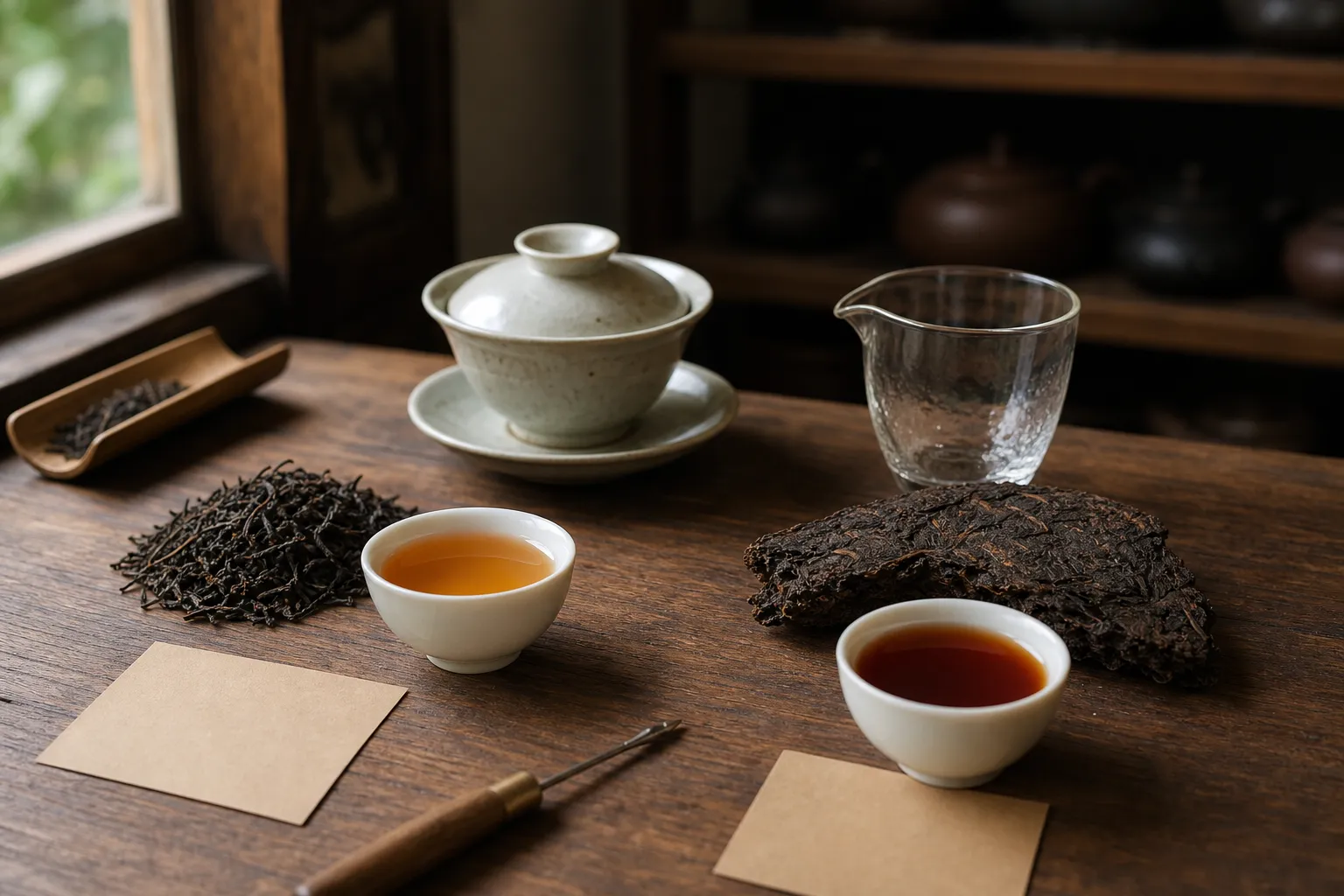
Choose young dark tea when you want a brighter, livelier cup: lifted aroma, briskness, and sometimes a drying edge. Choose aged dark tea when you want a rounder, darker, woodier, earthier, or sweeter cup with more weight in the mouth.
That is the short answer to young vs aged dark tea, but age should not make the decision by itself. Tea type, storage, compression, leaf breakage, dose, water temperature, and steep length can all change what you taste. A poorly stored older tea can taste flat or musty. A well-made young tea can be vivid and enjoyable. Ripe shou Pu-erh can taste dark and mellow even when it is not very old.
upward
Start with the broader guide
Use the broader guide first if you need the full scope before this page.
Start with the cup you want, not the year on the wrapper
If you are choosing between two samples, begin with the cup character you want to drink today.
Young dark tea often suits drinkers who like lift and tension. In young sheng Pu-erh, the flavor can lean toward fresh wood, green stem, grass, flowers, light fruit, or a sharper finish. It may feel more drying on the tongue or cheeks. Some drinkers enjoy that active, brisk feeling; others prefer to brew it lightly.
Aged dark tea often suits drinkers who want depth and less sharpness. Aged sheng tea flavor can move toward wood, dried fruit, old book, camphor-like coolness, earth, leather, or darker sweetness, depending on the material and storage. The mouthfeel may feel rounder or thicker, and the aftertaste may sit lower and longer rather than flashing quickly at the front of the mouth.
If you want…
Start with…
Watch for…
Bright aroma, briskness, a little bite
Younger dark tea or young sheng
Sharpness that stays pleasant rather than harsh
Rounder texture and darker sweetness
Aged dark tea
Clean storage aroma and a smooth middle infusion
Earthy, mellow, dark liquor without chasing old age
Ripe shou Pu-erh
Processing-driven depth, not just storage age
A tea that changes noticeably across infusions
Compressed sheng, young or aged
How it opens after the rinse and first few steeps
A calm daily cup with less edge
Aged, ripe, or softer-stored tea
Flatness, heavy must, or over-brewing
“Aged dark tea taste” is not one fixed flavor. Some teas become smoother and more integrated. Some become dull. Some keep their structure. Some show storage notes more strongly than leaf character.
Young tea flavor: brightness, edge, and brewing sensitivity
Young dark tea flavor is often easiest to notice in the first two infusions. The dry leaf may smell fresh, vegetal, floral, smoky, woody, or sun-warmed. Once hot water hits the leaf, the cup can become brisk quickly, especially if the leaves are broken, loosely stored, or brewed with a heavy hand.
Common young-tea signs include:
- A brighter aroma that rises quickly from the cup
- More obvious bitterness or astringency
- A lighter or clearer liquor color, depending on subtype
- A faster “attack” on the tongue
- A finish that may feel drying, tingling, or sharp
- Sweetness that may appear after the first edge passes
This does not mean young tea is automatically rough. A young dark tea can be fragrant, clean, sweet, and balanced. But it often gives less hiding space to brewing mistakes. A long first steep, a high dose in a small vessel, or too much broken leaf can make the tea seem harsher than it is.
If a young tea tastes too sharp, adjust before rejecting it:
- Shorten the first few infusions
- Use slightly less leaf
- Give compressed pieces a quick rinse and a short rest
- Compare the second, third, and fourth infusions, not only the first
- Avoid turning the comparison into one long extraction
Young tea astringency can be part of the structure. The question is whether it supports aroma and aftertaste, or whether it blocks everything else. If the cup becomes all grip and no fragrance, the tea may not fit your taste, or the brew may simply be too strong.
Aged tea taste: roundness, storage, and the risk of dullness
Aged dark tea is usually chosen for a deeper and more settled cup. In many everyday tasting situations, people look for woodiness, earthiness, darker sweetness, smoother texture, and a longer aftertaste. The liquor may appear darker or more orange-red to brown, though color alone is not enough to judge age or quality.
Aged tea mouthfeel is often the main reason to choose it. Instead of a quick bright snap, the cup may feel broader, softer, or heavier. The aftertaste may seem less sharp but more persistent. A clean aged tea can feel layered: aroma first, then sweetness, then wood or earth, then a lingering finish.
Storage matters as much as time. When comparing an aged sample, pay attention to the aroma before you pay attention to the age claim.
Look for:
- Clean dry-leaf aroma, without obvious damp cellar smell
- Rinse aroma that opens rather than turns sour or stale
- Liquor that feels coherent, not muddy or lifeless
- Earthiness that reads as warm or woody, not dirty or moldy
- Sweetness or depth in the middle infusions
- Aftertaste that remains pleasant after the cup cools
Be cautious if the tea smells musty, sour, heavily damp, or like it has absorbed storage odors. Aged tea can be earthy, but “earthy dark tea flavor” should not excuse every off note. Poor storage can flatten aroma, make the cup heavy in an unpleasant way, or cover the leaf’s original character.
This is why choosing aged dark tea should not mean choosing the oldest tea you can find. A younger tea with clean storage and clear flavor may be more enjoyable than an older tea with dull or distracting storage notes.
Do not confuse aged sheng with ripe shou Pu-erh
Pu-erh creates one of the biggest misunderstandings in the young-versus-aged question. Young sheng, aged sheng, and ripe shou Pu-erh are not simply three ages of the same taste path.
Young sheng Pu-erh is raw Pu-erh at an early stage. It can be bright, sharp, floral, grassy, bitter, sweet, or mineral depending on the leaf and processing. Aged sheng is raw Pu-erh that has changed over storage time. Its flavor may become woodier, mellower, sweeter, darker, or smoother, but the result depends strongly on storage conditions.
Ripe shou Pu-erh is different. It goes through pile fermentation, a processing step that can create dark liquor, mellow body, earthy aroma, woody notes, and thick mouthfeel without requiring the same long natural aging path as sheng. A young ripe Pu-erh may therefore taste more “aged” to a beginner than an actual aged raw tea, simply because the processing gives it a dark, mellow profile.
Use this distinction when choosing:
- If you want brightness, edge, and aromatic lift, try young sheng or a younger dark tea style.
- If you want to taste how raw tea changes over storage time, compare aged sheng samples carefully.
- If you mainly want mellow, dark, earthy, and thick, ripe shou Pu-erh may fit that taste preference without making age the main requirement.
One terminology note helps here: in this article, dark tea refers to post-fermented or microbially transformed tea styles often called hei cha in Chinese tea classification. It does not mean ordinary English black tea, which corresponds more closely to Chinese hong cha, or red tea. The taste changes discussed here are about dark tea processing, aging, and storage, not simply oxidation.
A short-infusion test for comparing two teas
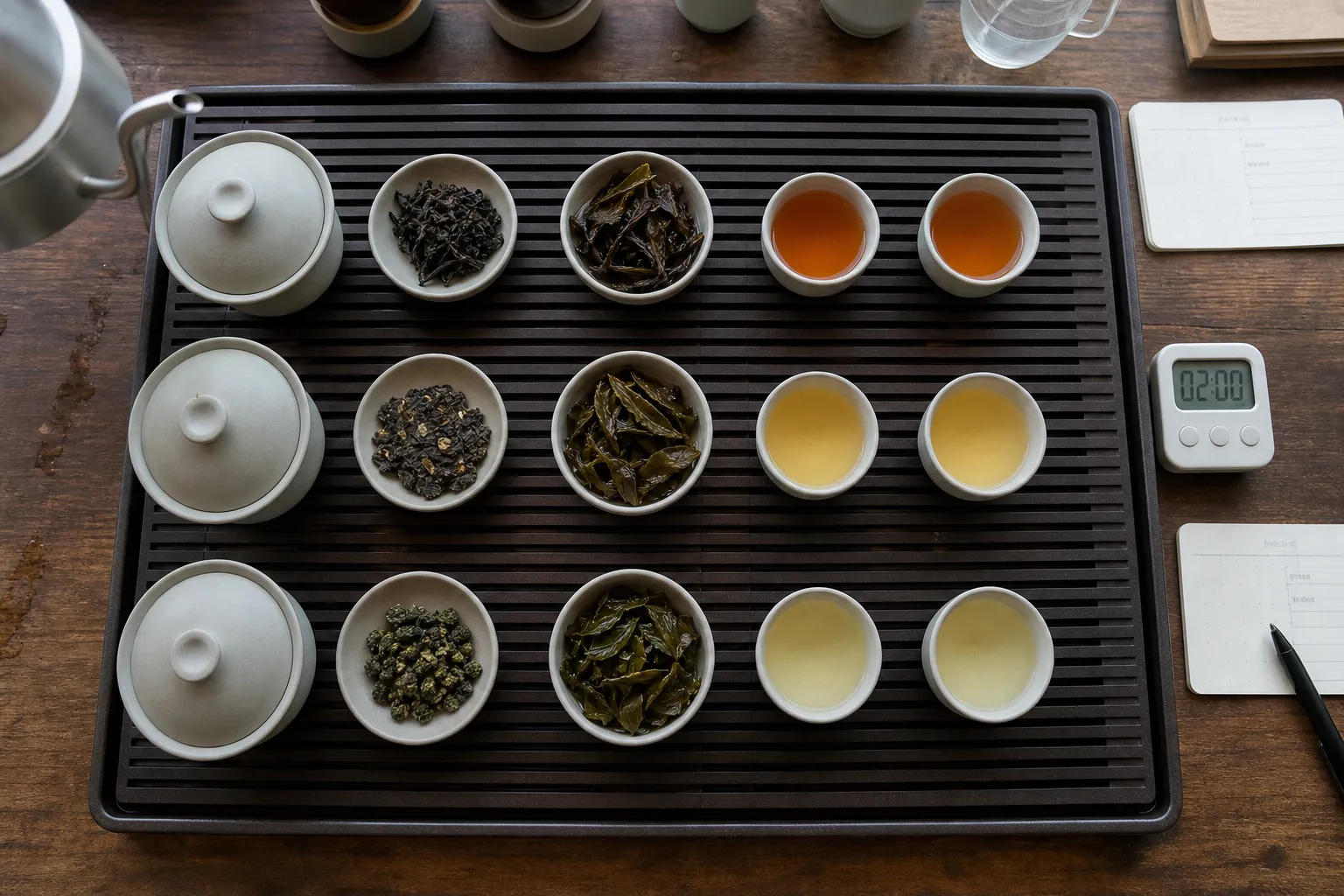
A single long steep is a poor way to compare young and aged dark tea. It can exaggerate bitterness in young tea and heaviness in aged or ripe tea. Short infusions are more useful because they show how each tea opens, softens, or fades across time.
Use the same vessel, water, and leaf amount for both samples. The exact numbers can vary; the comparison just needs to be consistent.
Smell the dry leaf.
Notice whether it is fresh, woody, earthy, smoky, floral, sweet, dusty, musty, or flat.
Use a brief rinse if the tea is compressed, dusty, or tightly packed.
For compressed dark tea brewing, a rinse can help wake the surface and loosen the piece. Very tight cakes or bricks may need a little time to open.
Start with short first infusions.
Do not try to pull everything out at once. Young tea may show sharpness quickly; aged or ripe tea may show aroma before full body.
Compare the middle infusions.
The second through fifth infusions often reveal the better decision. Does the young tea become sweeter after the first edge? Does the aged tea become deeper, or does it turn flat and heavy?
Track mouthfeel and aftertaste.
Young tea may grip the mouth and then leave a fragrant finish. Aged tea may feel smoother or thicker. Ripe tea may feel mellow and dark, with a soft earthy base.
Adjust one variable only.
If the young tea is harsh, shorten the steep or reduce leaf. If the aged tea is thin, extend slightly. If either tea tastes muddy, check whether the dose or broken leaf is too high.
Compression changes the test. A loose dark tea may release flavor quickly and taste strong in the first cup. A chunk from a cake or brick may seem quiet at first, then expand over several infusions. Broken pieces can make a tea taste more intense, more bitter, or more dusty than a cleaner intact portion.
When age should not decide the choice
Age is useful information, but it is not a tasting verdict. Treat it as one clue among several.
Do not choose aged tea only because it is older if:
- The dry leaf has an unpleasant damp or storage-heavy smell
- The rinse aroma is stale rather than clean
- The liquor feels flat after the first infusion
- The earthiness covers all sweetness and aftertaste
- The tea tastes strong only because it was brewed too long
- The wrapper age is more impressive than the cup
Do not dismiss young tea only because it is young if:
- The aroma is clear and appealing
- The astringency feels lively rather than harsh
- Sweetness appears in later infusions
- The tea responds well to shorter steeps
- You enjoy brightness more than heavy body
A good final test is simple: after three or four short infusions, which cup do you want to keep drinking?
If the younger tea keeps pulling you back with aroma and energy, choose young. If the aged tea gives cleaner depth, smoother mouthfeel, and a more satisfying finish, choose aged. If what you really want is dark, mellow, earthy comfort, consider whether ripe shou Pu-erh is the better match than aged sheng.
For taste, the better choice is not automatically the older tea or the younger tea. It is the tea whose aroma, texture, aftertaste, storage condition, and brewing response match the cup you want.
FAQ
Is aged dark tea always smoother than young dark tea?
No. Aged dark tea can be smoother, but storage and leaf quality matter. Some older teas taste flat, musty, or storage-heavy. Some young teas are bright but balanced, especially when brewed with short infusions.
Why does ripe shou Pu-erh taste dark even when it is young?
Ripe shou Pu-erh develops much of its dark, mellow, earthy character through pile fermentation. That processing step is different from the slower storage change of raw sheng Pu-erh, so young ripe tea can taste dark without being old.
Should I judge age by liquor color?
Use color as one clue, not the decision. Aged, ripe, or heavily oxidized-looking dark teas may pour darker, but liquor color can also be affected by processing, compression, leaf breakage, dose, and steep length.
What is the easiest way to compare young and aged dark tea fairly?
Use the same vessel, water, leaf amount, and short infusions for both teas. Smell the dry leaf, rinse if needed, then compare the middle infusions for aroma, mouthfeel, sweetness, sharpness, storage notes, and aftertaste.
Sources
Sources and further reading
Reference links are limited to sources considered suitable for public citation in this page.