
Ripe Pu-erh liquor color
Why Ripe Pu-erh Liquor Can Look Darker Than Other Dark Teas
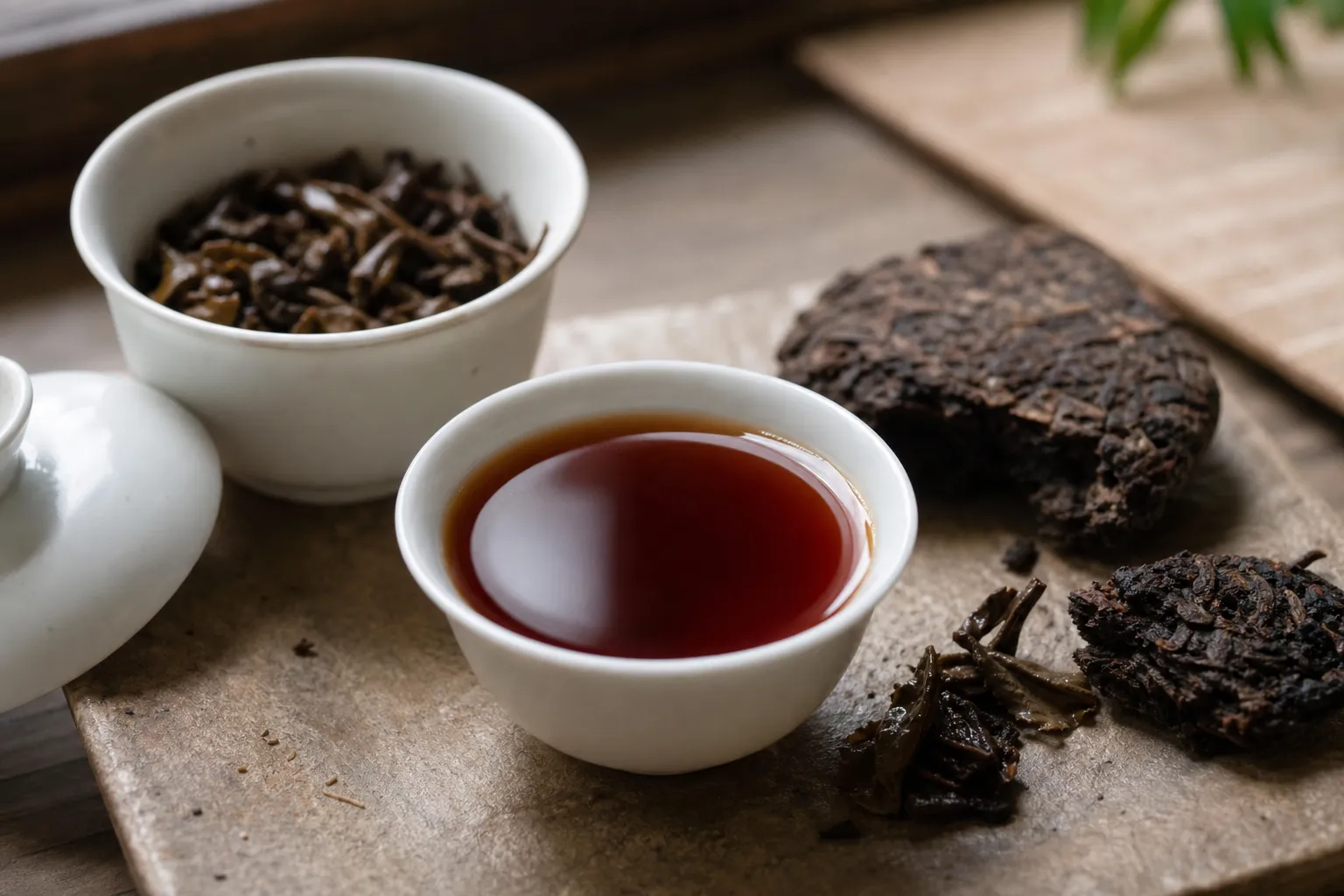
Ripe Pu-erh can look darker than many other dark teas because its wet-piling process, often called wo dui, changes the leaf before you ever brew it. That warm, humid post-fermentation stage affects soluble compounds, aroma, body, and the way color extracts into water. In everyday brewing, ripe pu-erh liquor color often appears deep red, red-brown, dark brown, or nearly opaque when brewed strong.
That darkness can be completely normal for shu Pu-erh. It is not a verdict by itself. Leaf amount, broken cake fragments, steep time, vessel size, cup depth, lighting, and storage condition can all make the same tea look darker or lighter.
upward
Read the full overview first
Use the broader guide first if you need the full scope before this page.
The processing reason: wet piling gives ripe Pu-erh a darker starting point
Ripe Pu-erh, also written as shu or shou Pu-erh, is made from Yunnan tea material that goes through pile fermentation. During wet piling, moisture, heat, microbial activity, and leaf chemistry move the tea away from the fresher profile of raw Pu-erh and toward a darker, mellower cup.
Research on Pu-erh processing describes ripened Pu-erh as a microbial post-fermented tea, with pile fermentation contributing to brownish-red liquor, mellow taste, and changed chemical composition. That does not create a simple color rule, but it supports the practical observation: ripe Pu-erh is naturally inclined toward a deep red-brown infusion.
A simple comparison
- Young raw Pu-erh may brew yellow, gold, orange, or amber.
- Ripe Pu-erh often begins closer to red-brown or dark reddish brown.
- Other dark teas can also brew dark, but their leaf material, processing, and storage paths may produce a clearer, redder, browner, or lighter cup.
So if ripe Pu-erh looks heavier than Liu Bao, Anhua dark tea, or a young raw Pu-erh, that does not automatically mean something is wrong. It may simply reflect how the tea was made.
Why one ripe Pu-erh cup can look almost black
Processing sets the tendency. Brewing decides what you actually see.
More leaf per water
More soluble material extracts into the cup.
Broken cake fragments
Small pieces release color quickly.
Fine dust or loose particles
The liquor can look heavier or less clear.
Longer steeping
More color and body move into the water.
Hotter water
Extraction usually happens faster.
Small vessel
A concentrated brew can look dense after a short steep.
Deep cup or dark interior
The same liquor appears darker than in a shallow white cup.
Early strong infusions
The first steeps often show the most visual density.
Warm or low lighting
Red-brown liquor can read as nearly black.
Broken Pu-erh cake fragments are a common reason for surprise. A small piece pried from a cake may contain compressed leaf, flakes, and powder. Once it opens in hot water, color can rush out before the flavor feels fully balanced.
That is why a deep red ripe Pu-erh cup should be read with the rest of the brew: aroma, clarity, mouthfeel, sweetness, bitterness, astringency, earthy notes, and whether the tea tastes clean, flat, heavy, or muddy.
Compare under the same conditions before judging color
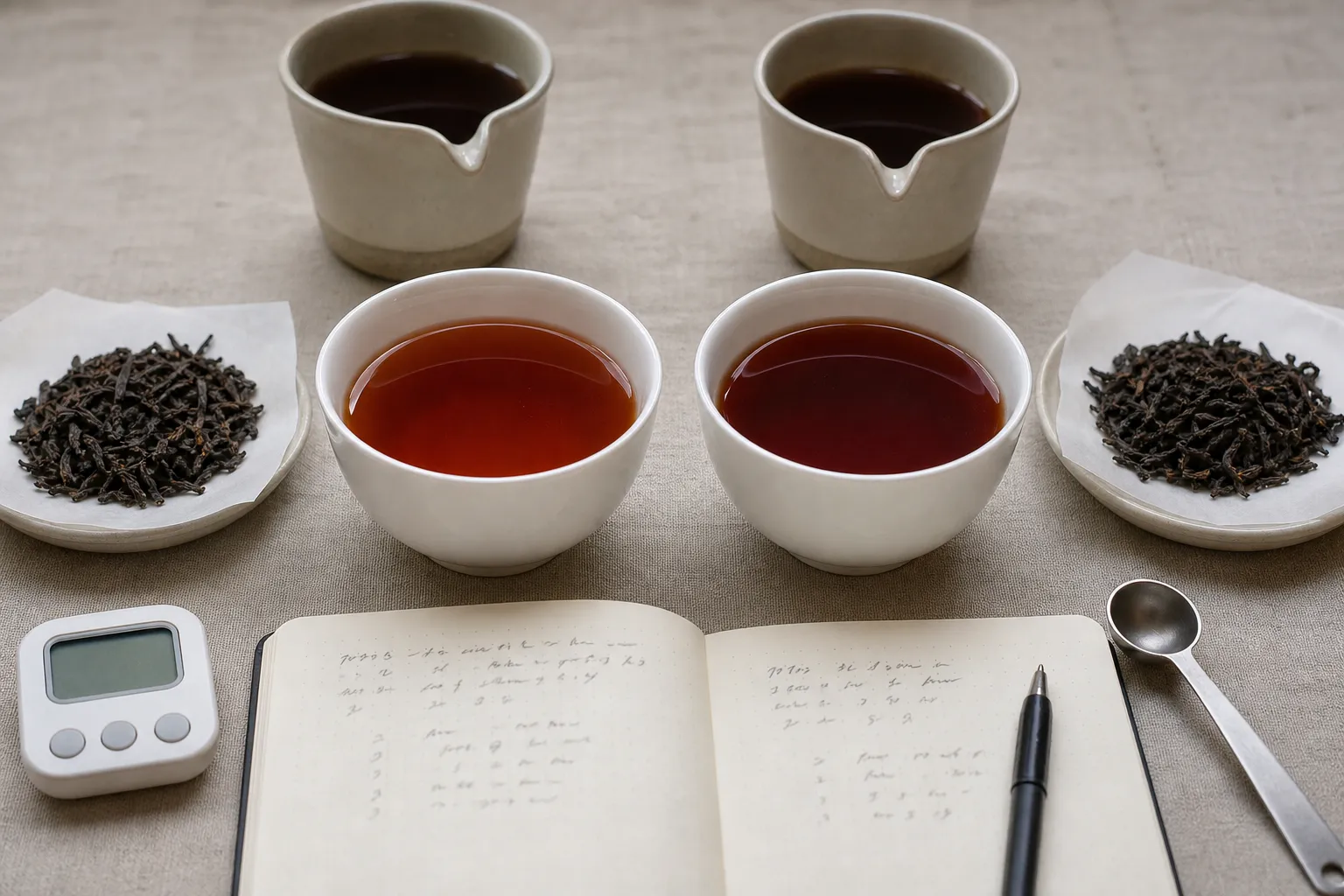
A dark tea liquor comparison only tells you much when the brewing conditions are close. If one tea is brewed with 7 grams in a small gaiwan for 20 seconds and another with 4 grams in a larger pot for 10 seconds, the color difference says more about the setup than the teas.
For a fairer comparison, keep these points similar:
- Leaf weight
- Water volume
- Water temperature
- Steep time
- Cup shape and color
- Lighting
- Infusion number, such as first steep to first steep
- Amount of broken leaf or fine material
This matters when comparing ripe Pu-erh vs Liu Bao, ripe Pu-erh vs Anhua dark tea, or ripe vs raw Pu-erh color. These teas may sit in the broader dark-tea conversation, but they do not need to brew the same color. One cup may be more transparent, one more reddish, one more brown, and one more visually dense.
A fair comparison may still show ripe Pu-erh as darker. That is not unusual. But if the brewing setup is uneven, the variables may be doing most of the work.
What dark liquor does not prove
Dark liquor is a cue, not a conclusion.
A darker red-brown Pu-erh infusion does not prove:
- higher quality
- older tea
- better fermentation
- cleaner storage history
- stronger flavor
- authenticity
- better future aging
- a better match for your palate
It also does not prove that the tea was brewed well. A cup can be dark and balanced, or dark and flat. It can be dense and sweet, or dense and muddy. It can look powerful but taste thin if most of the visual weight comes from fine particles and quick extraction.
Market language sometimes treats darker liquid as shorthand for “more fermented” ripe Pu-erh. In a controlled comparison, processing can influence color. In a real cup, steeping choices and leaf condition can easily blur that clue. A short steep of intact ripe Pu-erh may look clearer than a long steep of a broken fragment. A lighter-looking cup may taste more lively and better structured than a darker one.
Color also should not be used as a storage judgment. If a tea smells unpleasantly damp, stale, sharply musty, or shows visible surface problems, the liquor color cannot settle that question. This page is about cup color, not storage assessment.
How to read a red-brown ripe Pu-erh cup
First, look at clarity.
A ripe Pu-erh can be dark and still show a clear red-brown glow at the rim. If the liquor is cloudy or dull, the cause may be fine particles, broken material, aggressive brewing, or the particular tea. Cloudiness is not automatically a fault, but it is worth noticing.
Then smell the cup.
Ripe Pu-erh is often described as earthy, woody, mellow, sweet, or fermentation-influenced. Those words are not quality grades. What matters is whether the aroma feels clean and integrated, or flat and distracting.
Next, taste for structure.
A dark infusion can still be smooth and rounded. It can also be over-extracted. If the cup feels too heavy, shorten the steep, use slightly less leaf, or pour into a wider, lighter cup and see whether the tea becomes easier to read.
Finally, watch the steeps change.
Many ripe Pu-erh sessions begin dark, then move toward clearer red-brown, amber-brown, or lighter brown as the leaf releases its most immediate soluble material. If the first steep is nearly opaque but the third becomes clearer and sweeter, the tea may simply be settling into the session.
A quick reset when the cup looks darker than expected
Before judging the tea, try this:
- If the tea came from a cake, shake away loose dust and very fine crumbs.
- Keep the leaf amount moderate for your vessel.
- Use a short rinse if that is already part of your brewing habit.
- Start with a shorter first infusion.
- Pour into a white or light-colored cup when checking color.
- Judge aroma, flavor, texture, and clarity together.
If the cup still looks deep red-brown, that may be normal for ripe Pu-erh. The better question is whether the brew tastes balanced at that strength. If it tastes thick, sweet, mellow, and comfortable, the dark liquor is part of the tea’s style. If it tastes muddy, harsh, or tiring, adjust the brew before blaming the tea.
The practical takeaway
Ripe Pu-erh often looks darker because wet piling changes the leaf before it reaches your teapot, and those changes can produce a deep red-brown infusion. But the darkness you see in the cup is also shaped by grams, water, time, vessel, cup depth, lighting, and leaf breakage.
So yes, a ripe Pu-erh darker liquor can be normal. No, darkness alone does not mean better tea. Read the cup as a whole: clear or cloudy, sweet or flat, mellow or rough, balanced or over-extracted. That gives you more useful information than color by itself.
Sources
Sources and further reading
Reference links are limited to sources considered suitable for public citation in this page.