
Why Loose Leaf Dark Tea Can Brew Stronger Faster Than a Tea Brick
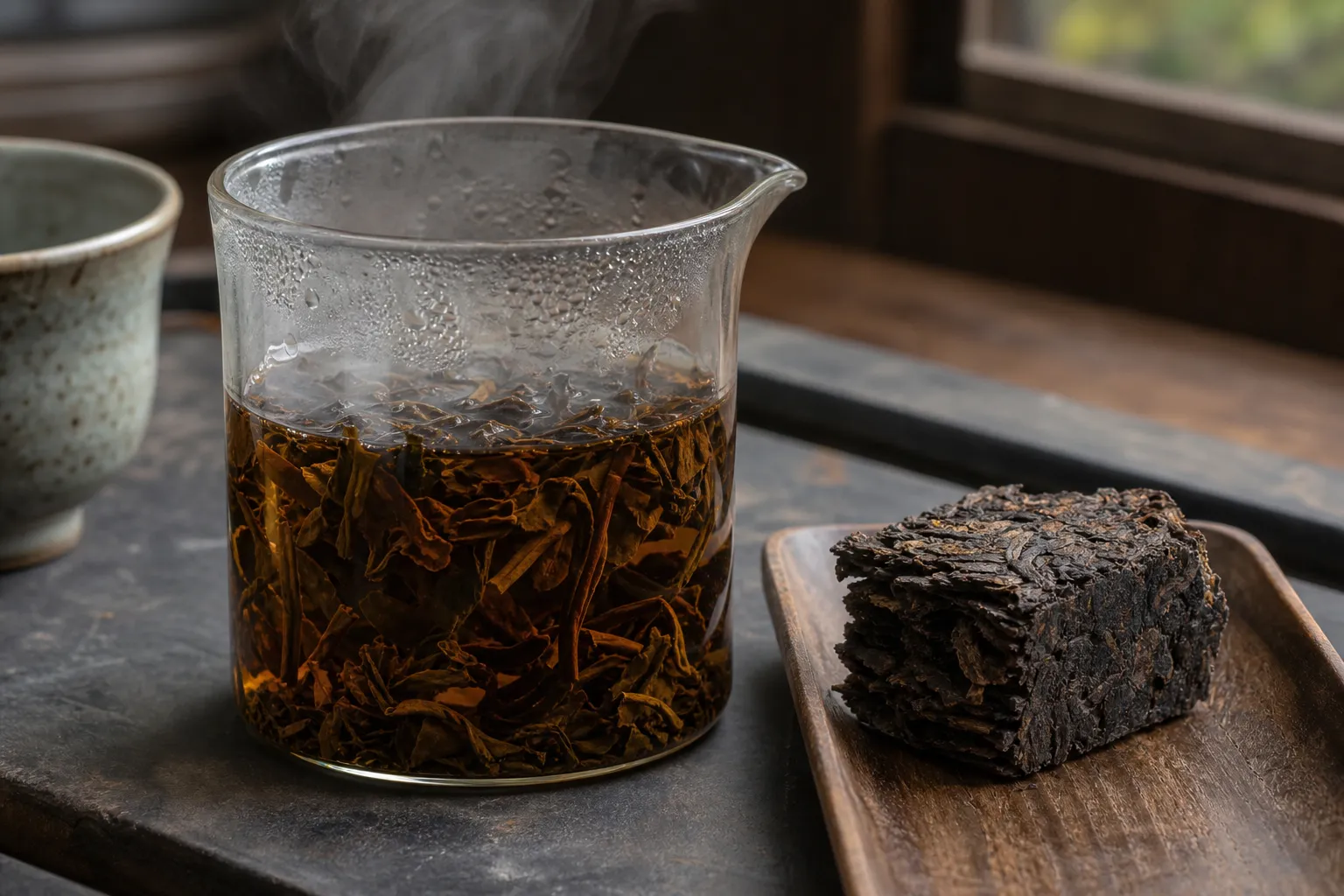
Loose leaf dark tea brews faster in many everyday setups because the leaves are already separated. Hot water can move around them right away, wet more surfaces, and pull out color, body, aroma, earthy notes, and sweetness sooner.
A tea brick starts from a different place. If the piece is compact, water first has to soften the outside, enter the layers, and loosen the fragment before the leaves extract evenly. That is why a tea brick first steep can taste thin even when the tea itself is not weak.
This is a brewing behavior, not a quality ranking. Loose leaf can become strong quickly, but it can also turn heavy, muddy, or harsh if the ratio or timing is too aggressive. A compressed piece may start quietly, then become fuller once it opens.
upward
Start with the broader guide
Use the broader guide first if you need the full scope before this page.
Water contact is the main reason
Tea strength in the cup comes from extraction: soluble taste compounds, aroma materials, color, and texture moving from leaf into water over time. Research on tea infusion broadly shows that extraction changes with time, temperature, processing, and the physical condition of the tea material. Studies on Fu-brick tea also describe aroma release during boiling-water extraction, with different compounds appearing at different rates.
For brewing at home, the useful version is simpler:
Water can only extract from leaf surfaces it can reach.
Loose leaf dark tea usually gives water quick access to many separated leaves. Even if the leaves are curled, twisted, or uneven, they are not locked into one dense block. Once water enters the vessel, the tea begins releasing liquor quickly.
A compressed brick piece behaves more slowly. The outside wets first. The inner layers may stay dry or only partly softened during the early seconds. The first cup may look pale, taste narrow, or feel watery even if the same weight of already-separated tea would have brewed more strongly.
Think of it as contact, not mystery. Loose leaf has more immediate contact. Compressed tea may need help creating that contact.
Why a tea brick can taste thin at first
A weak first steep from compressed dark tea is common when the piece is hard, thick, or still pressed tightly together. Several small variables can slow the early cup.
Compression tightness
A loosely pressed piece opens quickly. A tightly compressed tea brick can resist water longer. Some fragments flake apart after a rinse; others remain like a small block through the first steep.
If the piece stays solid in the gaiwan, pot, or cup, the liquor may be lighter than expected. The tea may simply be under-opened.
Fragment size and shape
A thin flake exposes more edges than a thick corner. Two grams of layered flakes can brew faster than two grams of dense chunk because water reaches more of the tea at once.
This is why “same weight” does not always mean “same first steep.” Weight tells you how much tea you used. Shape affects how quickly that tea becomes available to the water.
Broken particles
Loose dark tea often includes some broken leaf, crumbs, or small particles. These extract quickly because they have more exposed surface. They can make the first cup look darker and taste stronger sooner.
That can be pleasant when the tea is mellow. It can also push the cup toward dusty, woody, earthy, heavy, or drying if the leaf is very fine or the steep runs long.
Water temperature
Hotter water usually speeds extraction. Many dark teas handle very hot water well, especially compressed or older styles, but the right temperature still depends on the tea, the vessel, and the flavor you want.
If a brick tastes thin, hotter water may help it open. If loose leaf tastes too forceful, a shorter steep often helps first; slightly cooler water can also soften the cup.
Ratio and vessel size
A small vessel with a high tea-to-water ratio can make both loose and compressed tea taste strong. A large mug with a small brick chip can taste thin because the water volume is high for the amount of leaf that has actually opened.
For everyday brewing, weighing the tea is more reliable than judging by appearance. Compressed pieces can mislead the eye: a small chip may be dense, while a large flake may be light.
Loose leaf vs. brick in the first few steeps
The difference is usually clearest at the beginning. After a brick opens, the gap often narrows.
First contact with water
Loose leaf dark tea: leaves wet quickly and begin releasing color and aroma.
Compressed tea brick piece: outer layers wet first; inner layers may open slowly.
First steep
Loose leaf dark tea: can taste strong sooner, especially with broken leaf.
Compressed tea brick piece: may taste thin if the piece stays compact.
After a rinse or short steep
Loose leaf dark tea: may already be near full strength.
Compressed tea brick piece: often begins to loosen and gain body.
Later infusions
Loose leaf dark tea: may fade depending on leaf grade, ratio, and brokenness.
Compressed tea brick piece: may become fuller once the fragment opens.
Main risk
Loose leaf dark tea: too strong, heavy, harsh, or muddy if over-steeped.
Compressed tea brick piece: too light early if not loosened or steeped long enough.
Compressed tea steeping speed is hard to reduce to one rule. A brick that has been gently flaked into layers may brew almost like loose tea. A tightly pressed corner may need more time. A very broken loose tea may brew faster than a whole-leaf loose tea from the same category.
The form matters, but it is not the only thing in the cup.
If the tea brick tastes thin
If compressed dark tea tastes watery, pale, or slow in the first steep, adjust the opening before blaming the tea itself.
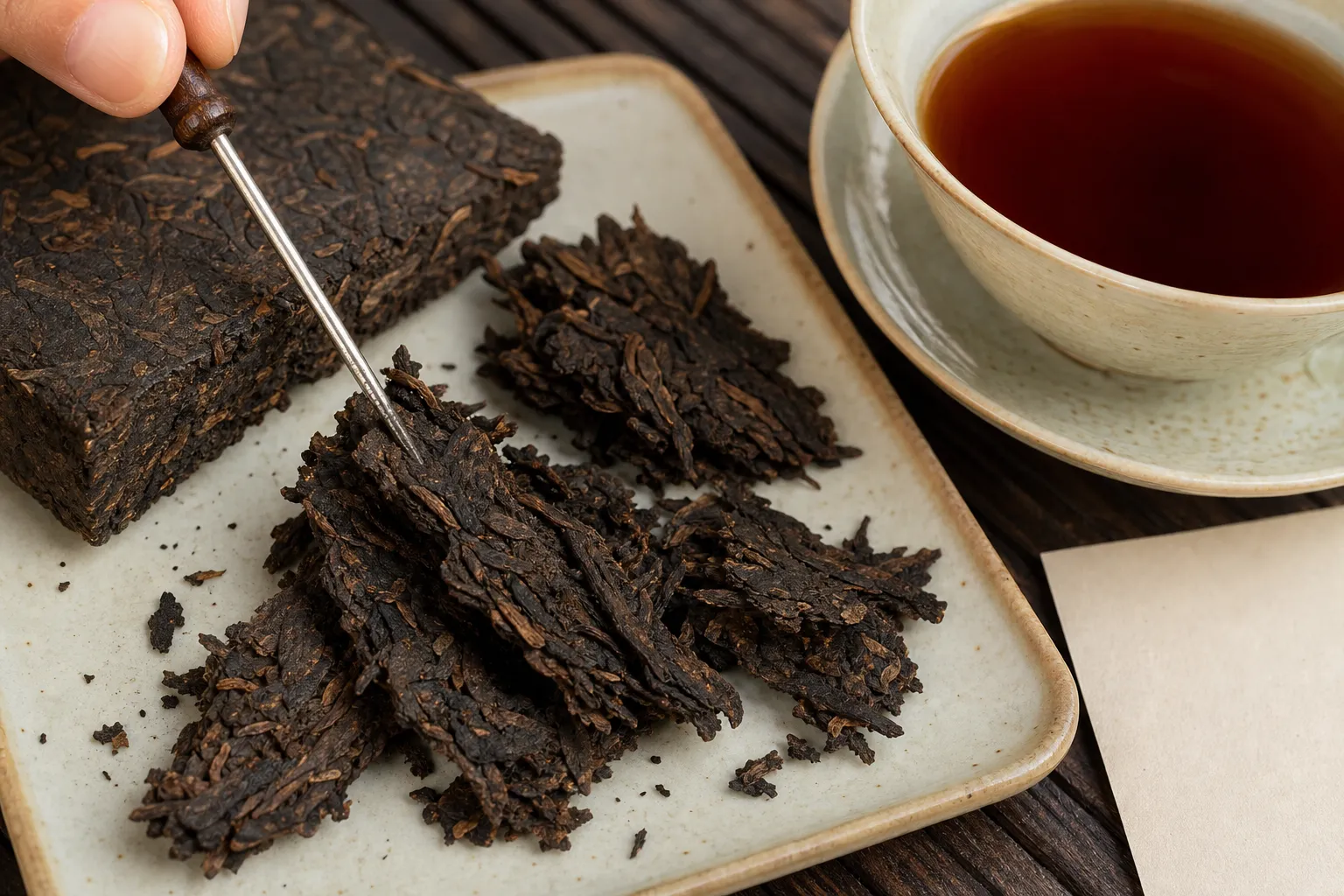
Start gently. Loosen the tea brick pieces into thinner flakes rather than crushing them into dust. A tea pick or small knife can help, but work from the side of the brick and keep the tool pointed away from your hand. Thin layers usually brew more evenly than thick chunks.
A short hot rinse can also help. Pour hot water over the piece, wait briefly, then discard that rinse if it fits your brewing habit. The purpose is practical wetting: warming the vessel, softening the compressed leaves, and helping the fragment begin to open.
For the next steep, look at the leaf rather than only the clock. If the fragment is still tight, extend the steep. If it has opened into visible leaves, keep the steep shorter and taste before pushing harder.
Useful adjustments
- Loosen the piece into thinner flakes before brewing.
- Use a brief hot rinse when the tea is compact and slow to open.
- Extend the first steep if the chunk remains solid.
- Use hotter water if the aroma feels muted and the tea can take it.
- Increase the tea amount slightly only after the leaves have opened and the liquor still feels thin.
- Judge the second steep fairly before deciding the brick lacks strength.
With compressed tea, the second steep is often more informative than the first. If the first cup was only a warm-up and the second gains color, body, and aroma, the issue was probably opening speed.
If loose leaf tastes strong too soon
Loose leaf can overshoot just as easily as a brick can under-open. If the cup becomes too strong early, reduce the variables that drive fast extraction.
Shorten the first steep. With separated leaves, even a small change in time can soften the cup. If you are brewing gongfu-style, pour sooner. If you are brewing in a mug or pot, remove or strain the leaves earlier.
Use slightly less tea. Loose dark tea can look fluffy or uneven, so a spoonful is not always consistent. If the cup is repeatedly heavy, weigh a little less or use a smaller pinch next time.
Watch texture as well as color. A dark cup can still be smooth; a lighter cup can still be sharp. Adjust from the cue you notice:
Too earthy or heavy
Use less leaf or shorten the steep.
Harsh or drying
Shorten the steep first; try slightly cooler water if needed.
Flat but dark
Reduce over-steeping and check whether the stored tea smells clean and lively.
Thin but fragrant
Use a little more leaf or extend gradually.
Sweet but weak
Lengthen the steep in small steps rather than jumping to a long infusion.
Loose leaf water contact is efficient, but efficient does not always mean balanced. A good cup is not just dark; it has aroma, body, sweetness, earthiness, and aftertaste in proportion.
Stronger first liquor does not mean better tea
A darker or stronger first cup is easy to overread. It may come from satisfying leaf, but it may also come from broken particles, exposed edges, a high ratio, very hot water, or a long steep. Loose versus compressed tea can change the early cup without making one form superior.
Compressed tea can seem quiet at first because its structure slows water contact. Once opened, it may produce a fuller cup across later infusions. Loose tea can be convenient and responsive, but more exposure and brokenness can also make some teas fade quickly or taste flatter depending on age, storage, and material.
Keep the judgment narrow: loose leaf dark tea often brews stronger faster because it is already separated. That explains the first moments of brewing. It does not settle the whole question of quality, storage, aging, or personal preference.
What to do next time you brew
Set your first steep according to the form in front of you.
For loose leaf, begin modestly. Use a controlled amount, keep the first steep short, and taste before extending. If the liquor turns strong quickly, do not keep steeping just because a general recipe says so.
For a brick, prepare the piece. Loosen it into flakes when possible, rinse if the tea is compact, and give the first infusion enough time to open the leaves. If the first steep tastes thin, check whether the piece actually separated before increasing the ratio.
A simple working rule:
Loose leaf
Assume fast contact; control strength early.
Compressed brick
Assume slower opening; help the leaves separate.
Both forms
Adjust by taste, not by form alone.
The useful cues are visible and sensory: liquor color, aroma release, body, sweetness, earthiness, harshness, and aftertaste. When those cues change, your steeping can change with them.
FAQ
Does loose leaf dark tea always brew faster than a tea brick?
No. It often brews faster because separated leaves meet water sooner, but compression tightness, fragment size, brokenness, water temperature, vessel size, ratio, and steeping time all matter. A well-flaked brick piece can brew quickly, while large whole loose leaves may extract more slowly.
Should I crush a brick piece so it brews stronger?
Usually no. Separate it into thin flakes if you can. Crushing creates dust and small particles, which can make the liquor heavy, cloudy, or harsh. Better extraction does not require pulverizing the tea.
Is the first steep the right way to judge tea brick strength?
Not by itself. With compressed tea, the first steep may mostly soften and open the piece. The second steep often gives a clearer reading of body, aroma, and balance.
Why does my loose dark tea get dark but still taste flat?
Color is only one cue. A dark but flat cup may be over-steeped, too concentrated, or affected by storage aroma, water quality, or leaf condition. Shorten the steep first, then adjust tea amount and water if needed.
Sources
Sources and further reading
Reference links are limited to sources considered suitable for public citation in this page.