
Practical tasting check
Ripe Pu-erh Pile Aroma vs Musty Dark Tea Storage Notes
If your ripe Pu-erh smells earthy, damp, basement-like, or a little musty, it is not automatically a problem. The useful question is whether the smell behaves like settled fermentation or like active storage trouble.
Ripe pu-erh pile aroma vs musty tea is best judged by several cues together: dry leaf condition, wrapper dryness, visible surface, aroma before and after a rinse, liquor clarity, mouthfeel, and the finish. Normal ripe Pu-erh can smell woody, soil-like, mushroom-like, damp-leaf, old-wood, sweet-compost-like, or mildly cellar-like. A more concerning musty dark tea aroma usually comes with fuzzy growth, wet patches, active dampness, sour rot, garbage-like odor, harsh mildew, or a stagnant fish-pond note that does not soften after the first rinse.
upward
Start with the broader guide
Use the broader guide first if you need the full scope before this page.
The quick difference: settled pile aroma vs active dampness
Ripe Pu-erh, also called shou or shu Pu-erh, is made through pile fermentation. That process changes the leaf through microbial and moist-heat activity, so a dark, earthy, aged, woody, or mushroom-like aroma can be part of the tea’s normal character.
The difficulty is that English drinkers often use the same words for both ordinary shou and questionable storage: basement, dirt, compost, dust, mushrooms, wet wood, funk. Those words are not enough by themselves. Look for the pattern.
Dry leaf
Normal pile aroma: dry, dark brown to black-brown, intact or normally broken.
Concerning storage note: damp-feeling, clumped from moisture, wet patches.
Wrapper
Normal pile aroma: dry paper, papery or tea-like smell.
Concerning storage note: damp paper, fresh staining, sharp wet-room odor.
Visible surface
Normal pile aroma: no fuzzy growth; ordinary leaf fibers and compression marks.
Concerning storage note: fuzzy growth, raised or spreading colored patches.
Dry aroma
Normal pile aroma: earthy, woody, damp-leaf, mushroom, old wood, sweet compost, mild cellar.
Concerning storage note: sour rot, garbage, stagnant pond, harsh mildew, wet basement.
After a rinse
Normal pile aroma: often softens, opens, or turns sweeter and woodier.
Concerning storage note: stays sharp, worsens, or becomes more rotten.
Liquor and finish
Normal pile aroma: clear reddish-brown to dark red-brown liquor, depending on brew; mellow, smooth, woody, sweet-earthy finish.
Concerning storage note: murky together with spoiled odor or unpleasant residue; harsh, sour, dirty, flat, or rotten-lingering finish.
This is not a lab test. It is a practical sorting method. If several warning signs appear together, do not explain them away as “just fermentation.”
Check the dry leaf and wrapper first
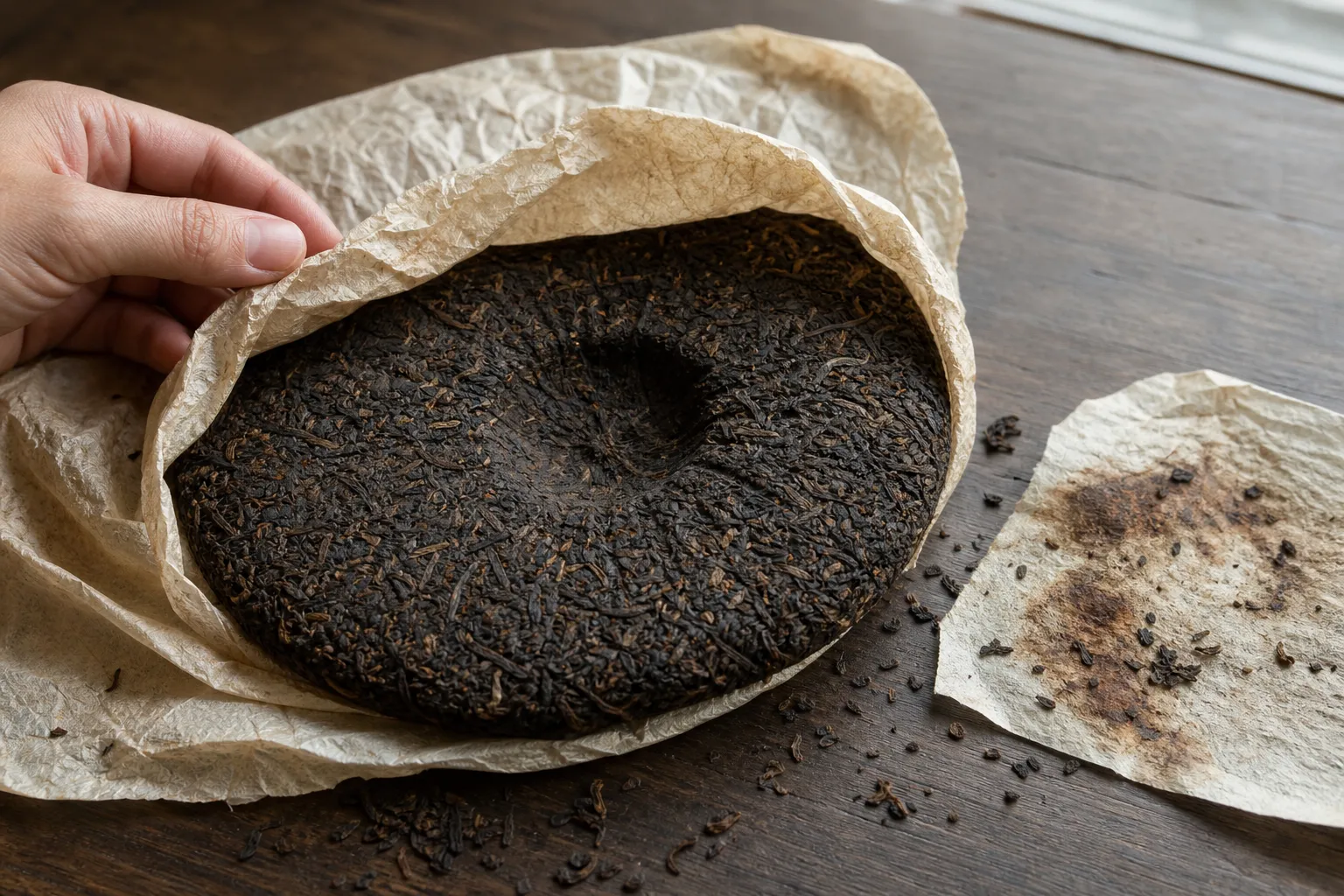
Start before brewing. Ripe Pu-erh pile aroma can be strong in the dry leaf, especially in young, heavily fermented, or inexpensive shou. But the cake, brick, tuo, or loose leaf should not look or feel actively wet.
Hold the tea in good light. Dark tea can have uneven color, broken edges, golden buds, compression marks, dry dust from handling, and ordinary leaf-fiber variation. Those are different from fuzzy, raised, spreading, or suspiciously colored growth. If you see visible mold on Pu-erh, treat it as a problem sign, not as a romantic aged-tea feature.
The wrapper can also tell you something. A dry old wrapper may smell papery, woody, or faintly of the tea. A wrapper that feels moist, shows fresh staining, or smells like a damp room suggests the storage environment may have affected the leaf.
Also notice whether the smell feels “inside the tea” or like the tea absorbed a storage room. A normal fermented tea storage smell often reads as old wood, dry earth, mushroom, leaf litter, or mellow cellar. Poor storage can smell more like wet cardboard, mildew, stagnant air, or sour rot.
Smell again after the rinse
For many ripe Pu-erh drinkers, a quick rinse is part of ordinary preparation. Here, use it as a sensory check, not as a fix. A rinse may wake the leaf and move the aroma from dry funk toward warm wood, earth, cocoa-like darkness, mushroom, or sweet compost. It should not be used to justify brewing through visible growth, active dampness, or a strongly spoiled odor.
A small rinse check
- Warm the vessel.
- Add the leaf and smell the warmed dry leaf.
- Rinse briefly with hot water.
- Discard the rinse.
- Smell the wet leaf, lid, or empty cup.
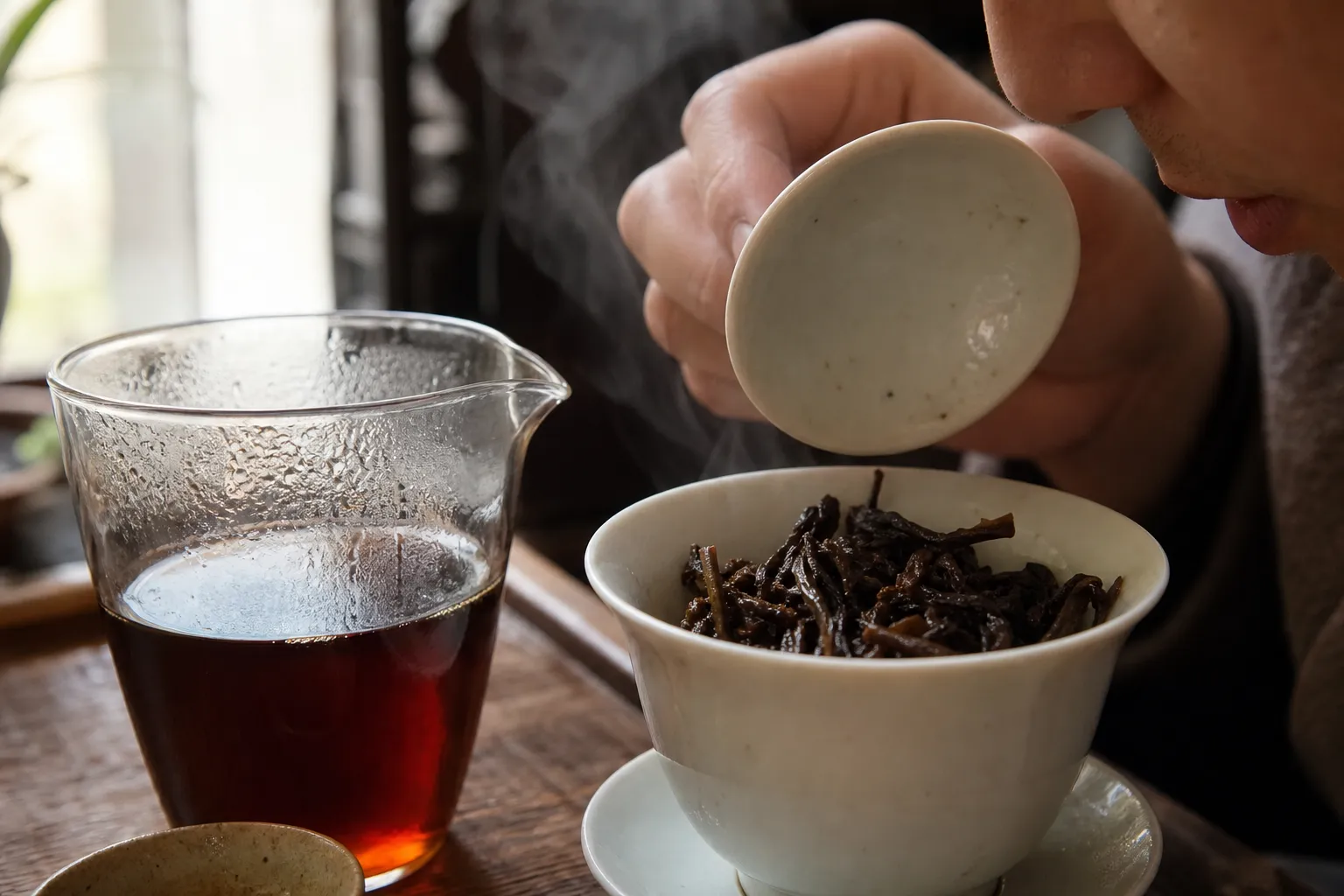
A normal shu pu-erh pile smell often becomes clearer after this: less dusty, more woody, more damp-leaf, sometimes sweeter. The first infusion may still be dark and earthy, but the aroma should feel more settled.
A concerning smell often becomes more obvious with heat. If the wet leaf releases sour spoilage, wet garbage, stagnant fish pond, harsh mildew, or wet rot that gets stronger after the rinse, set it aside. The key is not whether the tea has any mustiness at all; it is whether the aroma moves toward mellow fermentation or toward active decay.
What normal ripe Pu-erh can smell like
A normal ripe Pu-erh smell is not like fresh green tea, high-aroma oolong, or bright young raw Pu-erh. Ripe Pu-erh is built around post-fermentation, and aroma studies of ripened Pu-erh describe changes in volatile compounds during pile fermentation and storage. In everyday drinking terms, that can show up as:
- damp autumn leaves, without sour rot
- clean soil after rain, not sewage or garbage
- dried mushrooms or old wood
- sweet compost, not kitchen waste
- clay, mineral earth, or dark bark
- mild cellar or old book, if dry and mellow
- a sweet earthy Pu-erh finish as the cup cools
Young ripe Pu-erh can show a heavier pile aroma: warm, composty, slightly fishy, or rough around the edges. That fishy ripe Pu-erh odor is a tricky cue. A faint, short-lived marine or fermentation edge that fades after a rinse may belong to a young shou profile. A strong stagnant pond smell, especially with damp leaf, sourness, or a dirty aftertaste, should not be treated as normal.
Storage can also change aroma. Research on Pu-erh stored for different lengths of time shows that volatile profiles can shift, with aged or woody character becoming more prominent in some teas. That supports the broad idea that aged aroma is real. It does not mean every old, musty, or basement-smelling cake is fine to drink.
What musty, moldy, or poorly stored dark tea feels like
“Musty” is a slippery word. Some drinkers use it for a pleasant old-wood note; others mean mildew. Instead of arguing over the word, separate dry old storage from wet active trouble.
Concerning tea storage notes often include one or more of these signs:
- fuzzy patches or visible growth on the cake surface
- damp wrapper, damp cake edge, or leaf that feels moist
- wet basement tea smell that is sharp, sour, or rotten
- garbage-like, sour spoiled, or dirty kitchen odor
- strong fish-pond smell that remains after the rinse
- wet cardboard, mildew, or stagnant closet smell
- liquor and wet leaf that smell worse with heat
- unpleasant sourness or harshness that dominates the first cup
Other dark teas can also carry fermented storage aromas, especially compressed or aged forms. The same logic applies: dry, woody, earthy, mellow storage character is different from wet, sour, fuzzy, or rotten signs.
A common misunderstanding is that because dark tea is fermented, mold-like smells must be acceptable. Production fermentation and poor storage after the tea is finished are not the same situation. Research can show that microorganisms and fermentation help form Pu-erh aroma, but it does not give a home drinker a simple smell-based safety rule. When the visible and aroma cues point toward active dampness or growth, the conservative move is to stop.
What to do when you are unsure
If the tea has no visible growth, the wrapper is dry, the leaf is dry, and the smell is mainly earthy, woody, mushroom-like, or mildly musty, brew a very small amount first. Use a clean vessel, hot water, and short early steeps. Pay attention to how the aroma changes after the rinse and first infusion.
If the first cup becomes mellow, sweet-earthy, woody, or smooth, you may simply be meeting normal ripe Pu-erh character. If the first cup is dominated by sour rot, wet garbage, stagnant fish, or a smell that clings unpleasantly to the cup, do not force yourself to like it. Some ripe Pu-erh is simply not pleasant to a given drinker, even without obvious storage damage.
If there is fuzzy growth, active dampness, wet patches, or a spoiled odor, do not rely on rinsing, airing, boiling water, or longer storage as a rescue method. Those practices may change aroma in ordinary tea handling, but they should not be treated as a way to fix questionable leaf.
For a newly bought tea, keep notes in practical terms: dry leaf smell, wrapper condition, rinse aroma, liquor clarity, first infusion taste, and finish. Over time, this helps you learn your own line between earthy ripe Pu-erh smell and musty tea or moldy tea without pretending every cake follows one rule.
Common confusion: ripe Pu-erh, raw Pu-erh, and storage funk
Some searches mix this issue with ripe vs raw Pu-erh. The difference matters.
Raw Pu-erh can be green, bitter, floral, smoky, woody, aged, or camphor-like depending on age and storage, but it is not made through the same accelerated pile fermentation as ripe Pu-erh. Ripe Pu-erh is more likely to show the classic shou profile: dark liquor, mellow body, earthy aroma, woody depth, and sometimes a pile smell.
That is why a beginner may be surprised by a ripe cake that smells like soil, mushrooms, old wood, or basement. Those notes sit closer to the normal vocabulary of shou than they do to many fresh teas. Still, “normal for ripe” does not mean “anything goes.” The dividing line is not elegance or price; it is whether the tea looks dry and stable, and whether the aroma moves toward mellow fermentation rather than damp rot.
A final nose-and-leaf checklist
Before deciding, ask five small questions:
- Is the leaf dry, with no fuzzy growth or wet patches?
- Is the wrapper dry and free of strong damp-room odor?
- Does the dry aroma read as earthy, woody, mushroom-like, or sweet-compost-like rather than sour or rotten?
- After a rinse, does the aroma soften, or does it become more spoiled?
- Does the first infusion finish mellow, woody, or sweet-earthy rather than harsh, sour, garbage-like, or stagnant?
If most answers point to dry, stable, mellow fermentation, you may be smelling ordinary ripe Pu-erh pile aroma. If they point to dampness, visible growth, wet rot, or worsening odor, treat it as a concerning storage note and set the tea aside.
Sources
Sources and further reading
Reference links are limited to sources considered suitable for public citation in this page.