
Dark tea culture
What Post-Fermented Tea Means in Chinese Tea Culture
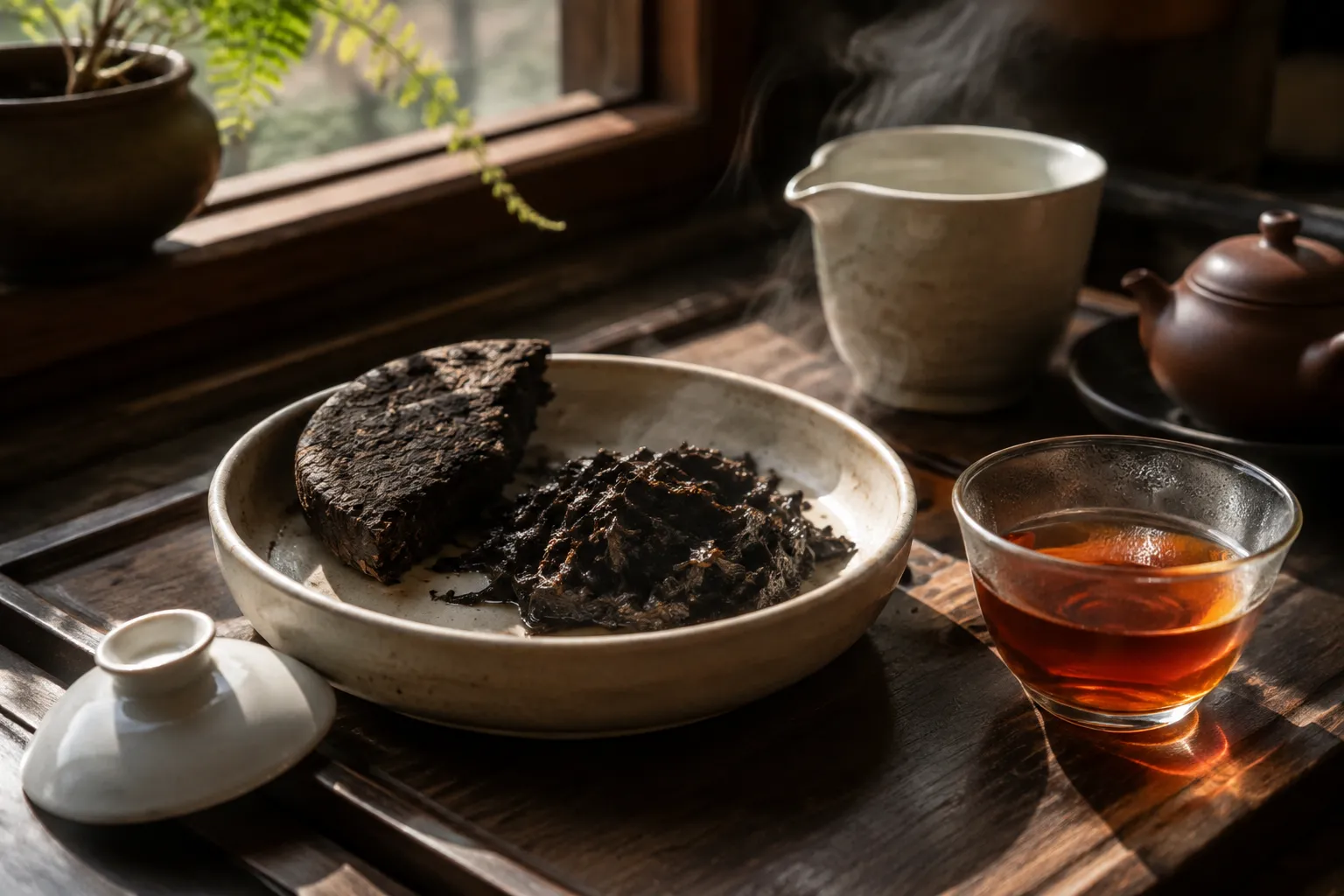
A rinsed piece of dark tea can explain the term better than a long definition. In Chinese tea culture, post-fermented tea usually points to tea understood through change after the leaf has already been shaped or processed. For the drinker, the meaning is practical: look at the form, the compression, the storage aroma, the darker liquor, the softened body, and the way the cup changes across steeps.
That is the center of post-fermented tea culture. The tea is not treated as one fixed flavor caught at one moment. It is handled as a material shaped by processing, time, storage, water, vessel, and use.
The source pack for this page does not include usable public references, so the answer stays narrow. It does not pin down regional histories, production rules, dates, biological mechanisms, or cultural chronology. It explains the term through what a reader can observe when handling dark tea.
upward
Start with the broader guide
Use the broader guide first if you need the full scope before this page.
The meaning starts with transformation
Post-fermented tea meaning is easiest to understand if you separate three things: the leaf, the processing language, and the cup.
The leaf
The leaf may be loose, pressed into a cake, packed as a brick, or sold in another compressed form. Compression matters because it changes how the tea breaks apart, how quickly water reaches the inside, and how evenly the first few steeps open. A tight piece may need a rinse and a patient first infusion. A looser flake may release color and body faster.
The language
The processing language matters because “post-fermented” is not just a romantic label for old tea. In everyday dark tea conversation, it usually signals that the tea’s identity includes later transformation, not only fresh leaf aroma or simple oxidation. Without stronger source material, the safest reading is modest: this is tea discussed in relation to later change, storage condition, aroma, and texture.
The cup
The cup gives the useful test. A post-fermented dark tea can show deeper liquor, rounder body, and flavor notes that move away from bright fresh-green sharpness. Depending on the tea and storage, the cup may seem woody, earthy, mellow, sweet, mineral, dried-fruit-like, or slightly humid. Those are tasting prompts, not fixed outcomes.
If the tea tastes thin, extend the steep. If it turns heavy or coarse, shorten the next infusion or use less leaf.
How the term fits dark tea language
English-language readers often get stuck on Chinese dark tea terminology. “Dark tea” in this context does not simply mean any tea that brews dark. It points toward a tea family and processing idea where later transformation is part of how the tea is understood.
“Post-fermented tea” is one English way to point toward that idea, but it can sound more technical and narrower than the way tea is handled at the table. The phrase Chinese dark tea fermentation can help readers notice that later change matters, but it can also invite overconfident explanations when the source base is thin.
A practical reader does not need a full production account before brewing a cup. Start with the visible tea:
This is the useful side of hei cha processing culture for an English reader: it gives you better questions. Is the tea compressed? Does it open slowly? Does the aroma clear after a rinse? Does the body become smoother after the first steep? The cultural meaning becomes visible through handling.
What to notice in the leaf and cup
Post-fermented tea sensory observation should begin before water touches the leaf. Dry tea can carry storage notes, compression marks, stems, broken flakes, or compact layers that separate slowly. These details do not prove quality by themselves, but they shape the brew.
After a rinse, smell the wet leaf, not only the empty cup. A clean, settled aroma may point toward a tea ready for normal brewing. A sharp, stale, or closed smell may call for a shorter first steep, a second rinse, or a smaller test session. Those are cup-level choices, not universal rules.
Liquor color is useful, but it should not become a score. Dark tea liquor color can move from amber-brown to deeper brown depending on leaf form, leaf amount, water temperature, vessel size, and steep length. A pale first infusion from a compressed piece may simply mean the leaf has not opened. A very dark cup may be pleasant if the mouthfeel is smooth, but too much leaf or time can make it heavy.
Mouthfeel is often the better guide. Look for whether the tea feels thin, rough, rounded, drying, soft, or full. If the aroma is good but the body is weak, increase steep time slightly. If the cup feels thick but blunt, reduce the leaf or pour sooner. If the aftertaste disappears quickly, compare a second or third infusion before deciding; some compressed teas need time to unfold.
Storage is part of the meaning
Dark tea storage awareness belongs inside post-fermented tea culture because the term points toward change beyond the first processing moment. Still, storage is a condition, not an explanation for every cup.
A cake or brick can carry signs of its environment. Drier storage may leave the tea more reserved at first. More humid storage may bring stronger cellar-like or damp notes. Packaging, airflow, light, room odor, temperature shifts, and time can all affect what the drinker notices. This page does not claim exact aging results or present storage as a path to certain value or flavor improvement.
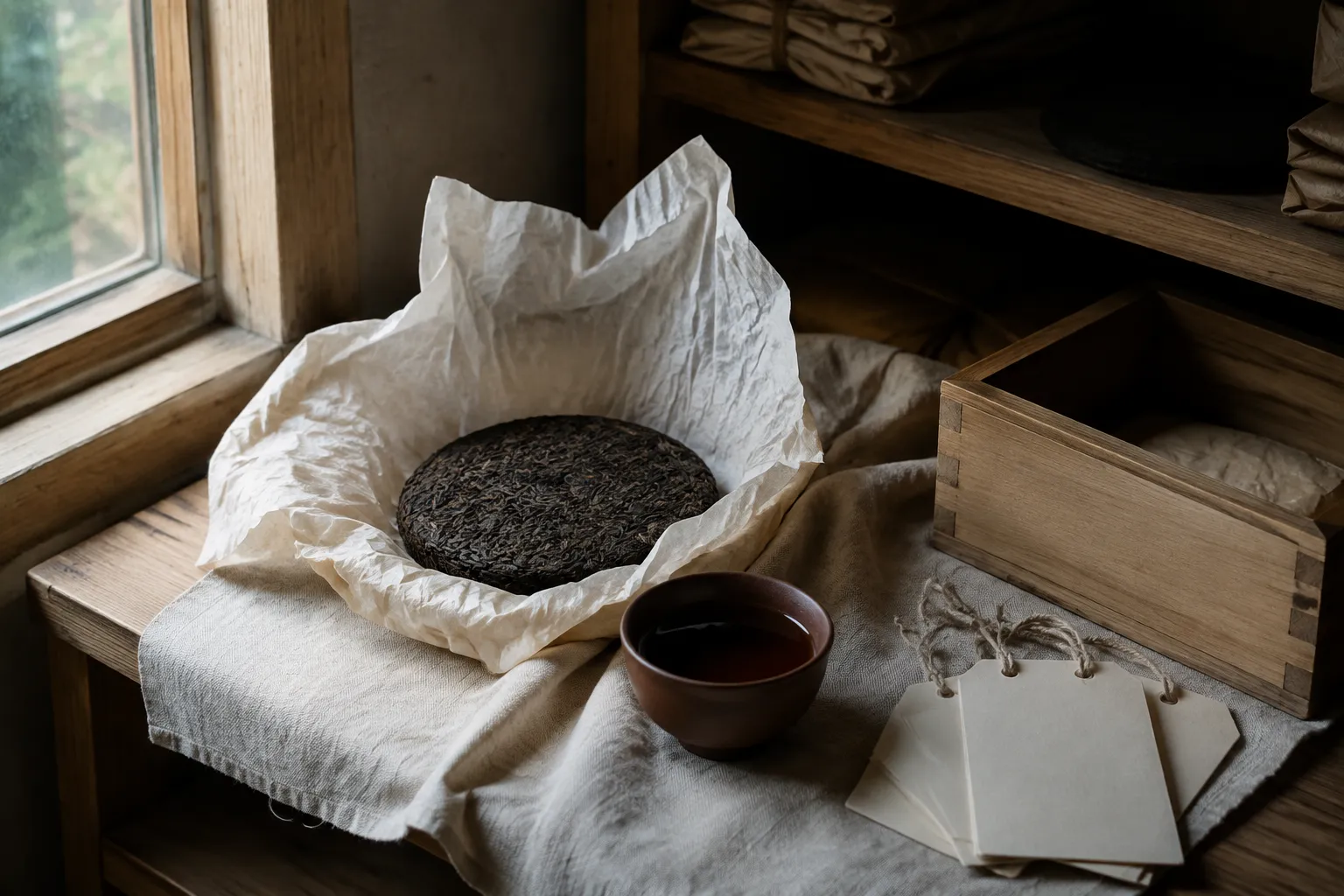
For everyday storage, keep the aim modest: protect the tea from strong smells, direct light, and unstable conditions. Let the material breathe enough that it does not sit trapped with unwanted odor, but do not expose it carelessly to kitchen steam, perfume, or damp corners. If a tea already carries a storage aroma, brew a small amount before moving the whole cake or brick. The cup will tell you more than the label.
This is also where respectful tea culture interpretation matters. In Chinese culture, post-fermented tea is often approached as tea that can be stored, shared, compared, and revisited. Without stronger materials for this page, that cultural reading should stay broad. The grounded point is simple: storage is part of how many drinkers interpret the tea, not proof of one fixed result.
Common confusion around post-fermented tea
Age is not the whole answer
One common confusion is treating post-fermented tea as the same thing as any old tea. Age may matter, but age alone does not explain the cup. Leaf material, compression, storage, brewing ratio, water temperature, and preference all shape the result.
Darker liquor is not a score
Another confusion is assuming darker liquor means better tea. A dark cup may be satisfying, but color can come from leaf amount, steep time, broken pieces, or vessel size. Taste the texture before deciding. A balanced dark tea is better judged by aroma, mouthfeel, clarity of flavor, and how the next steep responds to adjustment.
The term is not a body-effect claim
A third confusion is turning the term into a health-outcome claim. Tea culture can include comfort, routine, and daily rhythm, but this page does not frame dark tea as producing body effects. For selection and brewing, stay with observable signs: dry leaf aroma, wet leaf aroma, liquor color, body, aftertaste, and storage condition.
English can sound too precise
Finally, English terms can create false precision. “Post-fermented” is useful, but it is still a translation-shaped term. If a seller, label, or article uses it, ask what the tea is, how it is formed, how it has been stored, and how it behaves in the cup. Those questions are more useful than treating the English label as a complete explanation.
A practical way to read the term
When you see “post-fermented tea” in Chinese culture, read it as a clue to handle the tea with attention to transformation. Do not stop at the name. Look at the compressed dark tea leaf form, smell the dry and wet leaf, watch how the liquor develops, and adjust the brew as the material opens.
For a small gaiwan or teapot, start conservatively if the tea is unfamiliar. Use a modest amount of leaf, rinse if the piece is compact, and begin with short infusions. If the first cup is too light, add time. If it is heavy, reduce time or leaf. If storage aroma dominates, let the wet leaf sit briefly after the rinse and taste again before judging the whole tea.
That is the useful meaning of post-fermented tea in Chinese culture for a reader outside the production floor: the tea is understood through later change, storage presence, and repeated brewing, not only through a single fresh-leaf profile. The next decision is concrete: choose cake, brick, or loose leaf first, then let the first three steeps show how much patience the tea needs.