
Practical comparison
Liu Bao Tea vs Fu Brick Tea: Key Differences in Taste, Form, and Use
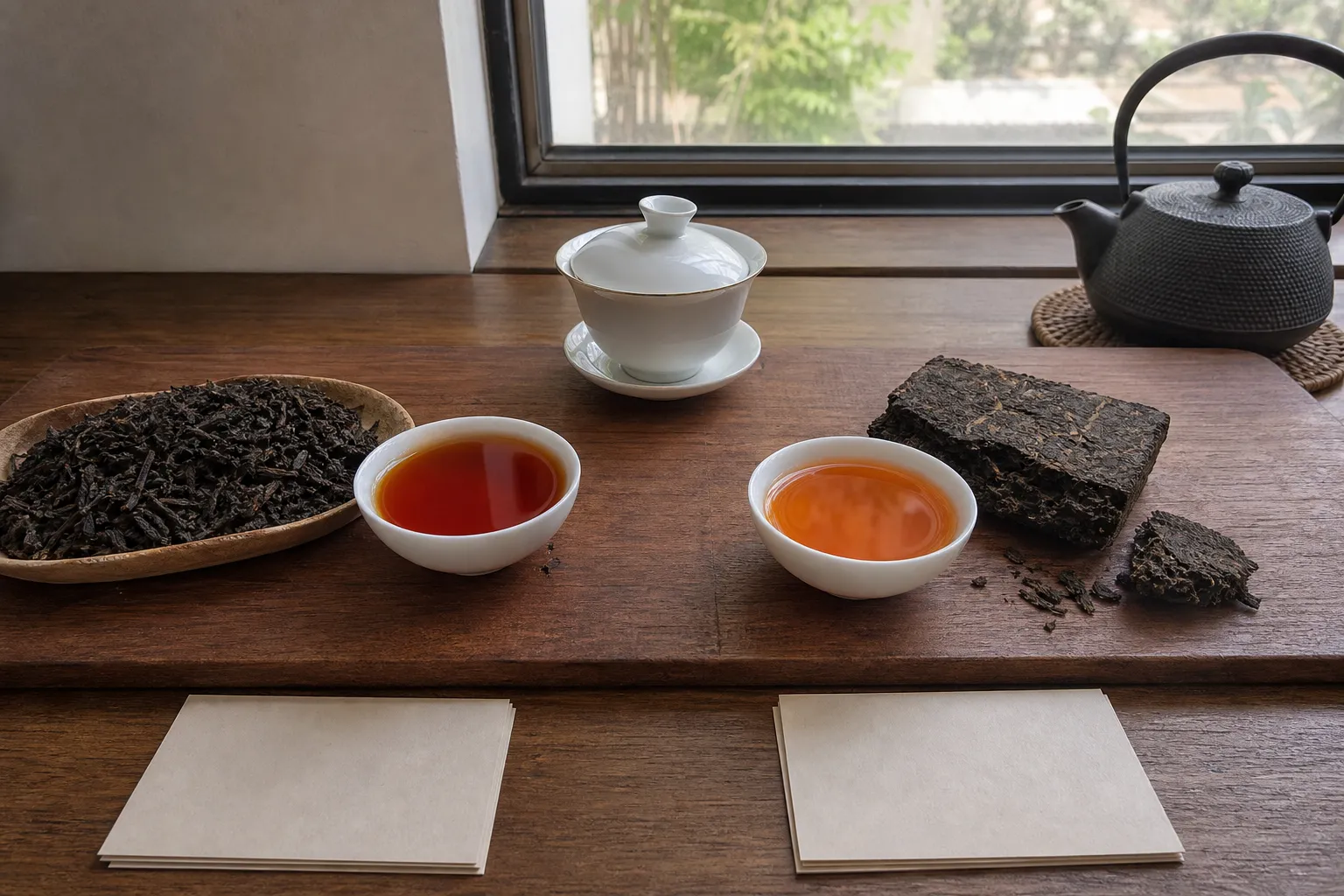
If you are comparing Liu Bao vs Fu brick tea, start with what is in your hand.
Liu Bao is often found as loose leaf, basket-stored tea, or lightly compressed Guangxi dark tea. In the cup, it commonly points toward aged wood, clean earth, old storage, plum, medicinal sweetness, smoke, or sometimes the well-known betel nut aroma associated with some Liu Bao.
Fu brick tea is usually approached as a compressed brick. Many examples show small yellow-gold “Golden Flower” specks inside the brick, and the cup often leans mellow, sweet, reddish-orange, gently fungal-floral, bready, or dried-fruit-like.
The short answer: choose Liu Bao when you want aged-wood depth and storage nuance; choose Fu brick when you want a compressed brick tea with visible flowering cues, soft sweetness, and a round everyday brew. Age, storage, water, vessel size, leaf ratio, and compression can shift both teas.
upward
Read the full overview first
Use the broader guide first if you need the full scope before this page.
Quick comparison: what changes in the cup
Common form
Liu Bao tea: Loose leaf, basket-stored material, or compressed pieces.
Fu brick tea: Compressed brick is central to how it is sold and brewed.
Main visual cue
Liu Bao tea: Dark aged leaf; storage character matters more than specks.
Fu brick tea: Many examples show yellow-gold Golden Flowers inside the brick.
Processing cue
Liu Bao tea: Guangxi dark tea associated with wet piling, aging, and storage influence.
Fu brick tea: Associated with steaming, piling, pressing, flowering, and drying.
Aroma direction
Liu Bao tea: Aged wood, clean earth, damp wood, plum, smoke, medicinal sweetness, sometimes betel nut.
Fu brick tea: Mellow sweetness, dried date, bread crust, yeast-like notes, honey warmth, fungal-floral aroma.
Liquor color
Liu Bao tea: Often red-brown to dark amber.
Fu brick tea: Often reddish-orange to deeper amber-red.
Mouthfeel
Liu Bao tea: Can be smooth, earthy, rounded, or thick with age.
Fu brick tea: Often soft, mellow, and smooth; tight compression may start slowly.
Everyday use
Liu Bao tea: Good for exploring storage aroma and aged dark-tea depth.
Fu brick tea: Good for repeated brewing, larger-pot use, and mellow brick-tea sweetness.
Use this as a tasting map, not a grading sheet. A clean younger Liu Bao may taste lighter than expected. A tightly stored Fu brick may brew less sweet than its product description suggests. Both are dark teas, but they do not show fermentation in the same way.
Form and appearance: loose, basket, brick, and Golden Flowers
The first practical difference is form.
Liu Bao is often read through loose leaf, basket storage, and age. Some Liu Bao is compressed, but drinkers usually judge it by the darkness of the leaf, the warmed-leaf aroma, the clarity of the liquor, and whether the earthy or woody character feels clean rather than flat.
Fu brick tea is read through the brick. The compressed form affects handling and brewing. You may need to pry off a piece, loosen a tight corner, or let the rinse and first steep open the leaves before the cup becomes fully expressive. A broken edge may show leaf, stem, and small yellow-gold dots inside the brick.
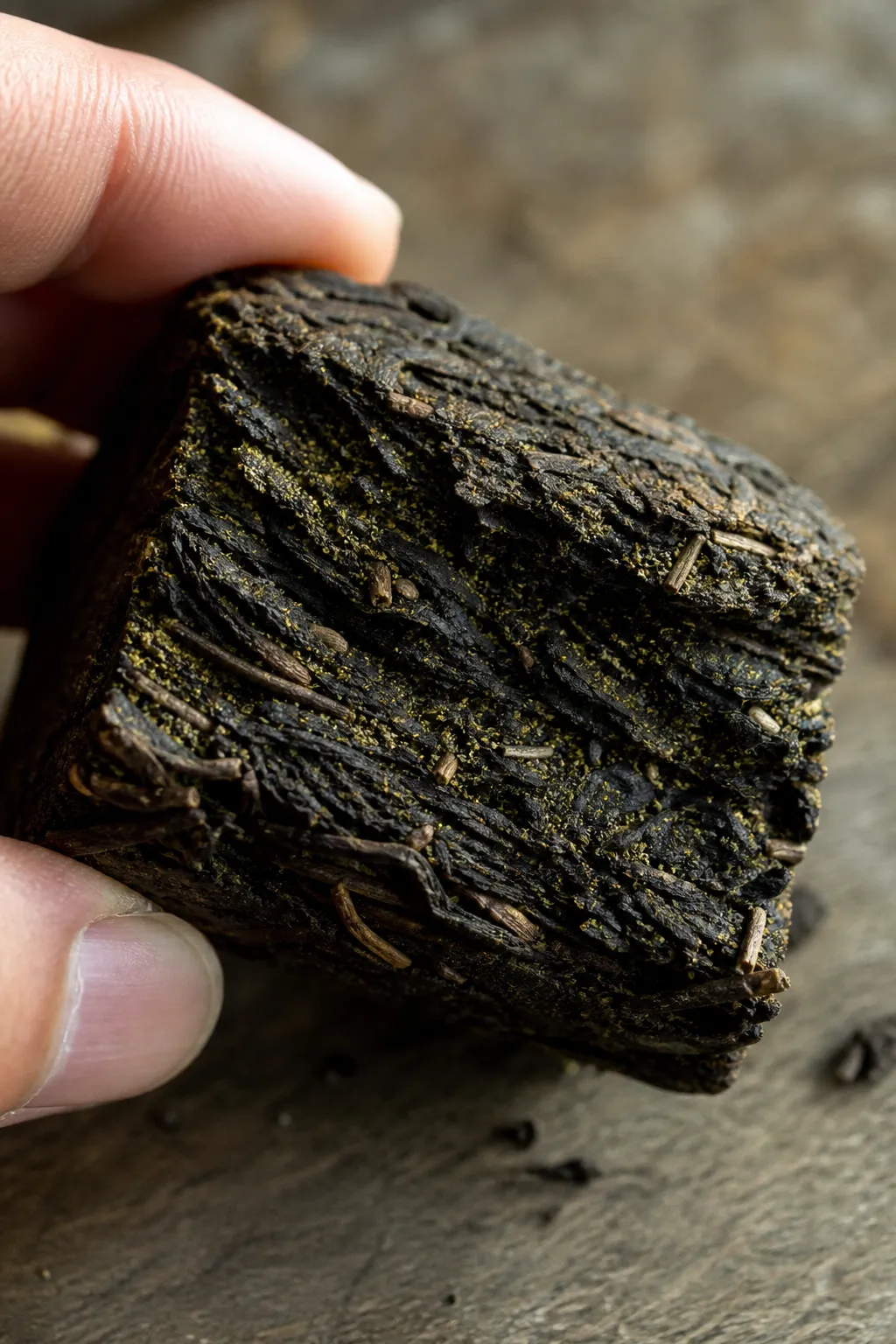
Those dots are why many drinkers ask about Fu brick golden flowers. In Fu brick tea, Golden Flowers refer to yellow-gold fungal structures associated with the flowering step in production, commonly discussed in connection with Eurotium cristatum in tea microbiology literature. Technical sources describe Fu brick manufacturing through steps such as steaming, piling, pressing, flowering, and drying, with microbial and chemical changes during production and storage.
That does not make yellow specks a simple quality score. More visible Golden Flowers do not automatically mean a tea is better, more authentic, or more valuable. They are a process-related visual cue in many Fu brick teas, not a promise about flavor. If a tea smells sharply unpleasant, looks unusually fuzzy, or seems affected by poor storage, do not try to judge it from color alone.
Liu Bao does not use Golden Flowers as its defining feature. Its comparison point is more often age and storage: dry-leaf aroma, warmed aroma, liquor color, mouthfeel, and whether the aged character feels pleasant in the cup.
Taste and aroma: Liu Bao depth, Fu brick softness
A useful Liu Bao tea comparison starts before the first sip. Warm the dry leaf in a gaiwan or small pot and smell it once. Look for old wood, damp forest floor, jujube-like sweetness, plum, light smoke, herbs, or the classic betel nut note sometimes mentioned in Liu Bao tasting language. That betel nut aroma is a known reference point, but not every Liu Bao shows it.
In the cup, Liu Bao often feels more shaped by storage than Fu brick. It can be woody, earthy, smooth, mellow, or quietly sweet after the first few steeps. Some examples lean clean and red-brown. Others move toward damp wood, cellar-like earth, old basket, smoke, or darker medicinal sweetness. Much depends on age, humidity history, storage cleanliness, raw material, and processing.
Fu brick usually sits in a softer lane. Many examples give reddish-orange liquor, gentle sweetness, dried date, honey-like warmth, bread crust, yeast-like aroma, wood, or a smooth thick texture. Research on Fu brick volatile profiles supports the broader point that aroma varies by raw material, region, processing, and storage duration. So Fu brick tea taste is better understood as a range than as one fixed flavor.
A simple aftertaste check
- Liu Bao often leaves aged wood, earth, mineral depth, or a storage-led aftertaste.
- Fu brick often leaves soft sweetness, dried fruit, grain warmth, or a mellow fungal-floral impression.
- If Liu Bao tastes too heavy, shorten the first few steeps or use slightly less leaf.
- If Fu brick tastes thin, give the piece more time to open or break it into smaller layers.
Neither tea is automatically stronger or more complex. Liu Bao can be quiet and elegant; Fu brick can be deep and layered. The difference is usually where the character comes from: Liu Bao often asks you to read age and storage, while Fu brick asks you to read compression, flowering cues, and mellow sweetness.
Brewing behavior: compression changes the first few steeps
The biggest dark tea brewing differences come from compression and leaf condition.
Loose Liu Bao usually releases flavor faster than a dense Fu brick chunk. Basket-stored or loosely packed Liu Bao may open after a short rinse and a few quick steeps. A compact Fu brick piece may need more heat, more time, or a second rinse before the inner leaf contributes fully.
For a side-by-side tasting, keep the setup simple
- Use the same vessel size for both teas.
- Use water near a full boil.
- Start with similar leaf weight, then adjust for density.
- Rinse briefly, especially if the tea is compressed or dusty from breaking.
- Begin with short steeps, then lengthen as the leaves open.
In a small gaiwan, many dark-tea drinkers start around 5–7 grams per 100–120 ml of water. Adjust from the cup rather than forcing a fixed rule. If the brew is too heavy, reduce leaf or shorten early steeps. If it is thin, increase time, use a smaller vessel, or break the compressed piece more evenly.
Fu brick can be forgiving in casual brewing because its sweetness and smoothness often hold across several infusions. It also works well in a larger pot when you want a soft, steady cup. Liu Bao can be just as daily-friendly, but it rewards a quick warmed-leaf check: if the aroma is clean and inviting, you can push it a little stronger; if it feels heavy, keep the first steeps lighter.
For boiling or thermos-style brewing, use a lighter hand. Both teas can become dense if packed too tightly. Fu brick may turn round and sweet with longer contact; Liu Bao may become earthy, woody, or drying if over-extracted, depending on the material.
Which one should you choose?
Choose Liu Bao if you want aged dark-tea character: old wood, clean earth, basket-storage suggestions, red-brown liquor, and the possible appearance of betel nut aroma. It is a good direction if you enjoy comparing storage styles and noticing how a tea moves from rinse aroma to later sweetness.
Choose Fu brick if you want a compressed tea with a clear visual identity and a mellow, rounded profile. It suits drinkers who enjoy reddish-orange liquor, soft sweetness, dried-fruit warmth, bready or fungal-floral aroma, and a tea that works comfortably in repeated everyday brewing.
If you are buying or sampling, do not rely only on the product name. Ask about form, compression, storage, and aroma. For Fu brick, ask whether Golden Flowers are visible inside the brick. For Liu Bao, ask how it was stored and whether the seller describes it as woody, sweet, smoky, humid, clean, or heavily aged. Those words are not proof, but they help you predict the first brew.
A practical decision can be simple
- Want more aged wood and storage nuance? Start with Liu Bao.
- Want mellow sweetness and brick-tea structure? Start with Fu brick.
- Want the easiest first session? Pick the tea that breaks cleanly and smells pleasant when warmed.
- Want a fair comparison? Brew both lightly at first before deciding which has more depth.
Common confusion: Golden Flowers, mold, and “all dark tea is the same”
The most common confusion is Golden Flowers vs mold. Golden Flowers in Fu brick are an intended feature associated with many Fu brick teas, but appearance alone should not be treated as a full judgment of storage condition or quality. In a sound brick, they usually look integrated into the tea rather than like random surface growth after poor storage. Aroma matters too: mellow, woody, sweet, bready, or fungal-floral is different from an aggressively unpleasant storage odor.
Another confusion is treating Fu brick as if it represents all Hunan dark tea. Fu brick is one important form, but not every Hunan dark tea or every brick-shaped tea should be reduced to Fu brick. For this comparison, the relevant cues are compressed brick form and the flowering step.
A third confusion is assuming every Liu Bao must show betel nut aroma. Betel nut aroma is a classic Liu Bao phrase, but it depends on material, processing, age, and storage. Some Liu Bao is more woody, earthy, smoky, plummy, or medicinal-sweet.
Finally, retailer flavor copy should be used as tasting language, not as a rulebook. “Honey,” “dried date,” “damp wood,” and “clean earth” are useful prompts. Your water, steeping time, storage conditions, vessel, and leaf-to-water ratio can move the cup quickly.
A small tasting checklist
Before deciding which tea you prefer, compare them through the same sequence:
- Dry form: loose leaf, basket material, tight brick, or broken chunk.
- Interior view: Golden Flowers in Fu brick, if present; leaf darkness and cleanliness in Liu Bao.
- Warmed aroma: wood, earth, sweetness, smoke, bread, dried fruit, or fungal-floral notes.
- Liquor color: red-brown, amber-red, or reddish-orange.
- First sip: sweet, earthy, woody, sour, bitter, mellow, or thin.
- Mouthfeel: smooth, thick, drying, soft, or flat.
- Aftertaste: aged wood, gentle sweetness, grain warmth, or lingering earth.
That sequence keeps the comparison grounded. Liu Bao and Fu brick tea are close enough to share the dark-tea family, but different enough that the better choice usually comes from the cup: Liu Bao often speaks through age and storage; Fu brick often speaks through brick form, flowering cues, and mellow sweetness.
Sources
Sources and further reading
Reference links are limited to sources considered suitable for public citation in this page.