
Practical dark tea ritual
Common Misconceptions About Simple Dark Tea Rituals
A simple dark tea ritual does not need to be formal, expensive, or the same every day. The clearest way to correct dark tea ritual misconceptions is to treat a home session as a small, adjustable practice: choose a workable vessel, notice the leaf, control water, steeping time, and leaf amount, then taste what changes.
Some sessions may include a rinse, several short steeps, and careful aroma notes. Others may be one quiet mug before work. Neither is automatically more “real.” For everyday dark tea, the better question is not whether the ritual looks impressive, but whether the cup gives you clear, drinkable liquor and helps you understand the tea a little better.
upward
Read the full overview first
Use the broader guide first if you need the full scope before this page.
Misconception: A Dark Tea Ritual Must Be Formal
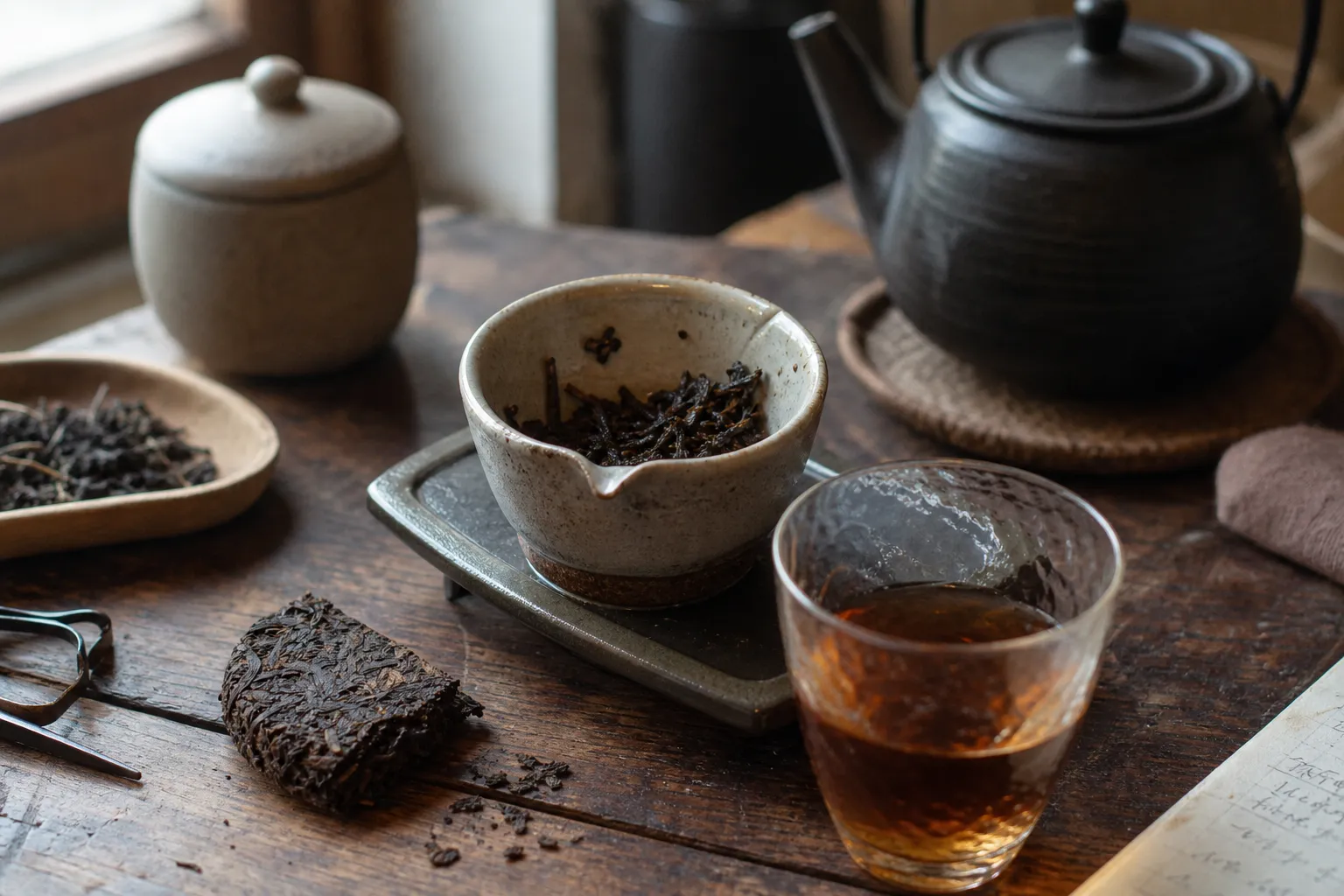
A simple tea ritual can be as plain as warming a cup, breaking off a small piece of compressed tea, rinsing if the tea seems dusty or tightly packed, and watching how the first drink opens. Formal settings can be beautiful, but they are not required for a daily dark tea practice.
This matters because dark tea often arrives in forms that already ask for attention: loose leaves, bricks, cakes, small compressed pieces, and stored teas with different aromas. If the ritual becomes mainly about performing steps, you may miss the practical cues in front of you.
Four checks that matter at home
- Leaf form: Loose tea usually opens faster than a dense broken piece from a brick or cake.
- Aroma before brewing: Clean woody, grainy, earthy, sweet, or aged notes can guide expectations; sharp, stale, or damp notes deserve caution.
- Vessel size: A small pot or cup changes concentration quickly; a large mug spreads the same leaf amount across more water.
- First taste: Thin, harsh, flat, heavy, sweet, or drying liquor tells you what to adjust next.
The ritual is the repeatable attention, not the number of objects on the table. If your setup lets you see the liquor color, smell the leaf, and adjust the next infusion, it is already doing useful work.
Misconception: One Correct Method Fits Every Dark Tea
One fixed recipe will not fit every dark tea. In many everyday brewing setups, dark tea steeping time, water temperature, leaf amount, and vessel size need to move together.
A compact piece may need more time to loosen. A broken or loosely stored tea may give color and body quickly. A small vessel with a generous leaf amount can make a strong cup in seconds, while the same leaves in a large mug may need more time to show body. These are not contradictions; they are practical home brewing variables.
Adjust one variable at a time
You do not have to rebuild the whole session each time. Change one thing, taste again, and let the cup show whether the adjustment helped.
Misconception: More Steps Always Make Better Tea
More steps can make a session more attentive, but they do not always make the tea better. A rinse, preheated vessel, aroma cup, multiple short infusions, or careful pouring sequence can be useful in some situations. They can also distract from the cup if used automatically.
The dark tea rinse choice is a good example. A quick rinse may help wake a compressed piece, clear loose dust, or warm the leaves before the first drink. But a rinse is not required for every home dark tea session. If the tea is loose, clean-smelling, and already opens quickly, skipping the rinse may be reasonable. If the first infusion tastes too forceful or cloudy, adding a short rinse next time gives you a useful comparison.
The same applies to repeated infusions. Short, repeated steeps can show how aroma, body, and sweetness shift. A longer mug brew can be more practical when you want one steady cup. The ritual should match the moment.
Before adding a step, ask what it does
- Does it warm the vessel so the brew is more consistent?
- Does it help compressed leaf open?
- Does it separate strong liquor from wet leaves before the cup turns harsh?
- Does it make aroma and mouthfeel easier to notice?
- Does it make the session calmer without making it fussy?
If a step has no clear purpose in your setup, it can stay optional. Simplicity is not a failure; it is often the easiest way to notice what changed.
Misconception: Darker Liquor Means Better Brewing
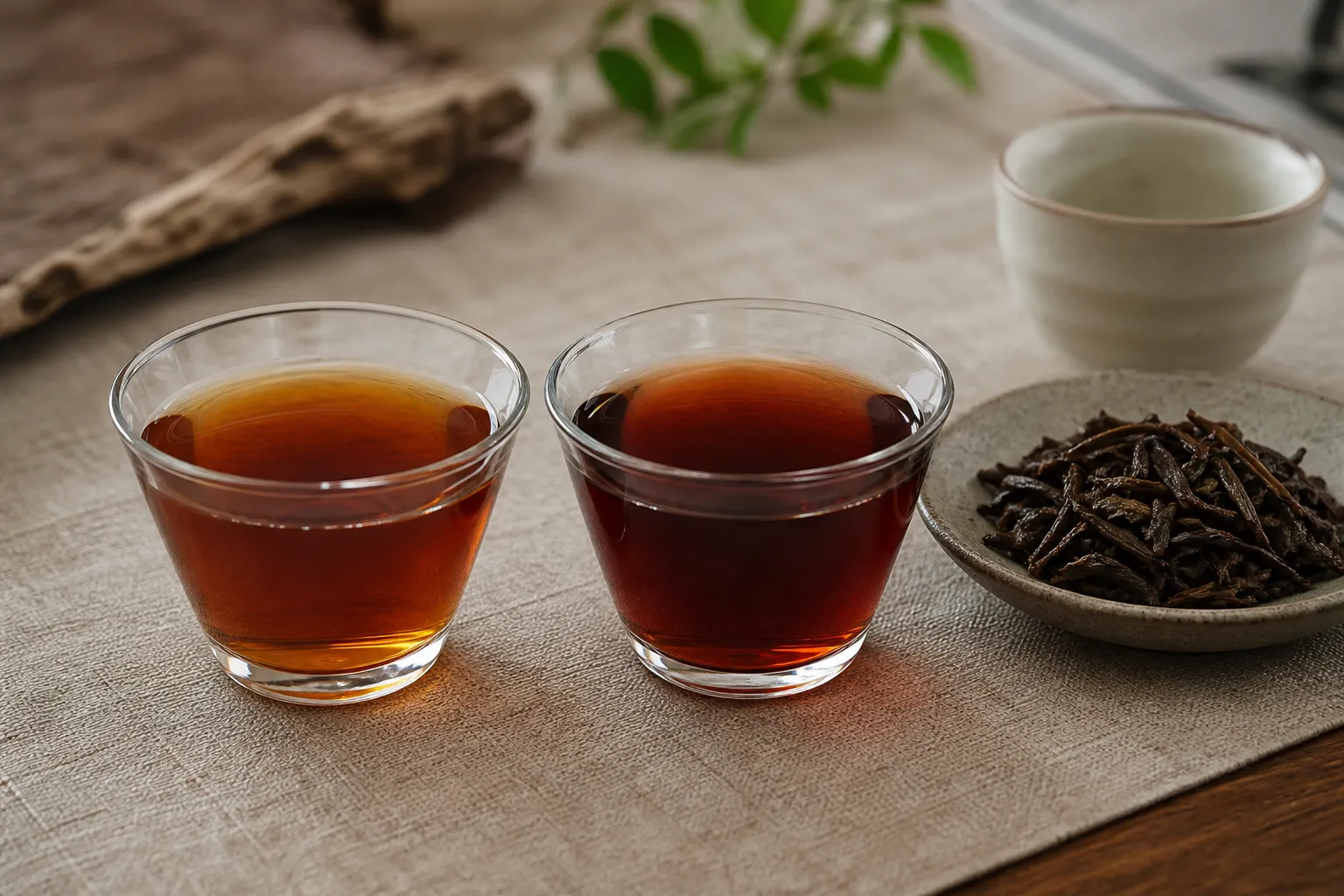
Dark tea liquor color can be helpful, but it is not a complete quality signal. A darker cup may come from more leaf, longer steeping time, a smaller vessel, older storage character, broken leaves, or a tea that releases color quickly. It does not automatically mean the brew is fuller, smoother, or better balanced.
Look at color alongside aroma and mouthfeel. A deep reddish-brown or dark amber cup may be satisfying if the aroma is clean and the texture feels rounded. The same color may feel too heavy if the liquor tastes muddy, flat, or drying. A lighter cup may still be pleasing if it carries sweetness, clarity, and a comfortable finish.
Use color as a comparison cue
- If the first cup is pale and thin, extend the next steep or use a little more leaf.
- If the cup turns dark quickly and tastes rough, shorten the steep or reduce leaf.
- If color looks strong but aroma feels dull, check whether the tea needs more airing after storage or whether the water is muting it.
- If the liquor looks lighter than expected but tastes balanced, there may be no problem to fix.
A ritual built around observation avoids chasing color for its own sake. Judge the cup by the whole impression: aroma, body, texture, aftertaste, and whether you want the next sip.
Misconception: Special Tools Are Required
A dedicated small pot, gaiwan-style vessel, serving pitcher, tea tray, scale, and tasting cups can all support careful brewing. They are not required to begin a daily dark tea practice.
For many readers, the practical minimum is modest: a heat-safe vessel, a way to separate leaves from liquor, water suited to the brewing style, and a cup that lets you smell and taste clearly. A small teapot, lidded cup, infuser mug, or simple strainer setup can all work if you understand its limits.
Vessel size changes the session more than the visual style of the equipment. A small vessel with more leaf often favors short steeps and quick adjustments. A larger mug with less leaf favors a slower, more casual brew. Neither is the single correct format. The right choice depends on whether you want a focused tasting session or a practical cup beside your desk.
Tools are useful when they solve a specific problem
If a tool makes you more attentive, it belongs in the ritual. If it only makes the session feel less approachable, it can wait.
What Actually Changes a Simple Dark Tea Ritual
Most confusion comes back to six conditions: leaf form, storage character, water, vessel, steeping time, and personal taste.
Compressed tea often behaves differently from loose tea because water reaches the inner leaf more slowly. A tight fragment may taste faint at first, then deepen across later infusions. Broken pieces may release quickly and need shorter timing.
Storage notes also matter. A tea with clean aged, woody, earthy, or grain-like aroma may brew comfortably with a straightforward method. A tea with stale or damp-smelling notes should not be hidden behind extra steps. If the aroma seems off, careful smelling and conservative brewing are better first checks than a more elaborate routine.
Water temperature and steeping time work together. Hotter water and longer time usually pull more from the leaf, but that “more” may include body, sweetness, roughness, bitterness, or heavy earthy tones depending on the tea. If a cup feels too sharp, the next step is often shorter timing or less leaf. If it feels weak, add time before adding complexity.
Personal taste is part of the ritual too. Some drinkers enjoy a dense, grounding cup. Others prefer a cleaner, lighter liquor with more space around the aroma. Flexible dark tea brewing makes room for both. The point is not to force every tea toward one ideal cup, but to learn what each tea can do in your vessel.
A Practical Check Before You Blame the Ritual
Before deciding that your method is wrong, run a small check during the next session:
- Keep the same tea and vessel.
- Use a modest, repeatable leaf amount.
- Smell the dry leaf and wet leaf separately.
- Brew once slightly shorter than usual.
- Brew the next cup slightly longer.
- Compare color, aroma, body, and finish.
If the shorter cup is clearer but thin, you may need a little more leaf. If the longer cup gains body but becomes rough, your timing window may be narrow. If both cups taste flat, look at water, storage aroma, or whether the compressed tea has opened enough.
This kind of check keeps the ritual practical and sensory instead of symbolic. It also keeps the answer narrow: simple dark tea rituals are about brewing choices, sensory cues, and small adjustments, not status, special authority, health outcomes, or one universal method.
A Better Way to Think About Simple Ritual
A simple dark tea ritual is a repeatable way to pay attention. It can be quiet, compact, and personal. It can include a rinse, or not. It can use a small pot, or a mug. It can aim for many short infusions, or one steady cup. What matters is that the method helps you notice the tea and make a better next adjustment.
When misconceptions fade, the session becomes easier: less pressure to perform, more attention to leaf and cup. Start with a clear setup, watch liquor color without overvaluing it, smell for storage notes, adjust steeping time in small steps, and let personal taste have a place. That is enough for a simple dark tea ritual to be useful, repeatable, and genuinely your own.