
Selection guide
How to Choose Dark Tea When You Prefer a Sweet Aftertaste
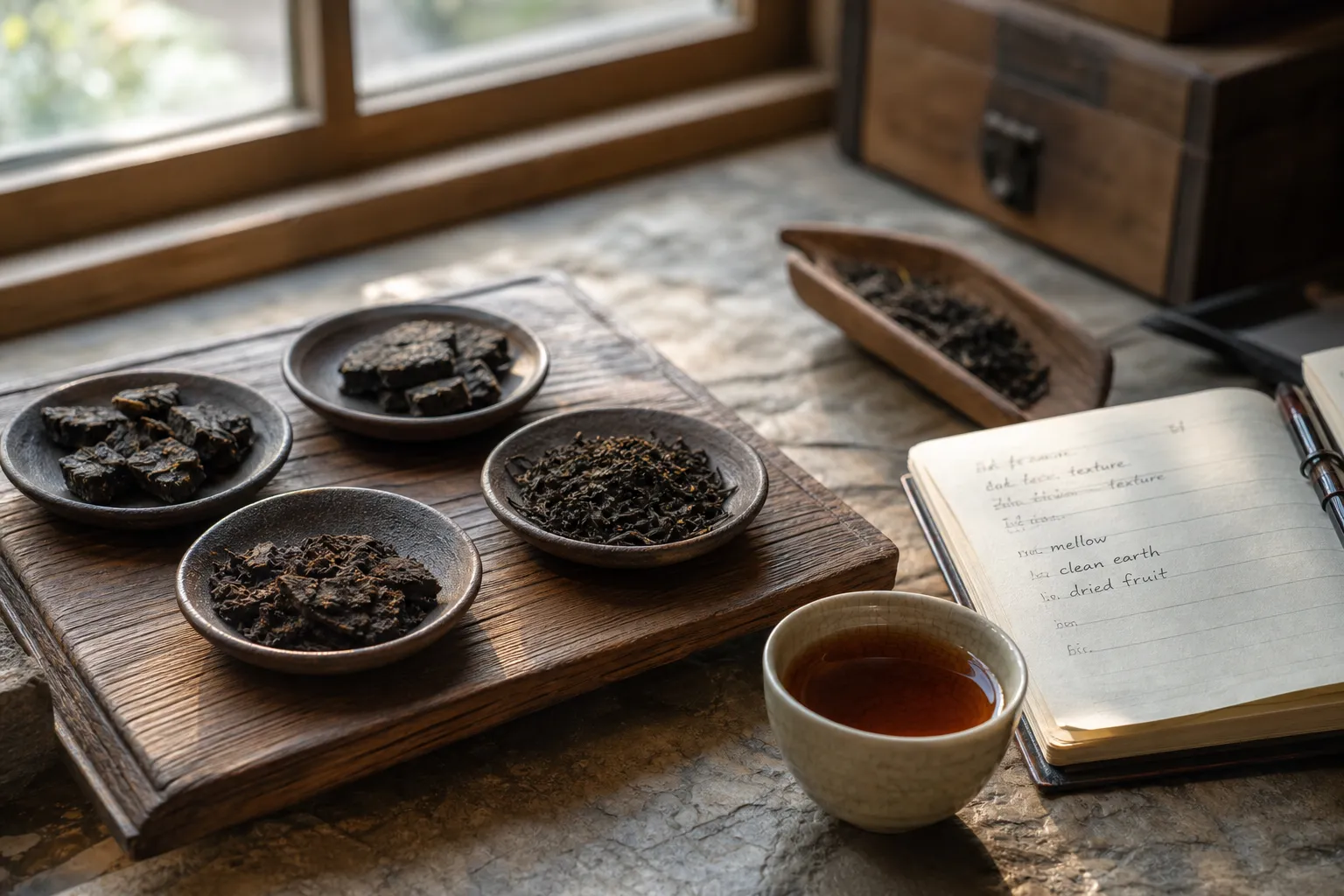
If you want a dark tea with sweet aftertaste, choose by aroma, tasting notes, and storage impression before you choose by age, origin, or brick appearance. Look for words such as mellow, smooth, clean earthy, dried fruit, red date, warm wood, aged wood, soft finish, rounded body, or returning sweetness. When you can smell the tea, favor a clean, woody, gently earthy, or lightly fruity dry aroma.
Ripe Pu-erh, Fu Brick Tea, Liu Bao, and other dark teas can all give a soft finish in the right example. None of those names makes sweetness automatic. Processing, storage, compression, water, leaf amount, and steeping time can reveal a sweet finish—or cover it with heaviness, sourness, or roughness.
upward
Start with the broader guide
Use the broader guide first if you need the full scope before this page.
What “sweet aftertaste” means in dark tea
A sweet aftertaste in dark tea is usually not sugary. It is the soft return after swallowing: a rounded finish, a mild lingering sweetness, or the sense that the cup becomes gentler after the first earthy, woody, or dark flavor fades.
In a ripe Pu-erh sweet aftertaste, the first sip may be earthy, dark, or mushroom-like, while the finish turns mellow and lightly sweet. In Fu Brick Tea, sweetness may show as warm grain, dried fruit, soft wood, or a calm earthy finish. Liu Bao can sometimes lean toward clean earth, aged wood, mineral depth, and a quiet sweetness.
Research on post-fermented teas, including ripe Pu-erh and dark tea, supports the broad point that fermentation and processing can change bitterness, astringency, aroma, thickness, and perceived sweetness. That is useful background, not a shopping rule. For buying, treat “sweet aftertaste” as a tasting target: you are looking for signs that the tea may finish softly after brewing.
Tasting-note words that help
Seller notes are not proof, but they can point you toward better candidates. The most useful notes describe aroma, texture, and finish rather than only age or origin.
Mellow, smooth, soft
May point toward lower sharpness and a gentler finish.
Thick, rounded, full body
May point toward a heavier mouthfeel that can carry sweetness.
Clean earthy
May point toward earthiness without stale or sour edges.
Dried fruit, red date, fig
May point toward a darker fruit-like sweetness.
Aged wood, warm wood
May point toward a soft woody finish rather than raw bitterness.
Honeyed, molasses-like, brown sugar note
May point toward a sweet aroma impression, not literal sugar.
Long finish, returning sweetness
May point toward a possible soft aftertaste after swallowing.
If you dislike sharpness, be more cautious with descriptions such as aggressive, sour, very bitter, pungent, smoky, camphor-heavy, or strongly damp. Some drinkers like those profiles, but they are not the shortest route to a soft earthy finish.
Also be careful with vague labels such as “premium aged,” “old tree,” “traditional storage,” or “rare brick” when no tasting notes are given. A modest tea described as mellow, clean, and dried-fruit-like may be a better candidate than a dramatic tea described only by year, origin, or compression style.
Bud-heavy appearance is not the main test. Many dark teas intentionally include stems, larger leaves, or coarser material. That does not automatically make the cup rough. For this question, ask: do the aroma, storage condition, and tasting notes point toward a clean, rounded finish?
Smell and appearance checks before you buy or brew
If you can smell the tea before buying, do it. Aroma will not tell you everything, but it can quickly separate a promising mellow dark tea from one that may brew unpleasantly.
Look for a dry aroma that feels:
- clean earthy, like aired dry soil rather than a damp room;
- woody, like old shelves, bark, or warm wood;
- lightly sweet, with hints of dried fruit, date, grain, or brown sugar;
- calm and integrated rather than sharp or piercing.
Pause if the tea smells sour, stale-musty, fishy, swampy, or sharply damp. These are practical buyer caution cues, not a formal diagnosis. If the aroma makes you hesitate, ask for more information, request a sample, or choose another tea.
For loose dark tea, color can vary: dark brown, blackish-brown, reddish-brown, and deep auburn can all appear. What matters more is the total impression. A dull gray, patchy, or tired look combined with an unpleasant smell is a reason to inspect further or avoid the tea.
For compressed dark tea, usability matters. A brick, cake, tuo, or basket that is firm but workable is easier to portion without crushing too much leaf. Very hard compression is not automatically better. If every session produces dust and broken fragments, the tea may brew stronger and rougher than intended, which can hide the finish you were hoping to notice.
For Fu Brick Tea, Golden Flowers are often discussed as a production and appearance feature. Do not treat them as a universal sweetness sign. If you are evaluating Fu tea, an interior view can be more useful than the surface alone, but the cup still depends on material, processing, storage, age, and brewing.
Styles to sample for a smoother finish
No dark tea category is always sweet, but these styles are reasonable starting points.
Ripe Pu-erh
Ripe Pu-erh is often a good first sample if you want a dark, mellow cup. Look for notes such as clean earth, date, dark wood, cocoa-like depth, smooth body, or sweet finish. Avoid examples described mainly as fishy, sour, murky, or aggressively wet if your goal is a soft aftertaste.
Fu Brick Tea
Fu Brick Tea can be worth trying if you like warm, mellow, woody, or grain-like dark tea. Do not reduce it to visible flowers or brick shape. A better candidate will mention clean sweetness, mellow body, dried fruit, aged wood, or a soft earthy finish.
Liu Bao
Liu Bao may suit you if you enjoy clean earthy and aged-wood tea notes. Some examples feel smooth and gently sweet; others lean more mineral, woody, or storage-forward. For this preference, choose descriptions that emphasize clean storage, woody depth, dried fruit, or mellow finish rather than heavy dampness.
Other compressed dark teas
Other compressed dark teas can also work, but choose by cup description rather than shape. Compression affects storage, handling, and brewing speed. It does not make a tea sweet by itself.
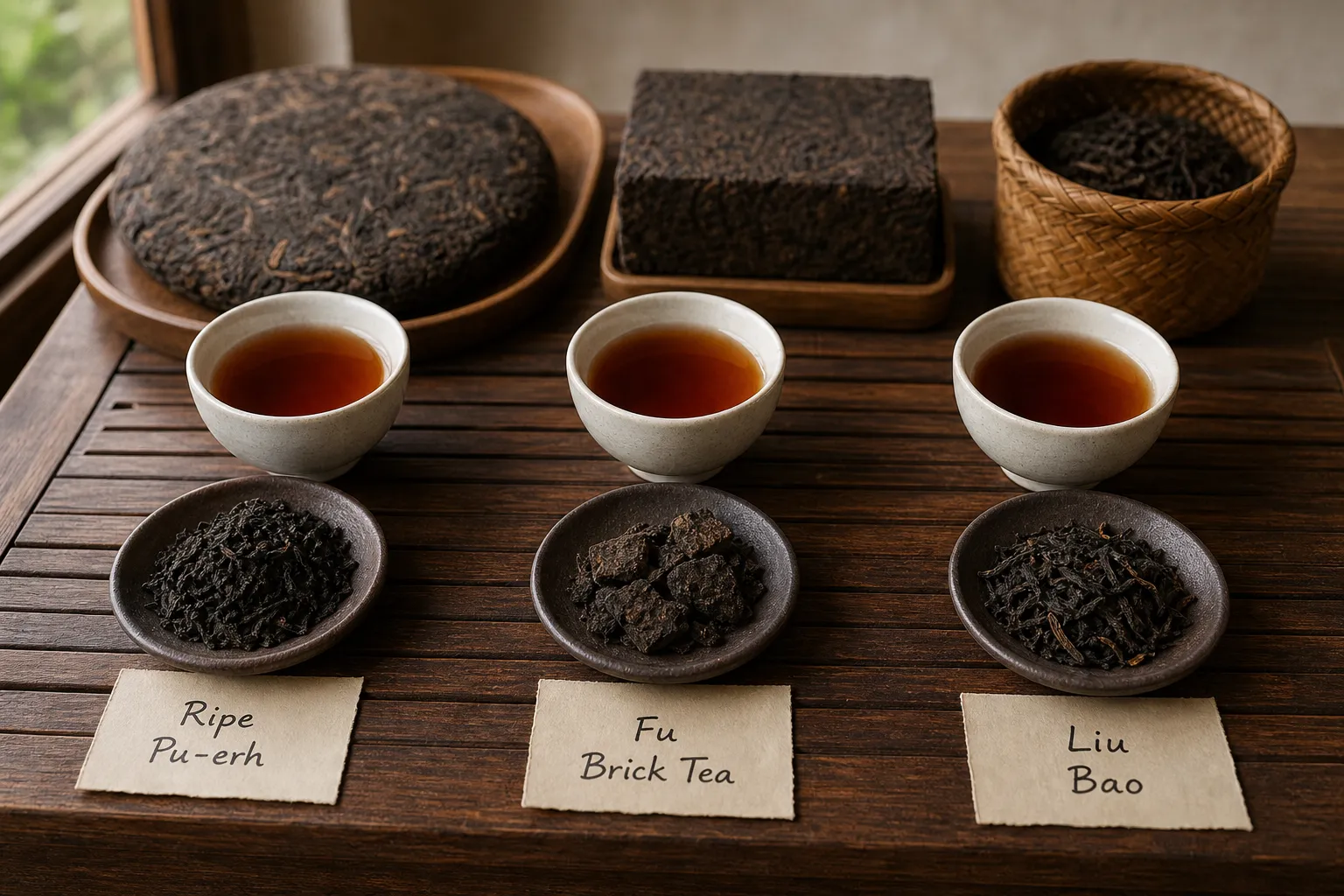
A useful route is to buy small samples across two or three styles instead of committing to a large brick. Compare, for example, a clean ripe Pu-erh, a mellow Fu Brick Tea, and a cleanly stored Liu Bao. Brew them at similar strength and notice which one leaves the softest finish after swallowing.
Age and storage can help, but they do not decide it
Age is one of the easiest dark tea claims to overread. Some well-stored dark teas can become smoother, deeper, and more integrated over time. Research on dark tea aging and post-fermentation also describes changes in aroma and taste characteristics. Still, age alone does not make a tea finish sweet.
A younger dark tea may be brighter, sharper, or more direct. An older one may be smoother, woodier, thicker, or more layered. But a poorly stored older tea can taste flat, stale, sour, or muddy. A younger tea with clean processing and careful storage may give a better aftertaste than an older tea with a troubled aroma.
When reading age claims, ask:
- What does it taste like?
“Aged” is less useful than “mellow, clean earthy, dried fruit, soft woody finish.” - How does the storage impression sound?
Clean, dry, warm, woody, and integrated are more promising than sour, dank, or stale. - Can you sample it first?
For this preference, a small sample is often more useful than a confident description.
Storage also affects the aroma around the tea. Dark tea can absorb surrounding odors. If it smells like cardboard, perfume, smoke, damp room, or mixed pantry odors, those notes may enter the cup and compete with sweetness.
Brewing can reveal sweetness or bury it
A tea with a possible sweet finish may taste harsh if brewed too strong. Before deciding the leaf is not sweet, adjust the brew.
For gongfu-style brewing, start with moderate leaf, hot water, and short steeps. Rinse briefly if that is part of your usual dark tea routine, then taste the early infusions separately. If the cup is thick but rough, shorten the next steep. If it is thin and woody with no finish, increase time slightly. If the liquor turns very dark immediately and the finish becomes bitter, use less leaf or shorter contact.
For mug or grandpa-style brewing, be careful with broken compressed tea. Small fragments release quickly. A large chunk may open slowly, while dusty bits can make the cup heavy before the sweetness appears. Start lighter than you think, then add time if the cup feels too thin.
For western-style brewing, use a modest amount of leaf first, especially with ripe Pu-erh or dense bricks. A smooth dark tea can become blunt and muddy if pushed too hard. The aftertaste is often easier to notice when the liquor is clear enough in flavor to let the finish show.
Water matters too. Very hard or strongly flavored water can make a dark tea feel flat, rough, or dull. If several teas seem muted, try a different water source before blaming the leaves.
Quick checklist for choosing dark tea with a sweet aftertaste
Use this checklist when choosing dark tea, then sample before buying a full brick, cake, or basket if the tea is unfamiliar.
- Tasting notes: Look for mellow, smooth, clean earthy, dried fruit, aged wood, soft finish, thick body, or returning sweetness.
- Aroma: Favor clean, woody, gently earthy, warm, or lightly fruity smells.
- Caution cues: Pause around sour, stale-musty, swampy, fishy, gray, patchy, or dull cues, especially when several appear together.
- Style: Consider ripe Pu-erh, Fu Brick Tea, Liu Bao, or another dark tea with clear sweet-finish notes.
- Age: Treat age as context. Well-stored matters more than old.
- Compression: Choose a form you can actually portion and brew.
- Sample size: Buy a small amount first when the tea is new to you.
- Brew adjustment: Test shorter, lighter brews before deciding the tea lacks sweetness.
The strongest buying signal is not one category name. It is alignment: the description, aroma, storage impression, and brewing behavior all point toward a clean, mellow, rounded cup that stays soft after swallowing.
FAQ
Is ripe Pu-erh the best choice if I want a sweet aftertaste?
It is a good starting point, especially if you like dark, earthy, smooth tea. But not every ripe Pu-erh finishes sweet. Look for clean earth, date, dark wood, smooth body, and soft finish rather than relying on the category name alone.
Does older dark tea always taste sweeter?
No. Age can help some teas become more integrated, but storage matters more than the number of years. A poorly stored older tea may taste stale, sour, or flat, while a younger well-stored tea may finish cleaner and softer.
Are Golden Flowers a sign that Fu Brick Tea will taste sweet?
They can be an important feature of Fu Brick Tea, but they are not a universal sweetness sign. Use them as one cue within the whole tea: aroma, storage impression, leaf material, processing, and the brewed cup still matter.
What should I avoid if I dislike harsh dark tea?
Avoid buying blind when the notes emphasize sourness, sharp bitterness, heavy dampness, murky storage, or only age and rarity. If possible, smell the tea and start with a sample. Then brew lightly at first so broken leaf or dense compression does not make the cup rough.
Sources
Sources and further reading
Reference links are limited to sources considered suitable for public citation in this page.