
How to Choose Dark Tea for Milk Tea or Boiled Tea
Choose dark tea for boiled tea when the leaf smells clean, has enough body to stay rounded under heat, and leans mellow, earthy, woody, lightly sweet, grainy, or roasted rather than sour, dusty, or sharply musty. For milk tea, the tea should already taste full before milk goes in. Milk can soften a rough edge, but it will not make stale storage notes disappear.
If the tea is dense, aged, or very forceful, start with less leaf and a short simmer. Another useful route is to steep it normally first, then simmer the wet leaves later. The aim is not the darkest possible liquor. It is a clean, steady cup that keeps its shape under heat or milk.
upward
Start with the broader guide
Use the broader guide first if you need the full scope before this page.
Start with storage aroma, not strength
Before thinking about leaf amount, smell the dry leaf, brick piece, or loose material. A good candidate for boiled dark tea should smell settled rather than aggressive. Clean earth, old wood, warm grain, dried date, light camphor, gentle cellar, or mellow fermented depth can all work, depending on the tea and its storage.
Be more cautious with tea that smells sour, dirty-damp, oily, chemical, visibly moldy, or sharply musty. Heat releases aroma quickly, so boiling often makes off-notes louder. Milk can also make stale or damp notes feel flatter and heavier. If the storage aroma already makes you hesitate, do not choose that tea for a saucepan or rich milk tea just because the leaf looks dark.
Post-fermented dark tea can develop mellow, woody, earthy, aged, and thicker liquor traits through fermentation and storage. Research on dark tea and related fermented teas supports the broad idea that fermentation and later aroma development can shape taste, texture, and aged fragrance. That still does not mean every dark tea will boil well. Storage, compression, leaf grade, water, vessel, and simmer time decide the cup in front of you.
Aroma cues before boiling or adding milk
Clean earthy, woody, grainy, or lightly sweet aroma
A good candidate for a small test.
Very faint aroma with thin broken dust
May become flat or muddy under heat.
Sourness, dirty dampness, visible mold, or unpleasant mustiness
Do not use boiling as a workaround.
Strong but clean aged aroma
Use less leaf or simmer wet leaves first.
Sweet, rounded aroma after a rinse
Often promising for dark tea with milk.
Choose body, not just dark color
Dark liquor is not the same as body. A tea can turn the water deep brown quickly and still taste hollow, rough, or muddy. For dark tea with milk, body matters more than color because milk dilutes aroma and softens the tea’s edge. The base needs enough weight to remain present after milk is added.
Before making milk tea, brew a small plain cup. Look for thickness across the tongue, not only bitterness at the sides. Useful signs include a rounded middle, mellow aftertaste, clean earthiness, woody sweetness, or dark grain-like depth. A full-bodied dark tea does not have to be forceful, but it should not vanish after one sip.
If the plain tea tastes thin, milk will usually make it flatter. If it tastes harsh, long boiling may make it rougher. If it tastes clean but slightly concentrated, milk may bring it into balance. Choosing dark tea for milk tea is less about finding the strongest brick and more about finding a tea with clean structure.
Ask three questions before adding milk
- Does it still taste like tea after dilution? A thin infusion may look dark but disappear under milk.
- Are the earthy notes clean? Milk can soften bitterness, but stale, sour, or damp notes may feel heavier.
- Is there sweetness or depth? Woody, grainy, caramel-like, or dried-fruit hints often give milk something to round out.
How leaf form changes the simmer
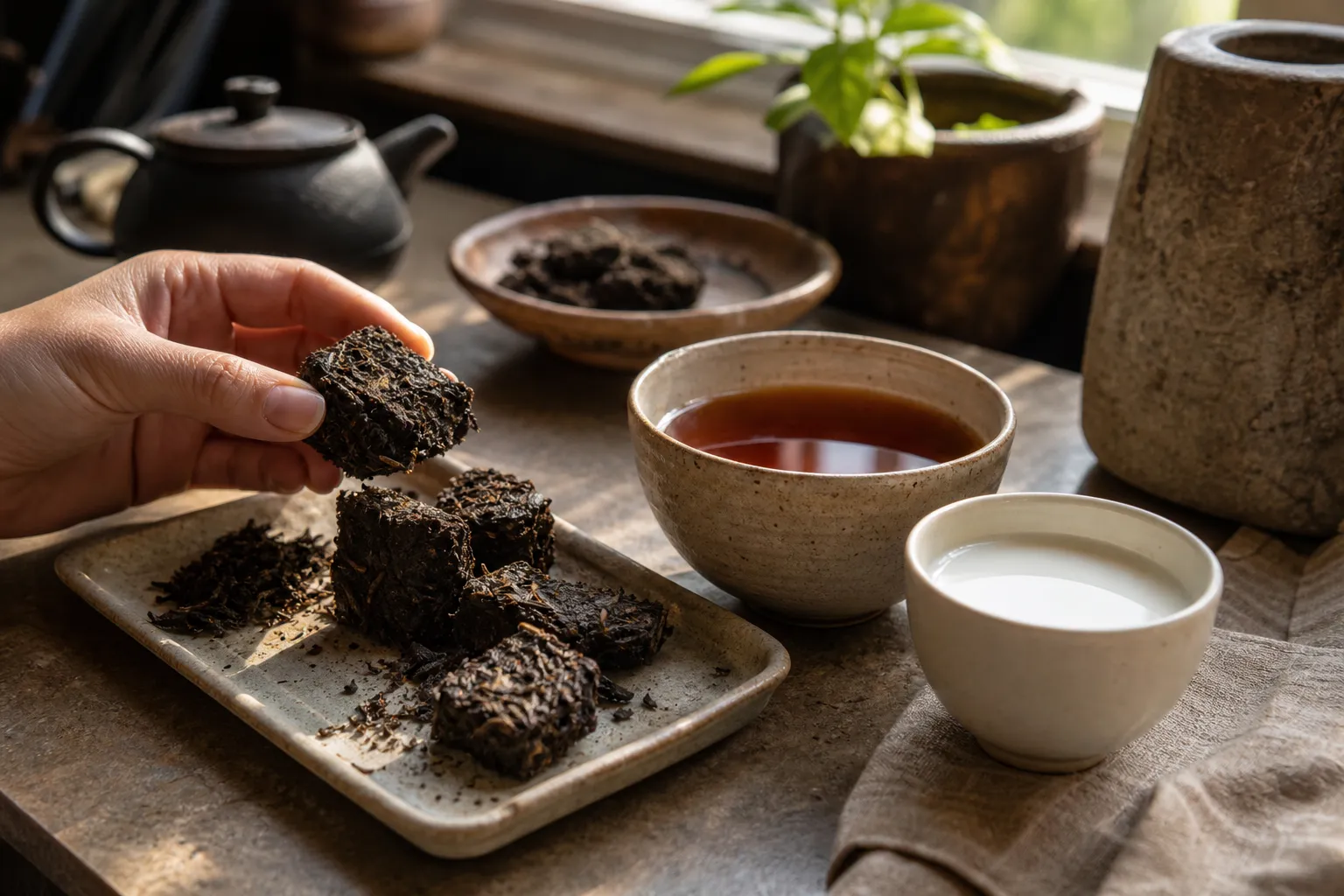
Compressed cakes, bricks, and chunks behave differently from loose leaf. Dense pieces need time to open. Loose or broken material releases faster and can turn heavy quickly. Treat dark tea boiling leaf amount as a starting adjustment, not a fixed rule.
For a first test, use less tea than you would for a normal short infusion. In many everyday setups, a modest piece or small spoonful is safer than a generous handful. You can add strength later. It is harder to rescue a pot that has already become harsh, muddy, or too heavy.
Starting approaches by leaf form and use
Dense brick or cake piece
Rinse or pre-wet, then simmer gently so the center can open.
Loose dark tea
Use less leaf and taste early.
Very strong aged chunk
Brew a few short infusions first, then simmer the wet leaves.
Tea intended for milk
Make the plain tea slightly stronger than a sipping cup, but still clean.
Thermos brewing
Use a small amount; heat contact is long even without active boiling.
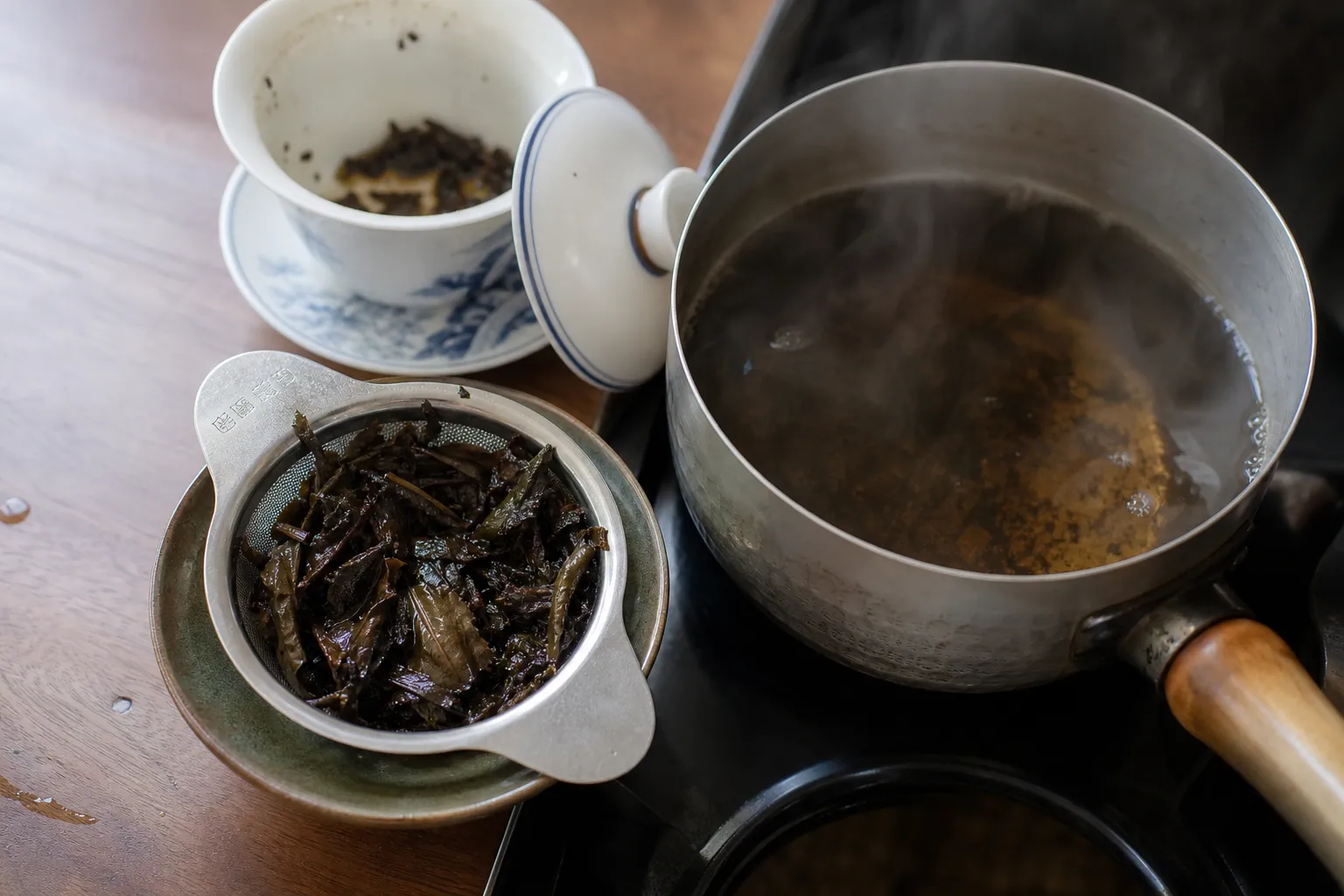
For boiled dark tea, a short simmer is usually easier to control than a long rolling boil. Try a gentle simmer for about 3–5 minutes as an initial range, then taste. If the liquor is pale and thin, simmer a little longer or use slightly more leaf next time. If it is bitter, muddy, or overly heavy, reduce the leaf, shorten the simmer, or use already-steeped leaves instead of dry leaf.
Simmering wet dark tea leaves is especially useful when the dry tea is powerful. After several normal infusions, the leaves have opened and released some early intensity. A short simmer can then pull out deeper sweetness and body without making the first cup too dense.
Matching dark tea to milk
Dark tea with milk works best when the base has clean weight. You are not trying to copy black tea habits exactly; the useful principle is simpler: milk needs a concentrated, full tea base. A delicate infusion can become bland. A stale infusion can become unpleasantly heavy. A clean, full-bodied dark tea can become rounder.
For a small milk tea test, brew or simmer the tea first and taste it plain. It should be a little stronger than you would drink straight, but not punishing. Add a small amount of milk, taste, then adjust. If the milk covers the tea completely, use a stronger tea base next time or reduce the milk. If the drink becomes too earthy or heavy, use less leaf, shorten the simmer, or choose a cleaner, sweeter tea.
Often useful for rich milk tea
- Clean earthy depth without dirty dampness.
- Woody or grainy sweetness.
- Rounded mouthfeel.
- Steady dark liquor that does not turn muddy immediately.
- Low-to-moderate bitterness when brewed strong.
- Enough aroma to remain noticeable after milk.
Less suitable candidates
Less suitable candidates include teas that are only dusty and dark, teas with sour storage notes, and teas that become flat when brewed strong. Milk can round a cup, but it cannot give structure to a weak tea or remove a storage problem.
If the milk tea tastes off, adjust one cause
Too thin
Use slightly more leaf, less milk, or a slightly longer short simmer.
Too bitter
Reduce simmer time or leaf amount.
Too heavy
Use spent leaves for simmering, dilute before milk, or choose a cleaner tea.
Flat
Choose a fuller-bodied dark tea or reduce milk.
Musty or sour
Stop using that tea for milk preparations.
When boiling is the wrong move
Not every dark tea improves in a saucepan. Some pieces taste better through repeated short infusions because the leaf gives a clearer sequence: first aroma, then sweetness, then deeper body. Boiling collapses those stages into one stronger extraction. That can be comforting in a pot or thermos, but it can also make the liquor blunt.
Avoid boiling as a rescue method. If the tea smells spoiled, shows suspicious growth, or has a dirty damp odor that does not clear after airing and rinsing, do not treat heat as a solution. General food-safety guidance around mold and spoilage is enough for this narrow boundary: questionable material should not be prepared for drinking.
Also be careful with the vessel. A saucepan or heat-safe pot is more appropriate for simmering than a vessel that may crack from direct heat or temperature shock. This is a handling point, not a flavor rule.
The common misunderstanding is that stronger always means better. For dark tea for simmering, strength should be controlled. A good pot has depth, warmth, and a clean finish. A poor pot may be dark, thick, and powerful but still taste muddy or stale. When the dark tea liquor is too heavy, the answer is usually less leaf, less time, gentler heat, or simmering wet leaves after normal steeping.
A quick choosing checklist
Use this before committing a cake, brick, chunk, or loose tea to a pot of boiled dark tea or milk tea:
- Smell first. Choose clean storage aroma over intensity.
- Check body. Brew a small plain cup; look for roundness, not only dark color.
- Start modestly. Use less leaf for simmering than you expect.
- Keep the first simmer short. Taste early, then extend only if needed.
- Use wet leaves for strong tea. This can reduce the risk of a heavy first pot.
- For milk, brew stronger but clean. The base should survive milk without becoming stale or muddy.
- Adjust one variable at a time. Change leaf amount, time, water volume, heat, or milk ratio—not all at once.
If you are unsure, make a small test cup rather than a full pot. A few grams of tea and a short simmer will tell you more than a seller’s description. The right dark tea for boiled tea or milk tea is the one that stays clean, rounded, and present under heat or milk—not simply the darkest or strongest piece on the shelf.
Sources
Sources and further reading
Reference links are limited to sources considered suitable for public citation in this page.